Onyx Card Review: Legit Crypto Debit Card or Risky Scheme in 2026?
In this Onyx Card review, we examine whether it is a reliable crypto debit card for no-KYC users. Launched in late 2025 via onyxcard.info, it offers virtual crypto card features for borderless spending and instant crypto cash. But questions arise about its Visa crypto card setup, anonymous debit options, and overall safety. In this analysis, Scams Radar combines insights from multiple sources to provide a clear and unbiased picture.

Table of Contents
Part 1: Understanding Onyx Card Basics
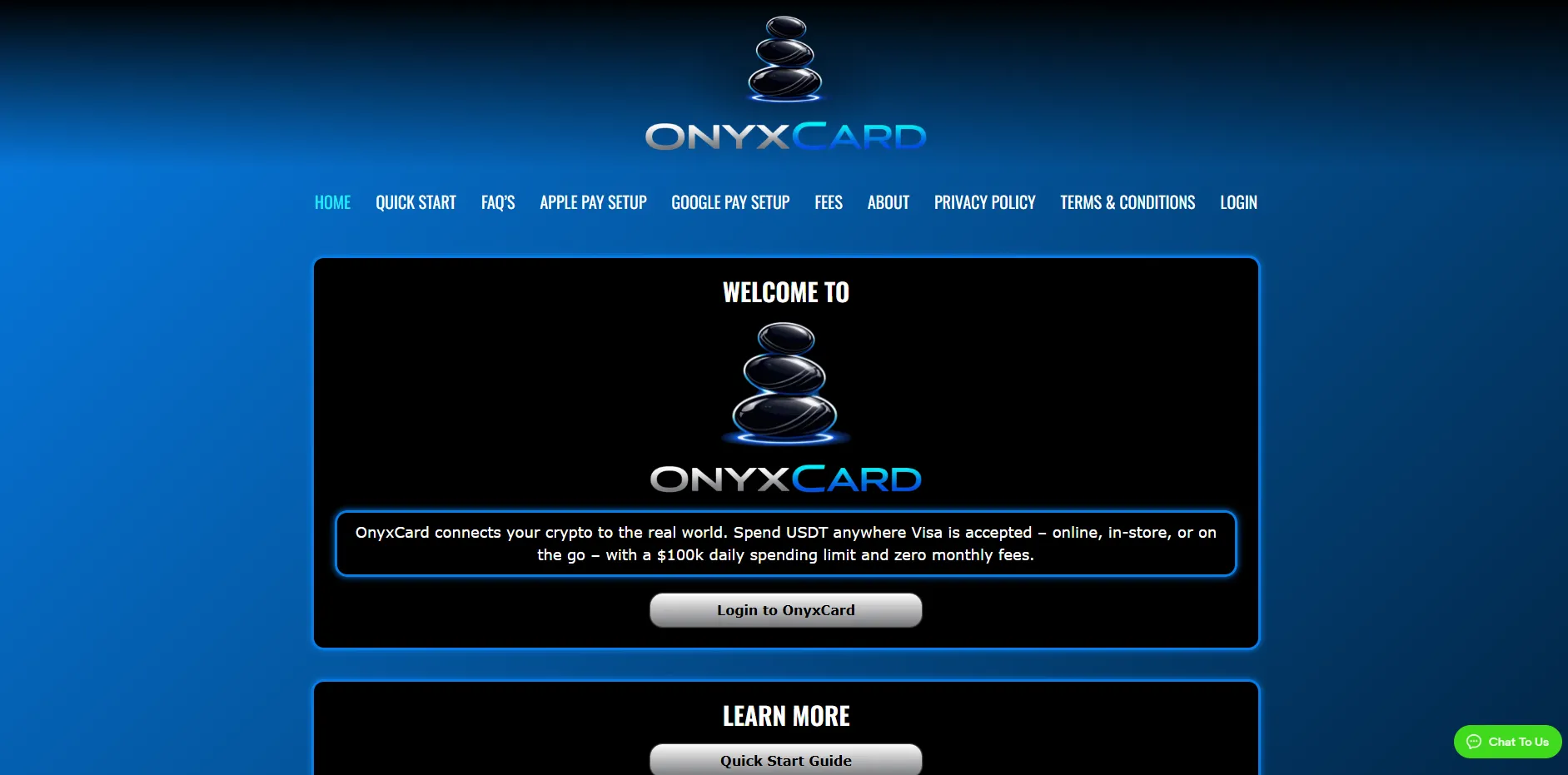
Onyx Card positions itself as a privacy card for crypto users. It lets people load USDT onto a card and spend anywhere Visa is accepted. The platform claims high limits, like $100,000 daily, with zero monthly fees. Users top up with USDT on the ERC-20 chain, incurring a 5% fee. Withdrawals also carry 5% charges. No KYC is needed for basic use, appealing to those seeking anonymous debit solutions.
The site emphasizes ease. Sign up takes minutes. Load funds quickly. Spend worldwide. It supports Apple Pay and Google Pay. But the real draw for many is the earning side. Onyx Card ties into a network-building model. This blends card utility with referral incentives. Users must often use a referral link to join, highlighting its focus on growth through networks.
Traffic remains low. Public data shows minimal visits. Social buzz comes mostly from promoters sharing ref links. No major reviews on Trustpilot or SiteJabber yet. This newness raises flags for long-term reliability.
1.1 Owners' Profiles and Backgrounds
Ownership lacks full clarity. The terms point to Vault27 Limited, a Costa Rica entity with ID 3-102-948161. This company handles operations. But deeper checks reveal ties to Bruce John Curnick. He founded Vault27. Curnick, a South African based in the UK, has a track record in crypto ventures.
Curnick’s past includes Meishi App and Dreamz Competitions. He promotes himself as a tech entrepreneur on LinkedIn. However, sources link him to earlier projects with MLM elements. Vault27 started as a staking platform in 2025. It promised yields from token locks. Critics called it unsustainable. Onyx Card seems like a rebrand, adding cards to the mix. Curnick’s name stays off the site, which is unusual for legit operations.
UK records show similar Vault27 entities under Curnick. But no direct match to the Costa Rican firm. His history involves crypto promotions, some flagged as risky. No criminal charges appear tied to him specifically. Yet patterns suggest caution. Serial projects often shift when issues arise. This background matters for trust in Onyx Card’s stability.
Part 2: The Compensation Plan Explained
Onyx Card’s plan centers on a 9-level unilevel structure. It’s recruitment-focused. No retail sales drive it. Earnings come from signups and top-ups in your network.
Entry costs $200. This covers $100 for the card and a $100 initial load. From the card fee, $65 distributes across levels. The rest goes to operations.
- Card Commissions (One-Time): Paid when someone buys a card via your network.
- Level 1: $25
- Level 2: $12
- Level 3: $9
- Level 4: $5
- Levels 5-8: $3 each
- Level 9: $2
- Top-Up Commissions (Recurring): From 5% fee on USDT deposits. 2% shares across levels, 3% to the company.
- Level 1: 1%
- Level 2: 0.5%
- Level 3: 0.3%
- Level 4: 0.2%
- Levels 5-8: 0.1% each
- Level 9: 0.05%
Withdrawals add another 5% fee. 2% may flow to the plan.
Claims include big earnings. For example, a 20,000-person team could yield $7,500 monthly. But this assumes steady top-ups, like $500 per user monthly. In reality, it depends on constant recruitment.
Here’s a table summarizing the structure:
Level | Card Commission ($) | Top-Up Commission (%) |
1 | 25 | 1 |
2 | 12 | 0.5 |
3 | 9 | 0.3 |
4 | 5 | 0.2 |
5 | 3 | 0.1 |
6 | 3 | 0.1 |
7 | 3 | 0.1 |
8 | 3 | 0.1 |
9 | 2 | 0.05 |
3.1 Mathematical Proof of Unsustainability
Such plans require exponential growth. Assume each user recruits three others. By level 9, you need over 29,000 people total. That’s (3^9 – 1)/2 ≈ 9,841 for levels 1-9, but texts suggest higher with deeper counts.
Break-even needs effort. With a $200 entry, you might need 8+ directs to profit after fees. Churn at 20% monthly erodes bases. Revenue from 5% fees caps payouts. If inflows drop below outflows, it collapses.
Real math: For $7,500 monthly from a 20,000 team at $100 top-ups, total volume is $2 million. 2% commissions equal $40,000 system-wide. One person claiming $7,500 takes nearly 19% of that pool. Only top spots win big. Most lose.
Compare to stable options:
Option | Typical ROI | Sustainability Source |
Real Estate | 5-8% annual | Rental yields, appreciation |
Bank Savings | 4-5% APY | Interest on deposits |
Legit Crypto Cards (e.g., Crypto.com) | 1-8% cashback | Audited assets, no MLM |
Onyx Card’s implied 12%+ annualized return relies on unstable downlines.
3.2 Red Flags and Public Perception
Several issues stand out:
- Hidden ownership: Curnick not listed.
- Recruitment emphasis: Must use ref links.
- Fee dependency: Earnings from user charges, not external revenue.
- Short history: Launched January 2026, tied to Vault27’s 6-month run.
- Negative views: Sites like BehindMLM call it a Ponzi. Reddit threads warn similarly.
- Security claims: PCI-DSS mentioned, but no audits shown.
- Crypto risks: USDT volatility, no refunds.
Social promoters like @JoeSwanies and @solpepejoker push refs. They have histories in similar crypto ops. Traffic tools show low engagement. Scam check sites flag low trust.
Part 4: Onyx Card vs Other Crypto Debit Cards
Onyx Card stands out for no KYC, but compare:
- Crypto.com Visa: Audited, 1-8% cashback, regulated.
- Binance Card: Similar rewards, large assets under management.
- Wirex: Fiat options, lower fees, established since 2014.
Onyx Card’s top-up cryptocurrencies are USDT-only. Transaction speed is quick, but complaints about the Onyx Card include potential freezes. Is onyxcard.info safe for spending? Data suggests high risk.
Future Predictions and Recommendations
By mid-2026, Visa scrutiny might hit. If recruitment slows, payouts falter. Bear markets speed collapses. Best case: It stabilizes with real utility. Likely: Rebrand or shutdown by Q3.
Steer clear if seeking stability. Test with small amounts. Withdraw early. Report issues to FTC. For the best no KYC crypto cards like Onyx, look at proven alternatives. DYOR always.
Conclusion: Weigh the Risks Carefully
This Onyx Card review highlights appealing features like worldwide Visa acceptance and Onyx Card privacy features. Yet the MLM core, opaque owners, and math concerns make it risky. For Onyx Card fees and limits review, the 5% charges add up. If hunting for Onyx Card ATM withdrawal fees or how to buy Onyx Card crypto load, verify firsthand. Ultimately, prioritize safety over quick gains. Choose regulated paths for secure borderless spending.
Onyx Card Review Score
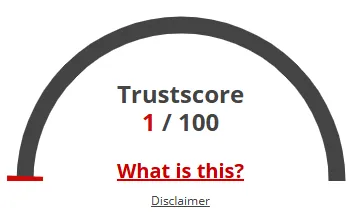
A website’s trust score is an important indicator of its reliability. Onyx Card currently has a worryingly low rating, raising serious concerns about its legitimacy. Users are strongly urged to exercise caution.
Key red flags include low web traffic, negative user feedback, potential phishing risks, undisclosed ownership, unclear hosting details, and weak SSL encryption.
With such a poor trust score, the likelihood of fraud, data breaches, or other security issues is much higher. It is crucial to carefully assess these warning signs before engaging with Onyx Card or similar platforms.
Positive Highlights
- We found a valid SSL certificate
- DNSFilter labels this site as safe
Negative Highlights
- The Tranco rank (how much traffic) is rather low.
- The age of this site is (very) young.
Frequently Asked Questions Onyx Card Review
This section answers key questions about Onyx Card, clarifies points, addresses concerns, and highlights issues related to the platform’s legitimacy.
The analysis, it shows Ponzi traits. Ownership links to past dubious projects raise doubts.
No KYC appeals, but sustainability issues make it questionable for long-term use.
Use USDT ERC-20 with 5% fee. Process claims minutes, but test small.
Loads and spends are fast, per claims. But overall, platform risks overshadow this.
Common ones include hidden fees, recruitment pressure, and scam allegations from reviews.
Other Infromation:
Reviews:
There are no reviews yet. Be the first one to write one.