DeltaOneAI Review: Ownership Backgrounds, Full Compensation Details, and Key Risks Explained
This DeltaOneAI review examines the platform’s claimed founders, complete compensation structure, and overall business model using publicly available information. The site promotes an AI-driven crypto trading approach with high return targets and a multi-level recruitment element. Readers looking for clear facts on legitimacy, payouts, and ownership will find the details broken down in plain language below. Scams Radar
Part : 1 Ownership and Founder Backgrounds
Table of Contents
Public pages linked to the platform name James Pack and Ricky Lundell as co-founders on a related landing area.
James Pack has prior ties to ASEA, a Utah-based network marketing company that sells redox signaling supplements. He is no longer prominently listed on ASEA’s current site. His background sits in direct selling rather than regulated trading or fintech.
Ricky Lundell is known as a martial artist and Brazilian jiu-jitsu coach. He holds a black belt under Pedro Sauer and has competition titles plus coaching experience with fighters. No public record shows prior work in AI trading systems, investment management, or licensed financial platforms.
Neither name appears with clear company registration documents, director filings, or verified control of the domain or deposit wallets. Domain records show private registration on 17 September 2026. A separate site (delta-one.app) posted a notice claiming the platform is an unauthorized copy and that its own business is paused. These points leave ownership unresolved and raise basic transparency questions for any investor.
1.1 Complete Compensation Plan Breakdown
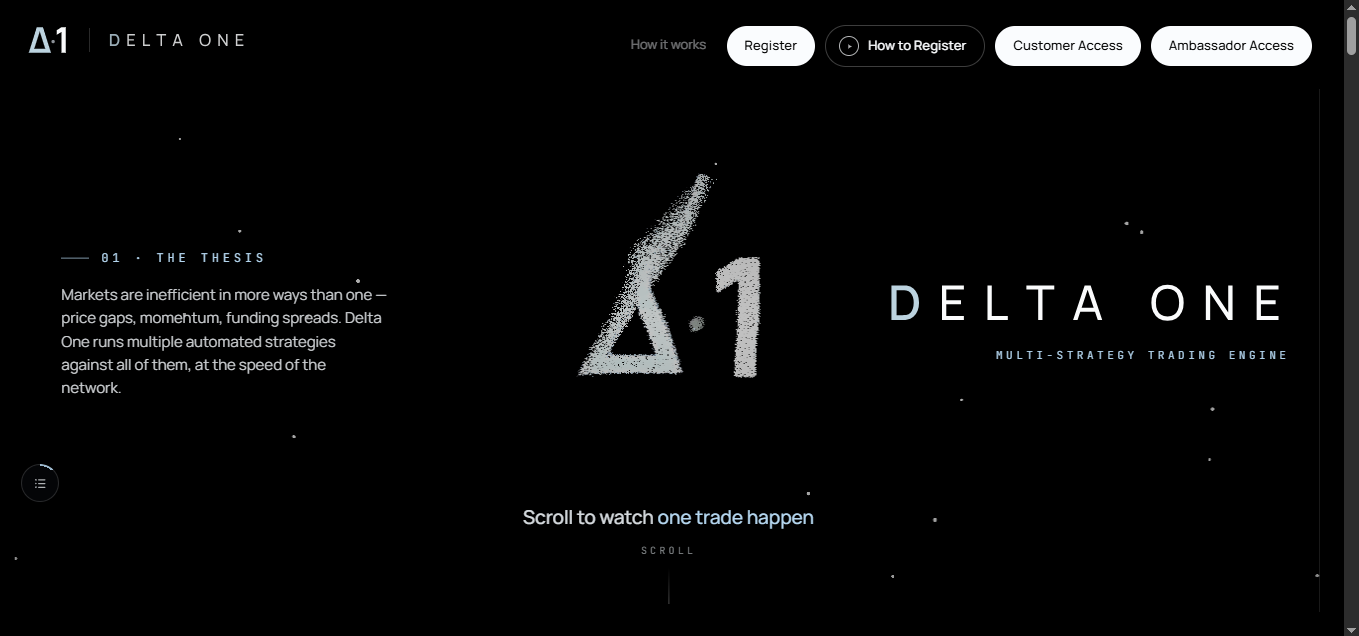
The model centers on deposits rather than a separate retail product. Participants place between 1,000 and 25,000 USDT. The stated target is a 200 percent return (capital plus profit, or total payout of twice the deposit depending on exact contract wording). An optional boost to 220 percent is offered if funds stay until the full target without early withdrawal. The first ten days block withdrawals.
Daily credits move the account toward the 200 percent ceiling. The exact daily percentage is not fixed in public materials and appears open-ended until the cap is reached.
Recruitment uses a 2×21 matrix. Each person has two positions under them. A full structure across 21 levels holds over four million theoretical spots. Members receive a reported 10 percent match on the daily ROI credited to qualifying downline positions. Seven ranks exist: Fuji, Kilimanjaro, Matterhorn, Denali, Rainier, K2, and Everest. Qualification rules and leadership bonuses are not fully published.
No independent product sale sits outside the deposit-and-recruit loop. New deposits form the only clear inflow that can fund earlier credits and matches.
1.2 Why the Return Targets Raise Sustainability Questions
A 200 percent target on crypto deposits far exceeds typical long-term results from banks (roughly 4–5 percent), broad stock indexes (7–10 percent), or standard crypto staking (often 3–15 percent). Even conservative daily credits of 0.5–1 percent push annualized figures into ranges rarely sustained by regulated funds.
If an automated system truly delivered those results at scale, operators would have little need to seek continuous new 1,000–25,000 USDT deposits. The combination of fixed high targets, matrix matching, and recruitment dependence matches patterns seen in short-lived high-yield programs. When new money slows, payouts usually face delays or stop.
Part : 2 Comparison Table of Return Claims
Type of Investment | Typical Sustainable Range | Transparency Level | Main Risk Driver |
Bank high-yield savings | 4–5% per year | High, often insured | Inflation, bank failure |
Broad stock market (long-term) | 7–10% annualized | High | Market swings |
Standard crypto staking | 3–15% | Partial | Platform and market risk |
DeltaOneAI advertised target | 200% (open-ended timing) | Low | Recruitment and opacity |
2.1 : Red Flags and Practical Checks
- Brand-new domain with private registration
- No clear legal entity, directors, or regulatory registration visible
- No audited trading logs, proof of reserves, or exchange statements
- Crypto-only deposits (hard to reverse)
- Marketing that appears heavily AI-generated
- Related site warning of impersonation
Anyone considering similar platforms should demand corporate filings, independent audit reports, and verified withdrawal history before sending funds. Tools such as WHOIS lookups, regulatory databases (SEC EDGAR, CFTC), and blockchain explorers help confirm identity and fund movement.
Final Assessment
This DeltaOneAI review shows a platform still lacking basic ownership clarity, independently verified trading results, and a sustainable revenue source outside recruitment. The full compensation plan rewards deposits and matrix growth more than external product sales. Founders’ public backgrounds do not demonstrate relevant regulated trading experience.
Treat any deposit as extremely high risk. Prefer regulated exchanges, diversified low-cost funds, or platforms that publish audited performance and clear legal responsibility. Always verify primary records yourself and never invest money you cannot afford to lose.
Related keywords to explore: Delta One trading platform, AI crypto trading bot, crypto arbitrage trading bot, DeltaOneAI legitimacy, DeltaOneAI withdrawal process, is DeltaOneAI safe, risks of AI crypto trading platforms, how to verify a crypto trading platform.
DeltaOne Review
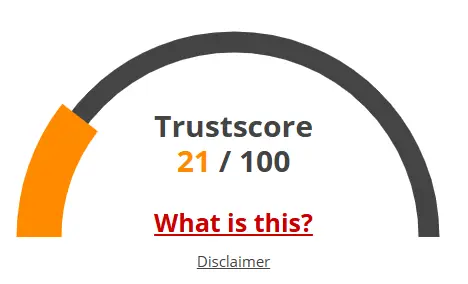
A website’s trust score is an important indicator of its DeltaOne icludes low web traffic, negative user feedback, potential phishing risks, undisclosed ownership, unclear hosting details, and weak SSL encryption.
With such a poor trust score, the likelihood of fraud, data breaches, or other security issues is much higher. It is crucial to carefully assess these warning signs before engaging with DeltaOne Similar platform.
Positive Highlights
- We found a valid SSL certificate
- DNSFilter labels this site as safe
Negative Highlights
- The Tranco rank (how much traffic) is rather low.
- The age of this site is (very) young.
Frequently Asked Questions About DeltaOne
This section answers key questions about DeltaOne concerns, and highlights issues related to the platform’s legitimacy.
DeltaOne AI claims to offer AI-based investment opportunities. Verify its business model before investing.
Check its ownership, registration, regulatory status, and verified earnings.
Understand its referral commissions, binary structure, and income requirements.
Returns depend on actual performance, fees, and reliable revenue sources.
Everstead Review is a separate topic unless a verified connection exists.
Other Infromation:
WHOIS data : Hidden
Owner : REDACTED FOR PRIVACY
Country: IS
WHOIS Registration Date : 2026-09-17
WHOIS Last Update: 2026-09-17
WHOIS Renew Date: 2027-09-17
Website: DeltaOne
Title : DeltaOne
Reviews:
There are no reviews yet. Be the first one to write one.