

Zarfund Review 2026: Ownership Details, Compensation Plan Breakdown, and Risk Analysis
Zarfund Review starts with a clear look at a platform that markets itself as an earning and advertising opportunity. Users can buy positions, join a matrix, collect cash-outs, receive matching bonuses, and earn from referrals or ad clicks. This Zarfund Review examines the full compensation structure, the available information on ownership and backgrounds, the mathematics behind the payouts, and the practical risks for ordinary people considering it. The analysis draws on public site details, historical records, and basic economic logic. It stays factual and straightforward so anyone can follow it. Scam radar

Table of Contents
Part : 1 What Zarfund Claims to Offer
The platform presents itself as a place where people can start small, build a network, view ads for rewards, and receive predictable earnings through matrix cycles. Marketing language focuses on network growth, cash-outs to wallets, and referral income. Positions can be purchased in multiples, with claims that more positions lead to higher totals. An advertising-credit or clicker section is also promoted, alongside matching bonuses.
The model combines matrix positions with advertising elements. The central question for any Zarfund Review is simple: where does the money for payouts actually come from? Public materials emphasize participant contributions and network activity more than independently verified outside revenue.

1.1 Ownership Profiles and Backgrounds
Current ownership of the site remains hidden. WHOIS data uses privacy protection through a common registrar. No clear company name, registration number, directors, beneficial owners, physical address, or regulatory authorization appears in the public materials. This lack of transparency raises a basic practical issue. Anyone sending money should be able to identify who legally receives it and under which rules disputes would be handled.
Historically, the Zarfund name appeared in 2016–2017 as a Bitcoin-based matrix or cash-gifting program. Contemporary reports and promotional material associated it with South African entrepreneur Hannes Jordaan, sometimes described as founder or originator. Independent reviews at the time characterized that earlier version as recruitment-dependent, with affiliates sending Bitcoin to uplines to unlock payments from downlines. Academic discussions of schemes operating in Nigeria and MLM research outlets also examined the historical model in the context of pyramid-style or Ponzi-style structures. Domain registration records from that period listed contacts such as Eugene Moseley in some snapshots, though registrant details do not automatically equal beneficial ownership.
Importantly, available evidence does not establish that the same individuals operate the present version. The current site does not name its management or confirm continuity with the earlier operation. Historical association with a recruitment-heavy matrix therefore serves as background context and a caution, not proof of current identity. Later professional activities linked to the historical founder involved other online marketing and business ventures, but those should not be assumed to share the same structure without separate evidence.
1.2 Zarfund Compensation Plan and How It Works
The published plan functions as a matrix or cycler system. Participants fill positions at successive levels. Money entering a level is allocated to upgrades, cash-outs, matching bonuses, and re-entries. Different public descriptions show slight variations in width (sometimes described as two-wide or four-wide) and exact dollar amounts, but the economic pattern is consistent.
A representative structure drawn from published tables works as follows:
Level 1 often involves small contributions (around $1 per position in some versions). Four participants can generate a total that is fully allocated to an upgrade amount, a modest cash-out, and a matching portion.Higher levels scale the same way. Contributions from the required number of people equal the sum of cash-out, matching, upgrade or re-entry allocations.Matching bonuses are advertised (sometimes around 25 percent), though the exact base for the percentage is not always transparent in public tables.Re-entry creates new positions from completed cycles.Separate “buy multiple positions” examples claim fixed multiples (for instance, 10 positions linked to a stated total, 50 positions to a larger total, and so on).An advertising-credit or clicker plan lists packages of credits with stated pay-per-click figures and total earnings. In several published versions the arithmetic of credits multiplied by the listed per-click rate does not match the stated total earning figure, leaving the calculation unclear without further explanation from the site.
The pattern across levels is that money paid in by participants is redistributed among cash-outs, bonuses, upgrades, and new positions. Public tables do not show a residual surplus generated by outside activity. Spillover (placement of recruits by uplines) can help fill individual matrices but does not create new participants or new money. The total number of people required still grows with each level.
Part : 2 Mathematical Structure and Sustainability
A matrix that requires multiple new positions under each existing one expands exponentially. In a four-wide illustration:
Level 1 needs 4 peopleLevel 2 needs 16Level 3 needs 64Level 4 needs 256Level 5 needs 1,024Level 6 needs 4,096
Cumulative participants under one person for a filled six-level structure already exceed five thousand. A two-wide structure follows the same geometric principle (2, 4, 8, 16…). Real-world recruitment rarely sustains this growth indefinitely. Markets saturate, trust declines, and inflows slow. When new money slows, the ability to fund cash-outs for the majority declines.
Re-entry multiplies positions further and therefore multiplies future demand for participants. Advertising credits could theoretically supply outside revenue if genuine advertisers paid enough to cover rewards, commissions, operating costs, and profit. Public materials do not provide audited advertising revenue, advertiser numbers, contracts, or financial statements demonstrating that this occurs at the required scale. Without that evidence, the system remains dependent on continued participant contributions.
Realistic return benchmarks for comparison include bank deposits or savings products in the low-to-mid single digits annually in many markets, long-term equity averages near 10 percent nominal, residential rental yields often in the 3–12 percent range depending on location and costs, and lower-risk crypto yields frequently in the low-to-mid single digits for more liquid products. Figures that multiply capital many times through recruitment and position purchases sit far outside these ranges and require continuous new capital.
2.1 Traffic, Perception, Security, and Other Practical Factors
Third-party traffic indicators for the current domain are low, consistent with a relatively new site. Public discussion outside promotional channels is limited. Historical commentary on the earlier Zarfund version was largely negative, focusing on the recruitment-dependent design. Security features include standard SSL, but a certificate alone does not establish financial soundness or operational reliability. Support channels often point to Telegram rather than formal corporate customer service. Payment flows emphasize peer-to-peer or wallet transfers, which are typically irreversible.
2.2 Key Red Flags in Summary
Key concerns include:
Unverified ownership
Hidden ownership and absence of clear legal-entity detailsMatrix structure whose published tables balance participant money in against allocations outExplicit recruitment and network-building incentivesRe-entry and multiple-position upsells that increase future participant demandUnclear arithmetic in some clicker-plan presentationsHistorical association with a recruitment-heavy Bitcoin matrix that faced widespread criticismLack of audited financials, regulatory authorization, or demonstrated external revenue sufficient to support the advertised economicsYoung domain with privacy protection
and hidden WHOIS.Extremely short domain history.Fixed high daily returns without audited proof of trading profits.Strong multi-level referral incentives.No clear regulatory license.Limited independent traffic or public footprint.Potential name overlap with official Dubai Chambers activity.
Anyone reviewing Dubai Global Network packages, daily income claims, or referral income should demand the legal company name, registration number, directors list, audited statements, custody arrangements, and exact source of the money used for payouts. Successful small withdrawals prove only that funds existed at that moment. They do not prove ongoing external profit.
Part : 3 Comparison with Ordinary Vehicles
Type | Typical Return Range | Transparency & Oversight | Primary Risk Driver |
Bank savings / deposits | Low single digits annually | High | Inflation, rates |
Residential real estate | Roughly 8–12% total in many markets | Moderate to high | Location, costs, leverage |
Broad equities (long-term) | Around 10% nominal | High | Market volatility |
Lower-risk crypto yields | Often 3–10% range | Variable | Platform, smart-contract, market |
Zarfund matrix / positions | High multiples via cycles | Low | Recruitment continuity |
Practical Recommendations
Treat the opportunity as high-risk. Do not send money you cannot afford to lose. If already involved, document all transactions, stop additional payments, and check whether withdrawals process. Prefer regulated products with clear asset backing, audited statements, and identifiable operators. Compare any promised multiple against ordinary market returns and ask where the surplus originates.
A responsible Zarfund Review ends with the same caution that applies to any recruitment-dependent matrix: early participants can receive payments while inflows continue; later participants face the mathematical pressure when growth slows. Independent verification of ownership, audited revenue, and regulatory status would be required before the risk profile could change materially.

Zarfund Review
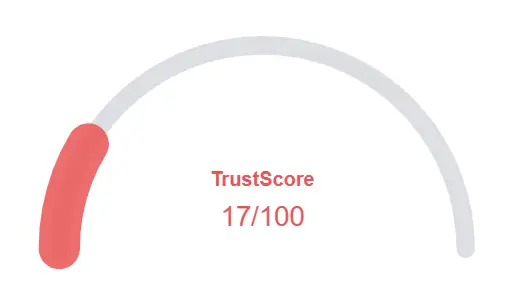
A website’s trust score is an important indicator of its zarfund includes low web traffic, negative user feedback, potential phishing risks, undisclosed ownership, unclear hosting details, and weak SSL encryption.
With such a poor trust score, the likelihood of fraud, data breaches, or other security issues is much higher. It is crucial to carefully assess these warning signs before engaging with a zarfund ..Similar platform.
Positive Highlights
- We found a valid SSL certificate
- DNSFilter labels this site as safe
Negative Highlights
- The Tranco rank (how much traffic) is rather low.
- The age of this site is (very) young.
Frequently Asked Questions About Zarfund
This section answers key questions about zarfund . clarifies points, addresses concerns, and highlights issues related to the platform’s legitimacy.
ZarFund has transparency and investment-risk concerns.
It uses investment and referral-based earning models.
It offers referral rewards and network incentives.
Risks include unclear ownership and sustainability concerns.
No verified connection has been established
Other Infromation:
WHOIS Registration Date: 2026-05-03
WHOIS Last Update: 2026-05-08
WHOIS Renew Date: 2026-05-08
Website: zarfund



Reviews:
There are no reviews yet. Be the first one to write one.