WavetrustReview: Clear Analysis of Ownership, Compensation Claims, and Platform Risks
This wavetrust Review examines public information about the platform linked to WaveTrust Exchange and the WTX token. The review draws only from available domain records, promoter statements, third-party scanner reports, and on-chain observations. It focuses on ownership details, the compensation approach, and sustainability questions. Readers should treat all claims as unverified until independent audits appear. Scamsradar
Part : 1 Ownership and Background Details
Table of Contents
Public records show the domain registered on 30 December 2025 through Hostinger with privacy protection. Nameservers point to Cloudflare. No clear physical address, full corporate filings, or regulatory licenses in major jurisdictions appear in open searches. Promoters connect the project to WaveChain Global Technologies FZ-LLC, a UAE free-zone entity. Corinne Caravana (also referenced as Corinne Caravana Tomaneng) is named as co-founder and COO in social posts announcing registration and launch.
Independent searches did not locate verified criminal convictions or formal regulatory actions against Caravana tied to this project. Some public material describes Erik Nurm as a mentor figure. Nurm has appeared in earlier investigative reporting on other crypto and network-marketing ventures. Association alone does not prove control or wrongdoing in the current project. It remains a standard due-diligence point for anyone evaluating the team.
Unrelated organizations share similar names, including a long-standing UK charity focused on child protection. The current platform is distinct from that charity. Ownership opacity, the young domain age (roughly eight months as of mid-2026 checks), and limited independent corporate documentation form the first set of observable facts.
1.1 Compensation Structure and Promoter Claims
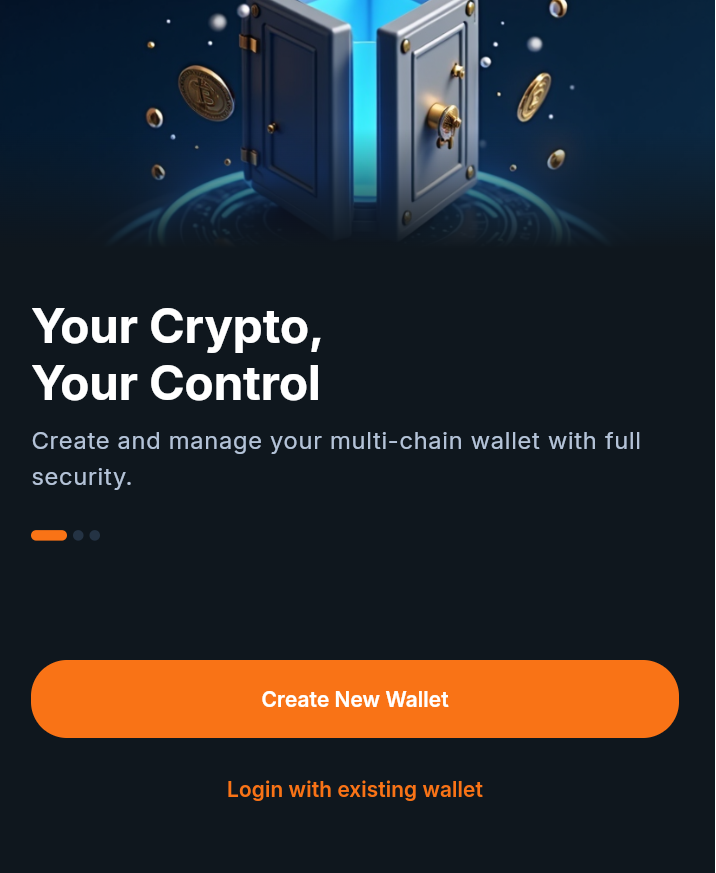
No complete official compensation document with exact percentages, rank tables, or payout formulas was located in public sources. Promoter material describes a hybrid model that mixes referral sharing, team growth, WTX token rewards, staking, P2P-agent participation, and multiple claimed income streams. Traditional binary, unilevel, or matrix plans are not independently confirmed.
Key promoter statements include:
Join at low or zero cost in some versions.Share a referral link and build a team.Qualify for recurring WTX allocations.One repeated claim: 100 WTX every 45 days for 12.5 years.Another version references targets of 500 WTX every 45 days for 12 years.Mentions of “17 income streams.”Entry figures as low as 6.25 USDT appear in some materials.Presale pricing references around $1.25 rising toward $1.50.
On-chain activity on BNB Smart Chain shows a WTX token, referral-distribution functions, staking/claim functions, and presale-related transfers. Token existence is real. Token distribution does not equal cash value or sustainable purchasing power.
1.2 Mathematical Illustration of Reward Scale
Approximate periods in 12.5 years: roughly 101.
One participant under the 100-WTX claim: about 10,100 WTX.
At a $20 valuation sometimes used in promotions, the nominal figure reaches roughly $202,000 per person.
At the 1.25–1.50 presale range, the same tokens equal roughly 12,600–15,150.
Scale the same claim:
1,000 participants → roughly $16 million nominal value per year at $20.100,000 participants → roughly $1.6 billion nominal value per year at $20.
These figures illustrate the volume of economic support required if the tokens are to retain claimed value and remain liquid. Token creation on a smart contract does not automatically generate the external revenue or buyer demand needed to support large-scale redemptions.
Part : 2 Comparison Table: Claimed Rewards vs Realistic Benchmarks
Opportunity | Approximate Annual Yield | Notes |
Promoter 100-WTX claim ($20 valuation) | Hundreds of percent simple annualized | Depends entirely on sustained token price and liquidity |
Pakistan National Savings products | 10–13% | Official, regulated rates |
Typical bank / high-yield deposits | 1–5% (varies by jurisdiction) | Often insured |
Broad real-estate historical totals | 5–10% | Includes rent + appreciation, illiquid |
Major-asset staking / DeFi yields | 3–15% | Market and smart-contract risk |
Any model that requires continuous recruitment to fund earlier participants faces the classic geometric limit. A simple three-direct growth tree reaches tens of thousands of people within ten levels. Real-world drop-off and finite willing participants make indefinite expansion impossible.
2.1 Red Flags Observed Across Public Sources
Domain age under one year combined with privacy-protected registration.Multiple independent scanners (Gridinsoft, Scam Detector, ScamAdviser) assign very low trust scores and flag phishing or suspicious signals.Current site often appears blank or shows default Flutter project text rather than a full live exchange interface.Heavy reliance on social media, Zoom calls, and referral links for promotion.Limited independent user evidence of long-term successful withdrawals or product use.Token valuation claims that differ widely between presale prices and later promotional figures.Absence of audited financials, clear external revenue breakdowns, or regulatory licenses visible in public searches.
These points do not constitute a legal finding of fraud. They do establish a high-risk profile that requires far more transparency before any capital commitment
2.2 Traffic, Perception, and Technical Notes
Public ranking data and scanner reports indicate low organic traffic and limited independent review history. Promotion concentrates among referral-focused accounts on Facebook, Instagram, X, and Telegram. SSL certificates and Cloudflare protection exist, yet both are inexpensive and common on both legitimate and high-risk sites. No evidence of advanced independent security audits or cold-wallet transparency was located.
Practical Questions Any Participant Should Ask
Exact legal entity name, registration number, directors, and beneficial owners.Source of external revenue that is independent of new participant deposits.Full official compensation plan with formulas for every claimed stream.Current WTX circulating supply, treasury holdings, and measurable liquidity depth.Audited proof of reserves versus outstanding reward liabilities.Clear withdrawal rules, fees, processing times, and historical completion rates from non-promoter users.
Wavetrust Review
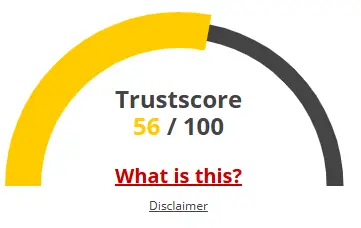
A website’s trust score is an important indicator of its wavetrust includes low web traffic, negative user feedback, potential phishing risks, undisclosed ownership, unclear hosting details, and weak SSL encryption.
With such a poor trust score, the likelihood of fraud, data breaches, or other security issues is much higher. It is crucial to carefully assess these warning signs before engaging with a wavetrust Similar platform.
Positive Highlights
- We found a valid SSL certificate
- DNSFilter labels this site as safe
Negative Highlights
- The Tranco rank (how much traffic) is rather low.
- The age of this site is (very) young.
Frequently Asked Questions About Wavetrust
This section answers key questions about wavetrust concerns, and highlights issues related to the platform’s legitimacy.
WaveTrust presents itself as a blockchain-based platform offering digital assets and financial services.
WaveTrust has several areas that investors should carefully verify before investing.
Its promoted model includes network-marketing structures such as binary, unilevel, and matrix systems.
Key risks include unclear revenue sources, withdrawal issues, token volatility, and regulatory uncertainty.
No. Everstead Review and WaveTrust Review refer to different topics and should not be confused
Other Infromation:
WHOIS data : Hidden
Owner : REDACTED FOR PRIVACY
Country: US
WHOIS Registration Date : N/L
WHOIS Last Update: N/L
WHOIS Renew Date: N/L
Website: wavetrust
Title : wavetrust
Reviews:
There are no reviews yet. Be the first one to write one.