
vowuReview: Full Look at VOW Unity Platform, Compensation Structure, Ownership Details, and Risk Factors
This vowuReview examines the VOW Unity platform based on available public data, promotional materials, blockchain records, and third-party checks. The site presents itself as a decentralized earning network built around matrix positions, slot activation, and on-chain rewards. Readers seeking clear facts on how the system works, who stands behind it, and whether the advertised returns hold up will find the key points below.
The domain registered on March 29, 2026. It remains only about five to six months old at the time of this review. Ownership details stay hidden behind Domains By Proxy privacy protection through GoDaddy. No public founder name, company registration, directors list, or verified legal entity appears on the site or in open records. This lack of transparency ranks as a primary concern for anyone considering participation. Scams radar

Part 1: Ownership and Promoter Backgrounds
Table of Contents
Public WHOIS data reveals nothing about the real operators. The site uses privacy services that fully redact names and addresses. No LinkedIn profiles, corporate filings, or team pages connect to verifiable individuals. Claims of longer operating history appear in some promotional material, yet the current domain only launched in March 2026. Any earlier activity would require separate documentation that is not readily available.
Promoters operate more openly than the platform itself. One visible figure is Jaime Soriano, who runs a Telegram channel focused on passive-income programs. He has shared referral codes for the matrix system and posted claims of substantial Bitcoin receipts from cycling activity. Public records link him to earlier network-marketing roles, including positions with Primerica and other home-business training systems. He has also discussed or promoted additional crypto and high-yield opportunities over time. These connections show a consistent pattern of opportunity marketing rather than proof of ownership of the platform.
Another active channel is Experience Crypto 24/7. It promotes the same matrix under referral identifiers and describes slot activation, spillover, and recycling. The channel has covered other crypto income programs in the past, including some that drew regulatory attention in certain jurisdictions. A third name, Blake Summer, appears as an administrator on a related promotional site that directs users to the matrix and encourages team building. None of these individuals has been established as the beneficial owner or developer of the core system. Their roles remain those of affiliates and marketers.
No verified criminal convictions tied specifically to the platform’s unidentified operators or these promoters appear in the reviewed material. The absence of owner identity simply prevents any deeper background check.
1.1 How the Compensation Plan Works

The platform describes itself as a global matrix network. Users activate slots, recruit others, receive spillover placements, complete cycles, and recycle into higher positions. The structure is best classified as a blockchain-based matrix or cycler rather than a standard binary or unilevel plan.
Participants typically begin with a small activation of about 0.001 BTCB on the BNB Smart Chain. The documented ladder doubles at each step:
Slot | Approximate Cost |
1 | 0.001 BTC |
2 | 0.002 BTC |
3 | 0.004 BTC |
4 | 0.008 BTC |
5 | 0.016 BTC |
6 | 0.032 BTC |
7 | 0.064 BTC |
8 | 0.128 BTC |
9 | 0.256 BTC |
10 | 0.512 BTC |
11 | 1.024 BTC |
12 | 2.048 BTC |
The full twelve-slot sequence totals roughly 4.095 BTC. Promotional calculations present theoretical income figures around 36.855 BTC for one complete ladder and higher cumulative numbers near 61 BTC once recycling is included. These figures create a large gap between what a single participant contributes and what the marketing suggests can be received.
A common matrix size uses fourteen positions. Incoming funds are routed according to fixed rules that send portions to upline positions, the participant’s wallet, next-slot funding, downline placements, and recycle slots. Spillover places new members into open matrix spots without requiring every recruit to come from the same person. Recycling restarts the process after a cycle finishes.
Recruitment remains central. Marketing stresses inviting two people to start and expanding direct referrals to accelerate progress. The smart contract automates distribution of BTCB once positions fill. On-chain records confirm that transfers occur. One documented transaction showed a small deposit entering the contract and a larger amount leaving, linked to a registration function that included a referrer ID.
The source of the extra value beyond a participant’s own contribution is the critical unanswered question. No audited trading desk, mining operation, lending book, product sales, or external customer revenue appears in the available material. The system redistributes participant activations. If new activations slow, the ability to fill higher positions and sustain advertised payouts declines.
Part 2: Mathematical Limits of the Model
Exponential growth creates clear pressure. A structure that needs fourteen positions per cycle expands rapidly across generations. After several cycles the required positions grow into the thousands and then far beyond any realistic population of new participants. Roughly ninety-three percent of positions sit in the newest layer at each stage. Early entrants can receive real distributions while the network expands. Later entrants face higher odds that positions remain unfilled.
Comparisons with ordinary returns highlight the gap. Bank deposits and fixed products typically yield low single-digit annual figures. Real-estate rental net returns often fall in the mid-single to low double digits depending on location and costs. Even higher-risk crypto staking or lending products rarely sustain the multiples promoted here without continuous new capital. Claims that turn a very small starting amount into tens of thousands of dollars or many BTC multiples require either external profits or ongoing participant inflows.
2.1 Security, Payments, and Support
The site uses valid HTTPS and sits behind standard infrastructure. Wallet connection is the primary access method. Transactions run on BNB Smart Chain with BTCB rather than native Bitcoin. Users must also hold BNB for gas fees. Once crypto leaves a wallet, recovery options are limited.
No clear public list of payment methods beyond the on-chain process, formal refund rules, or regulated support channels appears on the main experience. Promoters direct users to Telegram, WhatsApp, and community groups. This setup differs from conventional financial platforms that publish named compliance contacts and formal complaint procedures.
Practical Takeaways for Readers
Anyone researching the platform should note several consistent points. Ownership stays anonymous. The domain is new. The compensation plan centers on paid slot activation, recruitment, spillover, and recycling. On-chain payments happen, yet the economic engine that would generate surplus value independent of new participants remains undocumented. Promoters with network-marketing backgrounds actively share referral links and income screenshots.
A balanced view recognizes that early or well-positioned participants may receive transfers while growth continues. That observation does not answer the sustainability question. When recruitment slows, matrix positions stop filling at the same rate. The smart contract continues to exist, but the flow of new capital determines whether advertised progress remains possible.
Readers who want stronger confidence should look for published company registration details, named beneficial owners, audited financial statements showing external revenue, complete participant statistics (total deposits versus total payouts, percentage reaching higher slots), and an independent smart-contract audit that clarifies admin controls. Until such information appears, the platform carries a very high risk profile.
This vowuReview aims to give plain facts so individuals can decide for themselves. Always verify contract addresses, transaction histories, and ownership claims directly. Never share seed phrases or private keys. Only use funds that can be lost without personal hardship. Independent research remains the only reliable path before any decision.

VOWU Review
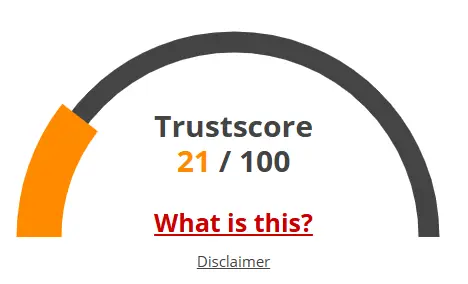
A website’s trust score is an important indicator of its VOWU includes low web traffic, negative user feedback, potential phishing risks, undisclosed ownership, unclear hosting details, and weak SSL encryption.
With such a poor trust score, the likelihood of fraud, data breaches, or other security issues is much higher. It is crucial to carefully assess these warning signs before engaging with VOWU similar platform.
Positive Highlights
- We found a valid SSL certificate
- DNSFilter labels this site as safe
Negative Highlights
- The Tranco rank (how much traffic) is rather low.
- The age of this site is (very) young.
Frequently Asked Questions About VOWU
This section answers key questions about VOWU concerns, and highlights issues related to the platform’s legitimacy.
VOWU is a crypto-based platform that uses a matrix-style referral structure. Participants may earn through network participation and placement-based rewards.
VOWU has several risk indicators, including its referral-driven structure and questions about how participant returns are funded. Investors should conduct independent due diligence.
The VOWU compensation plan uses a matrix structure where participants can potentially earn rewards from bringing in and placing new members within the network.
Some participants may receive payouts, but profitability is not guaranteed. Returns depend heavily on continued participation and the flow of new money into the system.
No. Everstead Review and VOWU are separate topics and should be researched independently to verify their ownership, business model, and legitimacy.

Other Infromation:
WHOIS data : Hidden
Owner : REDACTED FOR PRIVACY
Country: US
WHOIS Registration Date :2026-03-29
WHOIS Last Update:2026-08-11
WHOIS Renew Date: 2027-03-29
Website:VOWU
Title:VOWU


Reviews:
There are no reviews yet. Be the first one to write one.