USDBoom Review: Is This Crypto Platform Safe or a High-Risk Setup?
This usdboom Review examines the platform known as USDBoom or USDTGrowth. It looks at ownership details, the full compensation plan, and key risks in plain language. Readers seeking clear facts on usdboom.net review topics will find the main points here without hype.
USDBoom presents itself as a DeFi yield option. Users deposit USDT and see claims of steady daily gains. The site uses polished design and terms like professional protocol. Yet basic checks show major gaps in proof and transparency. This review pulls together public records, scanner data, and plan details to help everyday people decide.Scamsradar

Part : 1 Ownership and Background Facts
Table of Contents
No named founders, CEOs, directors, or team members appear on the site. Domain records show registration on July 11, 2026 through Namecheap. WHOIS data stays fully private via an Iceland service. Hosting runs through Cloudflare.
The footer lists a Dubai International Financial Centre address. This claim lacks any matching company papers or licenses. Independent checks found no registered entity tied to the operation.
Reports link the project to an earlier setup called 7USDT. That domain started in June 2026. Similar site templates and Telegram posts in Indonesian appear in both cases. Promotion for USDBoom showed up in 7USDT channels. Still, no public records name the actual people running either one. Ownership stays anonymous. This leaves investors without clear accountability if problems arise.
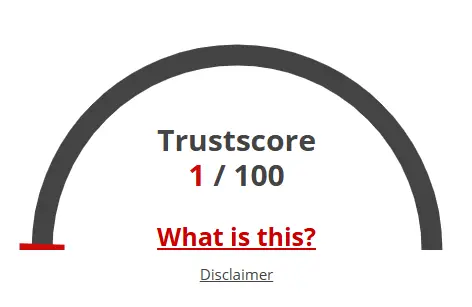
Scanners rate the site poorly. One tool gives a trust score of 1 out of 100 and flags cryptocurrency risk. Another scores it at zero and notes possible high-yield program traits. The domain age stays under two months in early checks. Traffic ranks very low. These signals do not prove wrongdoing by themselves. They do raise the need for extra caution before any deposit.
1.1 Full Compensation Plan Explained

The plan centers on deposits and referrals. Minimum entry sits at 4 USDT. The main claim offers 4 percent daily for 200 days. On a simple basis this equals 800 percent profit plus the original amount returned in theory.
1.2 Here is a clear breakdown for a 100 USDT deposit:
- Daily amount: 4 USDT
- Over 200 days: 800 USDT profit
- Total with principal: 900 USDT
For the minimum 4 USDT deposit the daily figure becomes 0.16 USDT. After 200 days that reaches 32 USDT profit plus the starting 4 USDT.
Part : 2 Referral rewards follow a four-level unilevel structure:
Level | Rate |
1 | 9 percent of downline deposits |
2 | 4 percent |
3 | 2 percent |
4 | 1 percent |
The rates add up to 16 percent across levels. No binary legs or fixed matrix appear in the available details. Earnings come only from new deposits and recruitment. The site offers no separate retail product or service that generates outside sales.
Principal stays locked in many descriptions. Users can take claimed profits and referral amounts under the rules shown. Payments use USDT only. Transactions move on-chain and cannot reverse once sent.
2.1 Why the Numbers Raise Questions
Simple math shows the scale. A 4 percent daily rate annualizes to about 1,460 percent on a non-compounded view. Legitimate options sit far lower. High-yield savings accounts offer roughly 3.75 to 4.5 percent per year. Tokenized treasuries range near 3 to 5.5 percent. Broad stock indexes historically average around 10 percent annually with risk. Real estate total returns often fall between 8 and 12 percent. Even higher-risk DeFi lending usually stays under 15 percent in normal conditions.
No verified trading records, audited accounts, or on-chain proof of external yield support the daily claim. Without a clear revenue source outside new deposits, the structure relies on continuous inflows. When new money slows, payouts become hard to sustain. Past similar plans followed this pattern and later stopped withdrawals.
2.2 Security and Practical Notes
The site carries a basic SSL certificate. That only encrypts the connection. It does not confirm safe handling of funds or honest operations. No published smart-contract audits or proof-of-reserves appear. Connecting a wallet to a new anonymous domain carries clear risk. Once USDT leaves the user wallet, recovery options stay near zero.
Customer support shows no phone, named staff, or verified office. Traffic stays minimal. Public discussion centers on the scanner warnings and the 7USDT link rather than verified success stories.
Red Flags in Summary
- Hidden owners and private domain data
- Fixed high daily rate with no proven yield source
- Pure referral focus and no retail product
- Very young domain and low trust scores
- USDT-only irreversible deposits
- Dubai address without matching records
These points match patterns seen in short-lived high-yield crypto plans.
Usdboom Review
A website’s trust score is an important indicator of its Usdboom icludes low web traffic, negative user feedback, potential phishing risks, undisclosed ownership, unclear hosting details, and weak SSL encryption.
With such a poor trust score, the likelihood of fraud, data breaches, or other security issues is much higher. It is crucial to carefully assess these warning signs before engaging with Usdboom Similar platform.
Positive Highlights
- We found a valid SSL certificate
- DNSFilter labels this site as safe
Negative Highlights
- The Tranco rank (how much traffic) is rather low.
- The age of this site is (very) young.
Frequently Asked Questions About Usdboom
This section answers key questions about Usdboom concerns, and highlights issues related to the platform’s legitimacy.
Yes. It can help you understand USDBoom’s ownership, earning model, risks, and investment claims.
USDBoom appears to offer investment packages with returns promoted through its platform and network marketing structure.
Its ownership, business model, and return claims should be independently verified before investing.
Key concerns may include high-return claims, limited transparency, withdrawal risks, and unclear sources of investment profits.
An Everstead Review should be treated separately from USDBoom and should not be used as evidence of USDBoom’s legitimacy.
Other Infromation:
WHOIS data : Hidden
Owner : REDACTED FOR PRIVACY
Country: IS
WHOIS Registration Date :2026-07-11
WHOIS Last Update:2026-07-11
WHOIS Renew Date:2027-07-11
Website: Usdboom
Title :Usdboom
Reviews:
There are no reviews yet. Be the first one to write one.