
US Lawmakers Revisit Stablecoin Yields as Deposit Flight Debate Intensifies
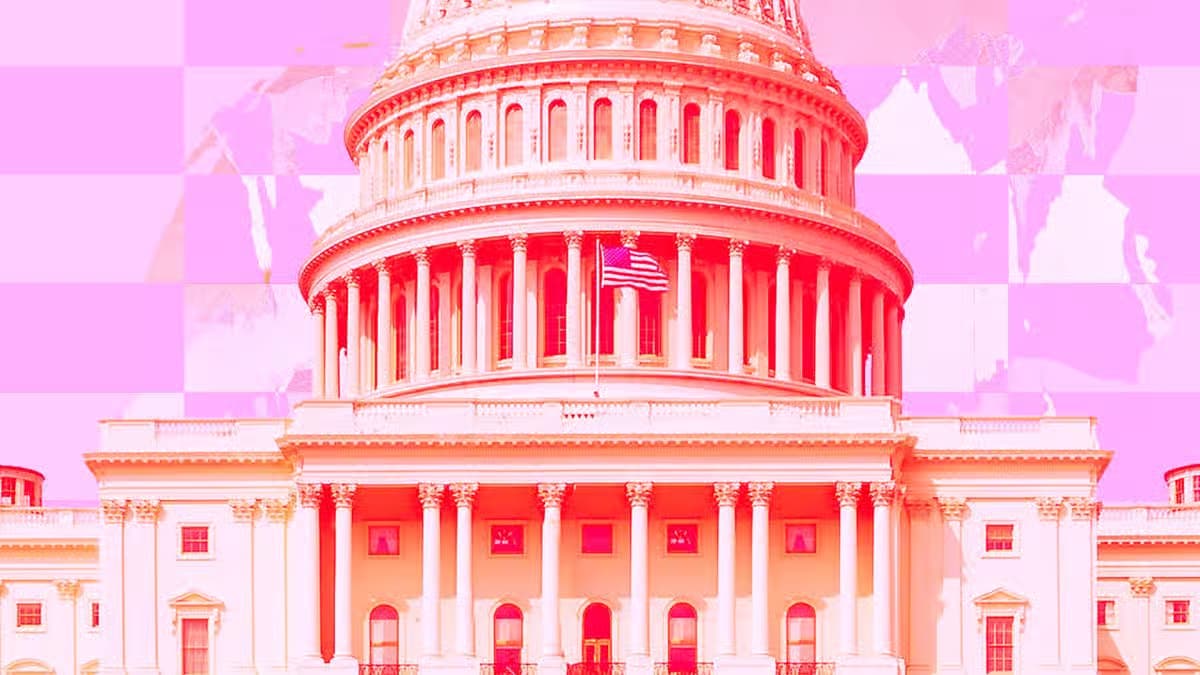
During a February 26, 2026, Senate Banking Committee hearing on bank regulators, lawmakers expressed renewed worries that stablecoin yields could blur the line between crypto products and traditional bank deposits — potentially accelerating deposit flight from banks.
Sen. Angela Alsobrooks (D-Md.) stated:
“Our concern is offering a bank-like product, like a bank deposit, without any of the protections or regulations that accompany that product and what that could mean for future deposit flight.”
Sen. Thom Tillis (R-N.C.) announced he will request an independent assessment from regulators on deposit-flight risks, saying:
“I just need some independent assessment on there for us to be able to move forward.”
Banks vs. Crypto Industry on Deposit Risk
Community banks, represented by the Independent Community Bankers of America, released a study late last year claiming that allowing platforms to pay yield on stablecoin holdings could reduce community bank lending by $850 billion due to a $1.3 trillion drop in industry deposits.
Crypto firms strongly dispute this. Coinbase’s Faryar Shirzad wrote in a September 2025 blog post:
“There is no meaningful link between stablecoin adoption and deposit flight for community banks, and there’s no reason to believe big banks would fare any worse.”
Regulators at the hearing were non-committal. FDIC Chair Travis Hill, OCC head Jonathan Gould, NCUA Chair Kyle Hauptman, and Fed Vice Chair Michelle Bowman all testified they had not observed massive deposit flight from banks so far.
Sen. Tim Scott (R-S.C.), the committee chair, countered the banks’ study:
“My staff’s research found that deposits increased after GENIUS passed into law and that will continue over the next year following its enactment in July. So the fear of the fear of the deposit flight does not seem to be realized whatsoever.”
The GENIUS Act and Yield Restrictions
The GENIUS Act (passed July 2025) explicitly bars stablecoin issuers from paying direct interest to holders. However, it does not prohibit third-party platforms (e.g., Coinbase, Binance, Kraken) from offering rewards or yield on stablecoin holdings.
This distinction is at the heart of the current debate: issuers cannot pay yield, but platforms can — creating a gray area lawmakers are now revisiting.
OCC Proposal to Implement GENIUS
The evening before the hearing, the Office of the Comptroller of the Currency (OCC) released a proposal to implement the GENIUS Act, clarifying its jurisdiction over:
- Subsidiaries of national banks or federal savings associations
- Federal qualified payment stablecoin issuers
- State qualified payment stablecoin issuers
- Foreign stablecoin issuers
Other regulators (Fed, FDIC, NCUA) are also working on implementation rules.
Fed Vice Chair Michelle Bowman reiterated:
“We will provide clarity regarding the treatment of digital assets to ensure that the banking system is well placed to support digital asset activities. This includes clarity on the permissibility of activities and willingness to provide regulatory feedback on proposed new use cases.”
White House Push for Resolution
The White House has been actively mediating between crypto firms and banks, hosting meetings over the past month and setting an end-of-February 2026 deadline for a compromise on stablecoin yield rules.
What to Watch
- Senate Banking Committee follow-up questions and independent assessments
- Progress on the CLARITY Act (market structure bill) and stablecoin implementation rules
- Any formal White House or inter-agency proposal on yield treatment
- Bank deposit data trends in early 2026 reports
The debate remains unresolved, but the hearing and OCC proposal indicate regulators and lawmakers are actively working toward clearer rules in the coming months.
Reviews:
Leave Your Review Here:
Lorem ipsum dolor sit amet, consectetur adipiscing elit. Ut elit tellus, luctus nec ullamcorper mattis, pulvinar dapibus leo.