Run Run Run Club Review: Ownership, Compensation Plan and Risk Analysis
Run Run Run Club Review examines a fitness-themed platform that combines monthly memberships, activity tracking and cryptocurrency rewards. This review focuses on ownership details, the full compensation structure and sustainability concerns drawn from public records and independent analyses. Readers seeking clear facts about the model will find ownership backgrounds, exact fee structures and mathematical checks presented in plain language.
The platform markets itself as a private members running community. Members pay a monthly fee, upload fitness-tracker screenshots and receive weekly rewards in APTM tokens. Virtual shoe purchases multiply those rewards. Referral commissions add another income layer. No retail product exists beyond memberships and multipliers. Independent reviews link the operation to prior schemes that faced regulatory action. Scams radar

Part 1: Ownership Profiles and Background
Table of Contents
The domain was privately registered on July 28, 2026. The site lists no company name, physical address, executive team or regulatory licenses. Ownership remains hidden behind privacy protection.
Independent investigators connect the project to the Apertum Foundation and the APTM token. Control traces to Josip Dortmund Heit, also known as Josip Curic or Curcic. He has a documented history with collapsed programs including Karatbars, GSPartners (also called GSB or G999) and DAO1. Multiple U.S. states, Canadian provinces, Australia, South Africa and the United Kingdom issued securities-fraud warnings and cease-and-desist orders against related entities between 2022 and 2024. Heit settled some North American claims in 2024, yet public reports note incomplete refunds. He operates from Dubai and uses titles such as Strategic Advisor.
Associates named in prior actions include Bruce Innes Wylde Hughes, a South African national listed as Tech Advisor and previously tied to GSPartners and DAO1. Dirc Zahlmann served as Chief Marketing Officer for GSPartners and appeared in California and Texas enforcement actions. Dennis Loos is also mentioned in the same network. These individuals have promoted successive token and metaportfolio vehicles that later faced collapse or regulatory pressure.
No official company page confirms these names as directors of the current platform. The absence of transparent ownership remains a primary concern for anyone evaluating legitimacy.
1.1 Run Run Run Club Compensation Plan Explained
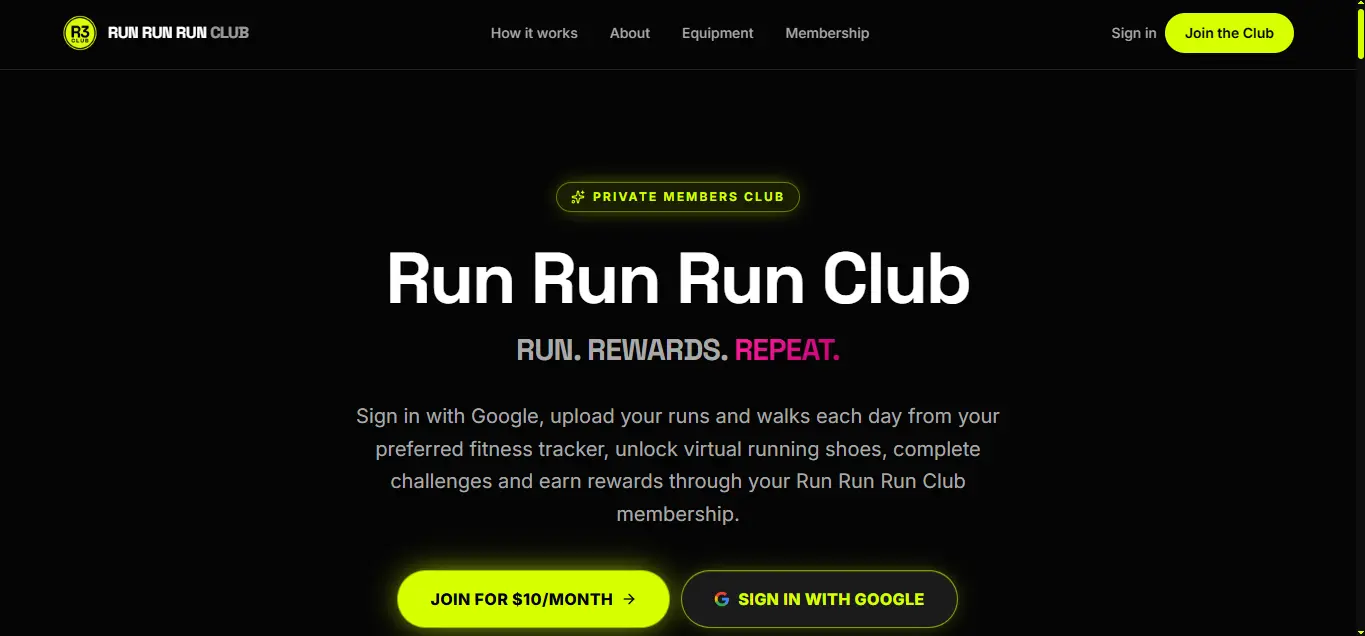
Membership costs $10 per month, paid through PayPal. Users sign in with Google accounts. Daily activity consists of uploading screenshots from any fitness tracker. Each claimed kilometer earns one Run Point.
Members may buy virtual shoes that multiply points. Shoes must be purchased in sequence and last 180 days.
Shoe Tier | Cost | Multiplier | Duration |
Stride One | $50 | 5× | 180 days |
Stride Pro | $100 | 10× | 180 days |
Stride Elite | $300 | 30× | 180 days |
Full stack cost reaches approximately $450. Renewal of higher tiers requires additional payment every six months.
Weekly rewards come from a pool of APTM tokens. The pool is described as APTM mined by the team, APTM from DAO Minerbot NFTs and APTM purchased by the team. Distribution is proportional to each member’s total Run Points. Amounts are not guaranteed. They change with participation levels, total points in the system, token price and operator decisions.
Referral commissions form a three-level unilevel structure on both membership fees and shoe purchases:
- Level 1: 20 percent
- Level 2: 7 percent
- Level 3: 3 percent
Total commission exposure equals 30 percent of those revenues. No other products are sold to outside customers.
1.2 Why the Numbers Do Not Hold
Consider a realistic active member who logs 20 km per day. Without a multiplier that person earns 20 points daily. With the 30× Elite shoe the total rises to 600 points daily. Over 180 days the multiplied total reaches about 108,000 points.
Rewards form a fixed weekly pool shared among all points. The only clear cash sources are new memberships and shoe purchases. If many members hold high multipliers, the pool must grow continuously to maintain attractive payouts. Early participants who recruit heavily can withdraw more than they paid. Later participants supply those withdrawals. When recruitment slows or the APTM price falls, distributions shrink.
APTM has already declined roughly 96 percent from its earlier peak near $2.43. Current prices hover near 0.08–0.09. Token-based rewards therefore lose real value even if the number of tokens stays constant. Selling pressure from members cashing out adds further downward force.
A simple break-even check shows the pressure. Suppose average members expect returns that cover the $450 shoe stack at rates common in promotional material. The system then requires steady new capital inflows far larger than existing membership fees alone can supply. Without external revenue from genuine product sales, the model depends on perpetual growth. That pattern matches classic pyramid dynamics rather than sustainable business cash flow.
Part 2: Comparison with Ordinary Investments
Legitimate options produce far lower but verifiable returns:
Investment Type | Typical Annual Return |
High-yield savings | 4–5 percent |
Bank savings average | under 1 percent |
Long-term real estate | mid-single to low teens after costs |
Major crypto staking | 2–15 percent depending on asset |
The platform’s multiplier structure implies effective rates many times higher for heavy users. No audited reserves or independent revenue stream supports those levels. Running screenshots create almost no external economic value and can be inflated. The combination fails basic cash-flow tests used by regulators when applying the Howey test for investment contracts.
2.1 Additional Risk Factors
- Ownership stays anonymous.
- Activity relies on easily faked screenshots.
- Rewards depend on an operator-controlled token with limited liquidity.
- Support contact is limited to an email address.
- Domain age is only a few months.
- Public traffic data remains minimal.
- Prior schemes under the same network of individuals repeatedly faced enforcement actions.
Social promotion appears concentrated inside existing Apertum and related networks rather than organic running communities. Independent coverage is dominated by critical reviews from BehindMLM and BE Conflict Management.
Practical Recommendations
Anyone considering the platform should treat every dollar spent as money at high risk of total loss. Document all payments. Contact PayPal promptly if a dispute becomes necessary. Report solicitations to local securities regulators. Do not recruit others.
Future patterns seen in earlier reboots suggest early promotional payouts may occur, followed by declining distributions, token price pressure and eventual rebranding once growth slows.
Run Run Run Club Review
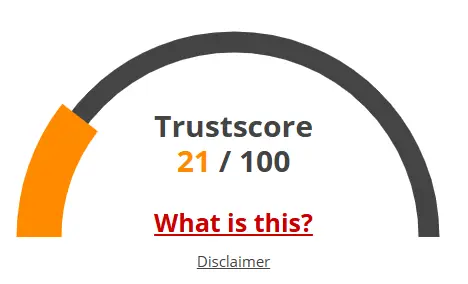
A website’s trust score is an important indicator of its Run Run Run Club icludes low web traffic, negative user feedback, potential phishing risks, undisclosed ownership, unclear hosting details, and weak SSL encryption.
With such a poor trust score, the likelihood of fraud, data breaches, or other security issues is much higher. It is crucial to carefully assess these warning signs before engaging with Run Run Run Club Similar platform.
Positive Highlights
- We found a valid SSL certificate
- DNSFilter labels this site as safe
Negative Highlights
- The Tranco rank (how much traffic) is rather low.
- The age of this site is (very) young.
Frequently Asked Questions About Run Run Run Club
This section answers key questions about Run Run Run Club concerns, and highlights issues related to the platform’s legitimacy.
Run Run Run Club is a platform offering token rewards, memberships, and referral incentives.
Users should review its ownership, revenue model, transparency, and risks before investing.
It rewards referrals, team growth, and other qualifying activities.
Risks include token volatility, limited transparency, and dependence on recruitment.
An Everstead Review can highlight factors such as transparency, compensation, and sustainability.
Other Infromation:
WHOIS data : Hidden
Owner : REDACTED FOR PRIVACY
Country: DE
WHOIS Registration Date :2026-07-28
WHOIS Last Update:2026-09-26
WHOIS Renew Date:2027-07-28
Website:Run Run Run Club
Title :Run Run Run Club
Reviews:
There are no reviews yet. Be the first one to write one.