
PoolPays Review: An In-Depth Look at the Arbitrum Liquidity Platform in 2026
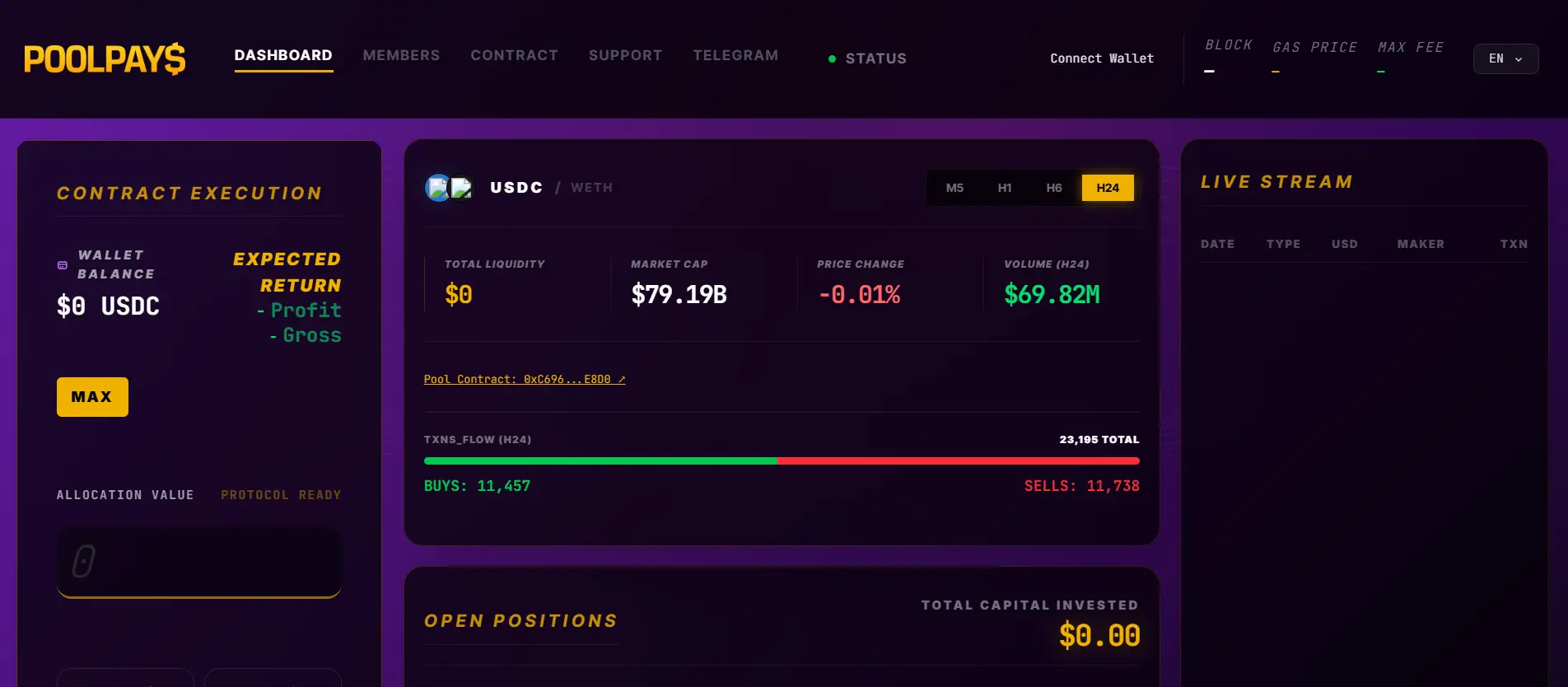
In this PoolPays review, we examine the PoolPays app available at poolpays.app as a decentralized liquidity terminal on Arbitrum. The platform lets users deposit USDC to support online gaming and earn fixed returns through smart contracts. Many people search for PoolPays crypto details before joining. This guide by Scams Radar pulls together clear facts on the compensation plan, owners, and key features in simple language.
The PoolPays app claims to link blockchain, DeFi, and GameFi in one place. Deposits start at about 10 USDC. Users pick investment terms and earn daily. A referral system adds extra income. Yet independent checks raise important questions about long-term safety.

Table of Contents
Part 1: Owners' Profiles and Backgrounds
PoolPays operates under an anonymous DAO of blockchain and DeFi experts. No names, photos, or biographies appear on the site. One marketing deck credits Thiago Malcher for promotion work. He shows no public company ties or past projects in official records.
Domain records stay hidden. The poolpays.app site was registered in September 2025 through a private service in Spain. A mirror site uses similar privacy settings in the Netherlands. No company address, registration number, or legal entity shows up in public searches.
Technical data reveals two key wallets with control rights. One deployer address and one operator wallet hold special permissions, such as fund withdrawal options. These details do not match the “no owners” marketing message. Some promoter networks link to figures active in other high-yield programs, but no direct proof ties them here.
This lack of clear leadership stands out in any PoolPays review. Legitimate projects usually list team members and legal details for trust.
1.1 The Complete Compensation Plan
PoolPays splits earnings into passive returns and active referral income. All payments run automatically on Arbitrum. Users need at least 100 USDC in their own wallet to unlock full affiliate features.
1.2 Passive ROI Plans
Users choose locked terms for fixed growth. Capital plus profit returns to the wallet at the end. Early withdrawal carries a 13.5 percent penalty.
Here is the full breakdown:
Plan Length | Total Return | Daily Rate Equivalent | Minimum Deposit |
1 day | 0.5% | 0.5% | 10 USDC |
5 days | 3% | 0.6% | 10 USDC |
10 days | 7% | 0.7% | 10 USDC |
20 days | 18% | 0.9% | 10 USDC |
The longest plan offers the highest daily rate. Profits come from claimed game fees and Uniswap V3 liquidity shares. The site shows on-chain pools and renounced contracts for some parts.
1.3 Active Referral Program
The 20-level unilevel structure pays commissions on downline earnings. No product sales exist — income ties directly to new deposits.
Commission rates break down as follows:
- Level 1: 20%
- Level 2: 8%
- Level 3: 3%
- Levels 4 to 17: around 2% each
- Level 18: 3%
- Level 19: 5%
- Level 20: 8%
Total override can reach 67 to 75 percent of each user’s profit. Higher personal deposits and more recruits unlock deeper levels. All commissions flow through smart contracts without manual approval.
This setup forms the core of PoolPays passive income and affiliate commissions. New users often join with a sponsor link to start earning faster.
Part 2: Visual Breakdown of Returns
The chart above compares annualized yields. PoolPays top plan reaches over 2,500 percent when compounded. Real benchmarks stay far lower: legitimate crypto staking tops 20 percent, bank savings sit at 5 percent, and real estate averages 8 percent.
The second chart tracks $1,000 growth over one year. The red line shows the fastest PoolPays pace. The blue line follows a safe 20 percent annual rate. The gap widens quickly after just a few months.
These visuals make the difference easy to see for everyday readers.
2.1 Why the Math Raises Questions
Users can deposit via USDT or local PIX transfers. The game markets itself as free, yet buying miners often requires rea
Simple compound formulas explain the challenge. At 0.9 percent daily, one thousand dollars grows to more than twenty-five thousand dollars in 365 days. The formula looks like this in basic terms:
Final amount = Principal × (1 + daily rate)^365
No low-risk source — gaming fees, Uniswap shares, or partner revenue — can match this scale for thousands of users. Real DeFi pools on Arbitrum deliver single-digit or low double-digit yields at best. To cover every payout, the system needs steady new capital each day. When recruitment slows, payouts become harder to meet.
l funds. Withdrawal limits and times never appear publicly. Promoters share proof images, but no large verified payouts show up on independent sites.
2.2 Public Perception and Safety Checks
Traffic data shows modest daily visitors. Scam-checking tools give mixed but mostly cautious scores. One major scanner lists a very low trust rating and flags high-risk crypto activity. Others note the young domain and hidden owner as concerns.
Social promotion relies on referral accounts and video content. Some channels also push similar programs. Support runs through Telegram and Discord groups with no verified company email.
Payments use only USDC on Arbitrum. Wallet connection works with MetaMask or TokenPocket. Gas fees apply, and transactions stay irreversible.
Security includes a valid SSL certificate. Smart contracts sit on Arbiscan with some renounced parts. Yet full independent audits remain unconfirmed in public records. Dashboard liquidity numbers sometimes show zero activity in certain views.
Key Points to Consider
- Anonymous structure with no public leadership
- Pre-launch claims of eighty million dollars were made before the domain existed
- Fixed daily rates far above market norms
- Deep referral focus over actual product use
- Early withdrawal fees and crypto-only payments
- Low external traffic compared with claimed user numbers
PoolPays Arbitrum investment appeals to those seeking quick growth. Yet the combination of high fixed returns and heavy recruitment matches patterns seen in other short-lived platforms.
Final Thoughts on PoolPays Review
This PoolPays review highlights both the claimed benefits and the practical limits. The compensation plan offers clear daily ROI options and a structured 20-level referral system. Owners stay fully anonymous, and returns depend on continuous inflows.
Anyone thinking about PoolPays USDC deposit or PoolPays smart contract use should check wallet addresses, test small amounts, and track withdrawal proof personally. Compare numbers with regulated options first.
Cryptocurrency carries full loss risk. Read every term, verify on-chain data, and invest only what you can afford to lose. Informed choices protect your funds better than any promise.
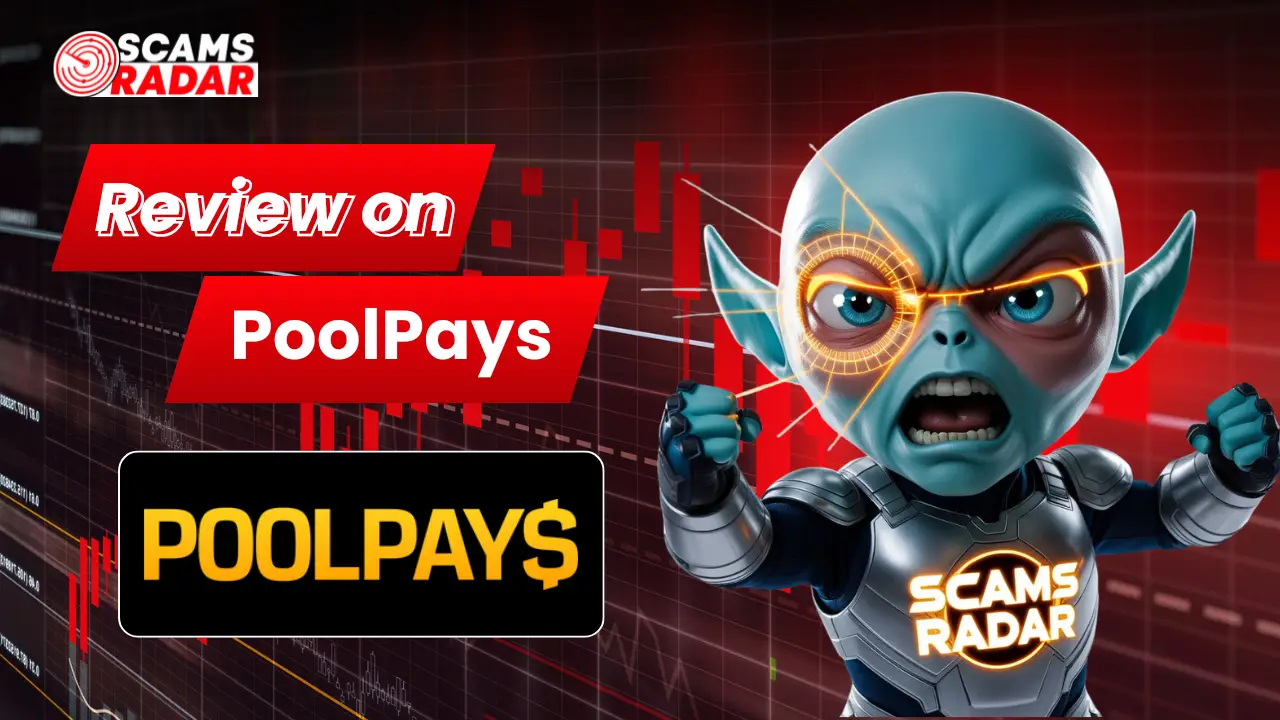
PoolPays Review Score
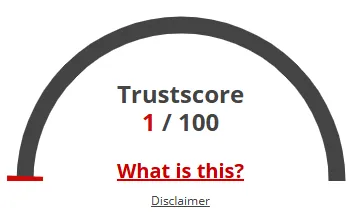
A website’s trust score is an important indicator of its reliability. PoolPays includes low web traffic, negative user feedback, potential phishing risks, undisclosed ownership, unclear hosting details, and weak SSL encryption.
With such a poor trust score, the likelihood of fraud, data breaches, or other security issues is much higher. It is crucial to carefully assess these warning signs before engaging with a PoolPays or similar platform.
Positive Highlights
- We found a valid SSL certificate
- DNSFilter labels this site as safe
Negative Highlights
- The Tranco rank (how much traffic) is rather low.
- The age of this site is (very) young.
Frequently Asked Questions PoolPays Review
This section answers key questions about PoolPays , clarifies points, addresses concerns, and highlights issues related to the platform’s legitimacy.
Options range from 0.5 percent for one day up to 0.9 percent daily equivalent for twenty days.
Users lock USDC for a set number of days and receive a fixed percentage growth sent straight to their wallet.
Options range from 0.5 percent for one day up to 0.9 percent daily equivalent for twenty days.
The structure relies heavily on new deposits and recruitment. Independent math shows returns exceed sustainable revenue sources.
Connect a wallet, choose a plan, deposit USDC on Arbitrum, and confirm the transaction.
Other Infromation:
WHOIS Last Update Date: N/A
Reviews:
There are no reviews yet. Be the first one to write one.