
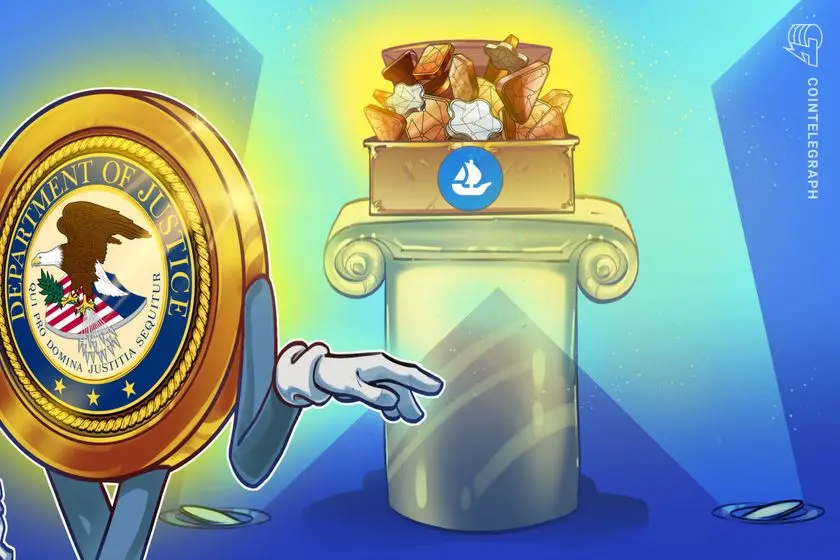
On August 21, 2025, federal prosecutors in Manhattan announced they would not retry the landmark insider trading case against former OpenSea product manager Nathaniel Chastain.
Instead, they entered a deferred prosecution agreement (DPA) with Chastain, under which all charges will be dismissed in one month, per Cointelegraph and court filings.
Key terms of the agreement:
US Attorney Jay Clayton stated in the filing:
“The interest of the United States will be best served by deferring prosecution of this matter and not retrying the case.”
In July 2025, the Second Circuit Court of Appeals vacated Chastain’s 2023 conviction on wire fraud and money laundering charges.
The court ruled that the trial judge gave flawed jury instructions and that non-commercial NFT homepage data does not qualify as “property” under federal wire fraud statutes.
Chastain had been accused of buying NFTs shortly before they were featured on OpenSea’s homepage (using confidential information) and selling them for profit after the visibility bump.
The appeals court found the government’s legal theory did not hold.
This was the first-ever insider trading prosecution involving NFTs in U.S. history.
The dismissal adds to a growing list of crypto-related cases dropped or softened under the Trump administration, which has pledged to reduce regulatory enforcement in the digital-asset space.
Previous examples include relaxed IRS rules on decentralized platforms and a more hands-off DOJ approach to certain enforcement actions.
Crypto advocates frequently cite the OpenSea reversal when arguing for clearer legislation on how digital assets fit within existing securities and fraud laws.
The OpenSea case is now effectively closed after nearly three years of litigation.
It serves as a reminder that novel legal theories in crypto enforcement can be overturned when they stretch existing statutes too far.