
Massifly Review 2026: High-Risk Advertising Platform with Complex Matrix Rewards
Massifly Review shows a young advertising and rewards platform launched in late 2025. It mixes traffic tools with multi-level matrices, cashback, and referral bonuses. Users buy packs for visitors and impressions while accessing earning structures. This Massifly Review examines ownership, the full compensation plan, and sustainability questions in plain language. Scams radar

Part : 1 What Massifly Offers
Table of Contents
Massifly calls itself an all-in-one digital growth system. It provides banner ads, text ads, feed ads, viral links, surf-to-earn activity, and community features. Free joining is available. Paid options include:
- Momentum Mini Pack at $1.99 for about 500 visitors and basic cashback entry.
- Massiflow Pack at $14.95 per month for more visitors, impressions, and recurring features.
- Bundle Advertising Package at $49 for 3,000 visitors, tens of thousands of impressions, lifetime slots, and access to multiple cashback plans.
Payments use cryptocurrency only through a third-party processor. Minimum withdrawals start low for most coins. The site states purchases buy advertising services, not investments. Large earning figures are theoretical and depend on full system growth.
Self-reported numbers have grown over time. Recent figures mention thousands of members, millions of impressions and visits delivered, and tens of thousands of dollars in cashback paid. Independent ranking tools show limited external visibility. Most activity appears internal.
1.1 Ownership and Background Details

Public records list the domain registered on 14 December 2025 through Namecheap with privacy protection from an Iceland-based service. Hosting sits behind Cloudflare. No clear company registration, physical address, founder name, CEO, or beneficial owner appears in public materials. Mentions of names such as “Alex” and “Hana” in testimonials lack independent verification or professional profiles linked to the platform.
One active promoter is Jaime Soriano. He maintains a long background in sales and network marketing. Records associate him with Primerica (Regional Vice President period ending around 2006), Powerbuilders, and My Lead System Pro as a leader. He has promoted home-based businesses, lead generation, and multiple income streams for years. His channels focus on crypto and passive-income opportunities and include direct Massifly referral links. No reliable court or government source establishes a Ponzi conviction or relevant financial crime conviction for this individual. Multiple people share the same name, so unrelated records cannot be linked without stronger matching.
The combination of a very young domain, privacy-protected ownership, and limited management disclosure creates the main transparency gap. Domain privacy itself is common and does not prove wrongdoing. The issue arises when it pairs with large theoretical compensation claims.
1.2 Complete Compensation Plan Explained Simply
Massifly uses a hybrid system rather than a pure binary or unilevel plan. Core parts include direct referral commissions, pair matching, forced matrices, cycle matrices, global auto-fill, spillover, referral surfing, cashback, recurring commissions, and multiple positions per purchase.
Key structures promoted in materials include:
- 1×3 Cycle Matrix: payments per completed cycle plus matching, with re-entry options.
- 3×8 Forced Matrix: three wide and eight deep. A full tree holds roughly 9,841 positions including the starting one.
- 2×21 Forced Matrix: theoretical figures around $246,000+ once filled. A complete two-wide tree to 21 levels holds over 4 million positions.
- Flow 2×15 Matrix: tied to the monthly pack with spillover.
- Global Auto-Fill versions (1×10, 2×10, 3×10, 5×10): the widest 5×10 structure is linked to a theoretical figure near $5.49 million.
A full 5×10 matrix contains about 12.2 million positions. If every position required a $49 qualifying package, gross package value would approach $598 million before any costs. That number is pure matrix math. It does not equal money the company receives or profit available for payouts.
Referral commissions appear around 10 percent on some packs or fixed amounts such as $5 on the Bundle. Pair matching pays small amounts per qualifying pair. Surfing rewards have been described near $0.001 every eight seconds of qualifying activity (roughly $0.45 per continuous hour under ideal conditions). Cashback and matrix payouts can stack with multiple positions.
Spillover and auto-fill place people without personal recruiting in some cases. Re-entry and extra positions let one person occupy several spots. These features change placement and distribution. They do not create new external money.
Part : 2 Why the Numbers Raise Sustainability Questions
The platform has stated it aims to return a high percentage of package revenue to members. Remaining funds must cover real traffic delivery, hosting, processing, support, and any profit. Internal member surfing produces lower-value visits than paid external traffic.
Simple comparison of typical annual returns:
Source | Typical Annual Range | Notes |
Traditional bank / savings | 0.01% – 5% | Low risk, regulated |
Real estate rental yields | 4% – 12% | Asset-backed, variable costs |
Broad stock market (historical) | ~8% – 10% | Long-term average |
Major crypto staking / rewards | 2% – 15% | Market and platform risk |
Massifly theoretical max | Extreme multiples via matrices | Depends on full network fill |
A 5×10 structure requires enormous future participation. Theoretical maximums are mathematically possible under perfect fill assumptions. They are not ordinary returns on a $49 purchase. Massifly’s own terms describe the largest figures as maximum theoretical amounts dependent on system-wide activity.
2.1 Trust Scores, Public View, and Red Flags
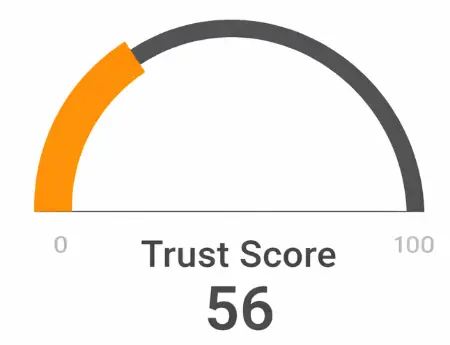
Automated tools have given low-to-moderate scores (commonly in the 25–40 range) and noted the young domain, hidden ownership, and crypto focus. Some engines report clean malware results. Trustpilot shows a small number of mixed reviews, including reports of small successful withdrawals and at least one scam claim. Volume is too low for firm conclusions.
Main concerns collected from public data:
- Extremely young domain with privacy-protected ownership.
- Heavy matrix, spillover, re-entry, and multi-position design.
- Large theoretical earnings that require continuous growth.
- Crypto-only payments (generally irreversible).
- Self-reported statistics that are hard to audit independently.
- Limited external verification of ownership or audited finances.
Positive operational points include a working site, valid basic SSL, third-party payment processing, live chat, FAQ sections, and some reported small payouts.
2.2 Practical Guidance for Users
Treat any money spent as the cost of testing advertising tools, not as capital expected to grow. Start free or with the lowest pack if testing. Avoid recruiting friends or family under income promises. Track withdrawals closely. Prefer established advertising networks or regulated products for serious capital.
The platform can continue short-term activity while new members join. Longer-term pressure rises if recruitment or package sales slow while payout obligations remain. Terms allow changes to rewards and features.
Conclusion
This Massifly Review finds a working advertising platform wrapped in an extensive hybrid matrix and cashback system. Ownership stays opaque. Theoretical earnings reach multi-million figures through deep matrices that demand massive future activity. Small withdrawals have occurred for some users. Independent financial statements showing how external advertising revenue covers all payouts are not publicly available.
Approach Massifly as a high-risk experiment in traffic and network rewards. Verify current terms, never send more than you can lose, and compare returns against ordinary regulated options. Further transparency on legal entity, beneficial owners, and audited unit economics would allow a clearer long-term view.
Massifly view
A website’s trust score is an important indicator of its Massiflyincludes low web traffic, negative user feedback, potential phishing risks, undisclosed ownership, unclear hosting details, and weak SSL encryption.
With such a poor trust score, the likelihood of fraud, data breaches, or other security issues is much higher. It is crucial to carefully assess these warning signs before engaging with a Massifly ..Similar platform.
Positive Highlights
- We found a valid SSL certificate
- DNSFilter labels this site as safe
Negative Highlights
- The Tranco rank (how much traffic) is rather low.
- The age of this site is (very) young.
Frequently Asked Questions About Massifly
This section answers key questions aboutMassifly clarifies points, addresses concerns, and highlights issues related to the platform’s legitimacy.
Other Infromation:
Massifly is an online earning and investment platform with referral-based opportunities.
Its legitimacy requires careful due diligence, especially regarding returns and transparency.
It uses referral-based rewards and other network marketing incentives.
Key risks include high ROI claims, withdrawal issues, and limited transparency.
Compare ownership, returns, withdrawal policies, and referral structures.
WHOIS data : Hidden
Owner : REDACTED FOR PRIVACY
Country: IS
WHOIS Registration Date2024-12-19
WHOIS Last Update:2025-12-18
WHOIS Renew Date:2026-12-19
Website:Massifly
Title:Massifly
Reviews:
There are no reviews yet. Be the first one to write one.