Invorium Review: Ownership, Compensation Plan, Background and Risk Analysis 2026
This invoriumReview examines the ownership structure, promoter compensation details, claimed investment model and overall risk profile of the platform based on publicly available information from independent analyses and company statements. The review focuses on facts about registration, leadership transparency, the full compensation plan and mathematical sustainability so readers can form their own view.
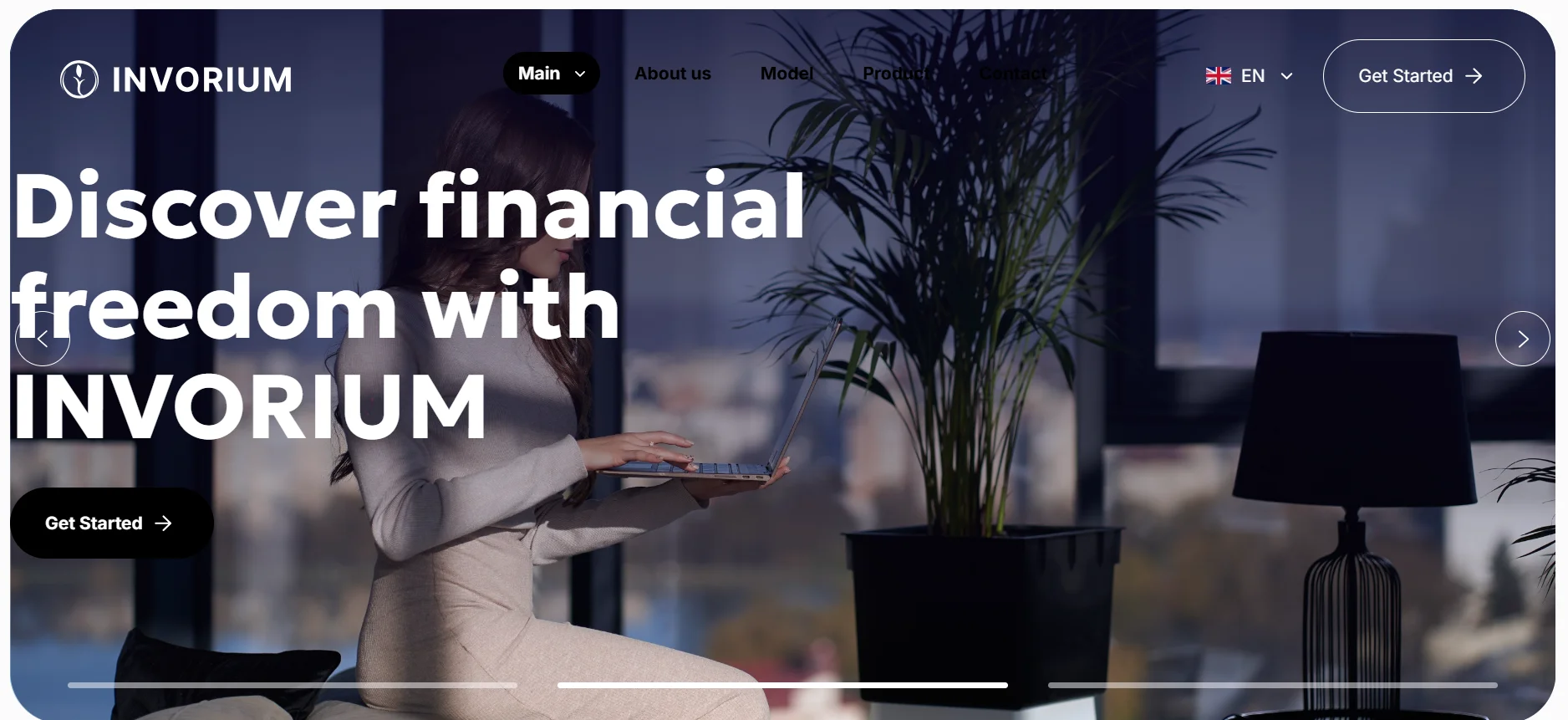
Invorium presents itself as a CeDeFi platform that links investor capital to trading and arbitrage firms through deposit and credit protocols. Company materials describe a flow in which funds enter CeDeFi deposits, move as credit to trading businesses and generate profits that are then shared. Deposit terms of 6, 9, 12, 18 and 24 months are mentioned, with longer periods linked to higher expected yields. An annual subscription is required for participation. The platform also runs a P2B Partner Network for promoters.Scamsradar
Part : 1 Ownership and Corporate Structure
Table of Contents
Public records show the domain was privately registered in October 2025 via Unstoppable Domains with WHOIS privacy protection. The company identifies itself as Invorium LLC, document number 4382 LLC 2026, registered in Saint Vincent and the Grenadines. That jurisdiction is commonly used by offshore financial projects and offers limited investor protections compared with major regulated markets.
No verifiable founders, full board list, physical office address or audited financial statements appear in independent records. The most visible public figure is Marc Ferrer, presented as Chief Marketing Officer. Some earlier materials used the spelling “Merc Ferrer.” A professional profile linked to Marc Ferrer lists prior roles in digital strategy and marketing with FTMO and as Director of European Expansion & Business Development at Apex Trader Funding. Searches for criminal convictions, Ponzi findings or proven fraud linked to this individual returned no reliable court or regulator records. At the same time, the ultimate beneficial owners and complete control structure remain undisclosed. This lack of clear ownership transparency is a recurring point in independent reviews.
1.1 Invorium Compensation Plan and Business Model
Independent analysis of the promoter side reports an annual membership fee of $49.99. Commissions are paid on recruitment of new promoters who pay the same fee. The structure is a five-level unilevel plan.
Key elements include:
- 20 percent direct commission on each personally recruited promoter’s fee (approximately $10 per direct recruit).
- Residual commissions across five levels that rise with rank.
- Monthly volume bonuses ranging from 5 percent to 20 percent based on downline fee volume.
- Rank-achievement bonuses reported between $1,000 and $10,000.
1.2 Reported Rank Structure
Rank | Approximate Downline Fee Volume | Reported Rank Bonus |
Explorer | Sign-up | None listed |
Builder | $100,000 | $1,000 |
Leader | $500,000 | $5,000 |
Legend | $1,000,000 | $10,000 |
Ambassador | $1,500,000 | Not disclosed |
Part : 2 Reported Residual Percentages by Rank
Rank | Level 1 | Level 2 | Level 3 | Level 4 | Level 5 |
Explorer | 8% | 7% | 6% | 5% | 3% |
Builder | 9% | 8% | 7% | 6% | 4% |
Leader | 10% | 9% | 8% | 7% | 5% |
Legend | 12% | 10% | 9% | 8% | 6% |
Combining the 20 percent direct commission with residuals produces theoretical allocations of roughly 49 percent at Explorer level rising to about 65 percent at Legend level of each $49.99 fee. Monthly volume bonuses add another layer: 5 percent at $100,000 volume, 10 percent at $250,000, 15 percent at $500,000 and 20 percent at $1,000,000.
No conventional retail product independent of the membership fee is described in the independent compensation reviews. Revenue on the promoter side therefore depends on continuous recruitment of new fee-paying members. When recruitment slows, residual income declines. This is the classic mathematical profile of a recruitment-driven plan.
2.1 Yield Claims and Mathematical Context
Company and promotional materials reference expected monthly yields in the approximate 7.5–11.9 percent range depending on protocol and term, with daily accrual and the option for weekly yield withdrawals. Principal is described as returned at the end of the fixed term, subject to fees.
Compounding examples show why such rates attract scrutiny. An 8 percent monthly rate compounds to roughly 151 percent annualized. A 10 percent monthly rate compounds to about 214 percent annualized. Real-world benchmarks for comparison include bank savings and high-yield accounts typically under 5 percent APY, diversified real-estate net yields often in the 5–12 percent annual range, and established crypto lending or staking products commonly in the 2–15 percent APY range. Sustained double-digit monthly returns require either exceptional consistent trading alpha or continuous new capital inflows.
Traffic estimates from third-party sources remain low (around 180 monthly visits in available snapshots). Social channels show modest followings. Automated reputation services have assigned low trust scores, including Gridinsoft figures around 10/100 and ScamAdviser scores near zero. Trustpilot currently displays a small number of positive reviews that are statistically limited.
2.2 Key Risk Indicators
- Hidden beneficial ownership and limited executive disclosure.
- Recruitment-focused compensation with no clear independent retail product.
- High claimed monthly yields that exceed typical market returns by a wide margin.
- Offshore registration in a low-oversight jurisdiction.
- Young domain age and sparse organic traffic.
- Absence of publicly verified smart-contract audits, proof-of-reserves or third-party financial audits.
Conclusion
This invoriumReview shows a young CeDeFi-style platform that combines deposit protocols with a multi-level promoter network. Ownership transparency is limited, the compensation plan is recruitment-heavy, and the advertised monthly yields sit far above ordinary market rates. No court finding of fraud was located in the reviewed sources, yet the combination of factors warrants careful due diligence. Readers focused on capital preservation are generally better served by regulated, audited vehicles until clearer independent verification of trading profits, reserves and ownership becomes available.
Invorium Review
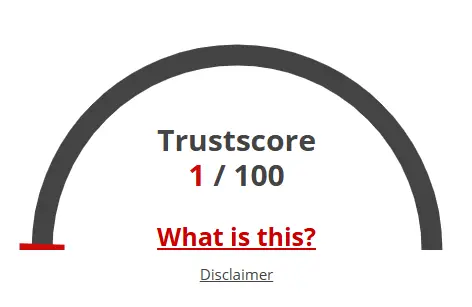
A website’s trust score is an important indicator of its Invorium icludes low web traffic, negative user feedback, potential phishing risks, undisclosed ownership, unclear hosting details, and weak SSL encryption.
With such a poor trust score, the likelihood of fraud, data breaches, or other security issues is much higher. It is crucial to carefully assess these warning signs before engaging with Invorium Similar platform.
Positive Highlights
- We found a valid SSL certificate
- DNSFilter labels this site as safe
Negative Highlights
- The Tranco rank (how much traffic) is rather low.
- The age of this site is (very) young.
Frequently Asked Questions About Invorium
This section answers key questions about Invorium concerns, and highlights issues related to the platform’s legitimacy.
Invorium’s legitimacy should be assessed through its ownership, business model, regulatory status, payment history, and independently verifiable financial information.
Invorium promotes a network-based compensation structure, so investors should carefully review its income sources, commissions, referral requirements, and payout conditions.
Potential risks include unclear ownership, unverifiable revenue claims, high-return promises, withdrawal issues, and dependence on new participant funds.
Very high or consistently fixed returns can become mathematically difficult to sustain because the required capital growth increases rapidly through compounding.
No. Everstead Review is a separate keyword and should not be treated as evidence of Invorium’s legitimacy, ownership, or investment performance.
Other Infromation:
WHOIS data : Hidden
Owner : REDACTED FOR PRIVACY
Country: US
WHOIS Registration Date :2025-10-21
WHOIS Last Update:2026-02-03
WHOIS Renew Date:2028-10-21
Website: Invorium
Title :Invorium
Reviews:
There are no reviews yet. Be the first one to write one.