
HedgerX Review: Ownership Backgrounds, Full Compensation Plan and Investor Risks
This hedgerxReview examines the platform’s ownership structure, detailed compensation mechanics, and overall risk profile using publicly available information. Readers seeking clarity on HedgerX exchange features, fees, security claims, and legitimacy will find the key facts presented in plain language.
HedgerX markets itself as a cryptocurrency exchange with spot trading, perpetual futures, AI tools, the HEX token, HX Node offerings, and related PayFi features. Multiple reviews highlight ownership opacity, mixed corporate entities, and ecosystem elements that include participation packages and rank-based rewards. The goal here is to present the compensation plan and ownership details clearly so everyday readers can judge the setup for themselves. Scams radar
Part 1: Ownership and Corporate Structure
Table of Contents
No public profiles of founders, CEOs, or named directors appear in verifiable records. The domain was registered in February 2020 with privacy protection. Different sources list these entities:
- HedgerX Inc. (referenced in some app-store and help-center materials, with a claimed FinCEN MSB registration)
- Core Parts Ltd (British Virgin Islands address listed as Google Play developer)
- HedgerX Exchange Malaysia Sdn. Bhd. (named in certain user agreements)
These names surface in different places without clear public links showing common directors, beneficial owners, or audited financial ties. App-store developer details do not always match website legal notices. Physical office claims across regions lack independent confirmation. FinCEN MSB status is a self-registration process; it is not a license, endorsement, or guarantee of safety. Independent checks of Korean FSC or similar claims have not produced matching public records in the materials reviewed.
This lack of transparent leadership profiles and consistent corporate registration is a core point raised across independent analyses. Readers should treat ownership details as unresolved until primary registry documents confirm the chain of control.
1.1 Complete Compensation Plan Breakdown
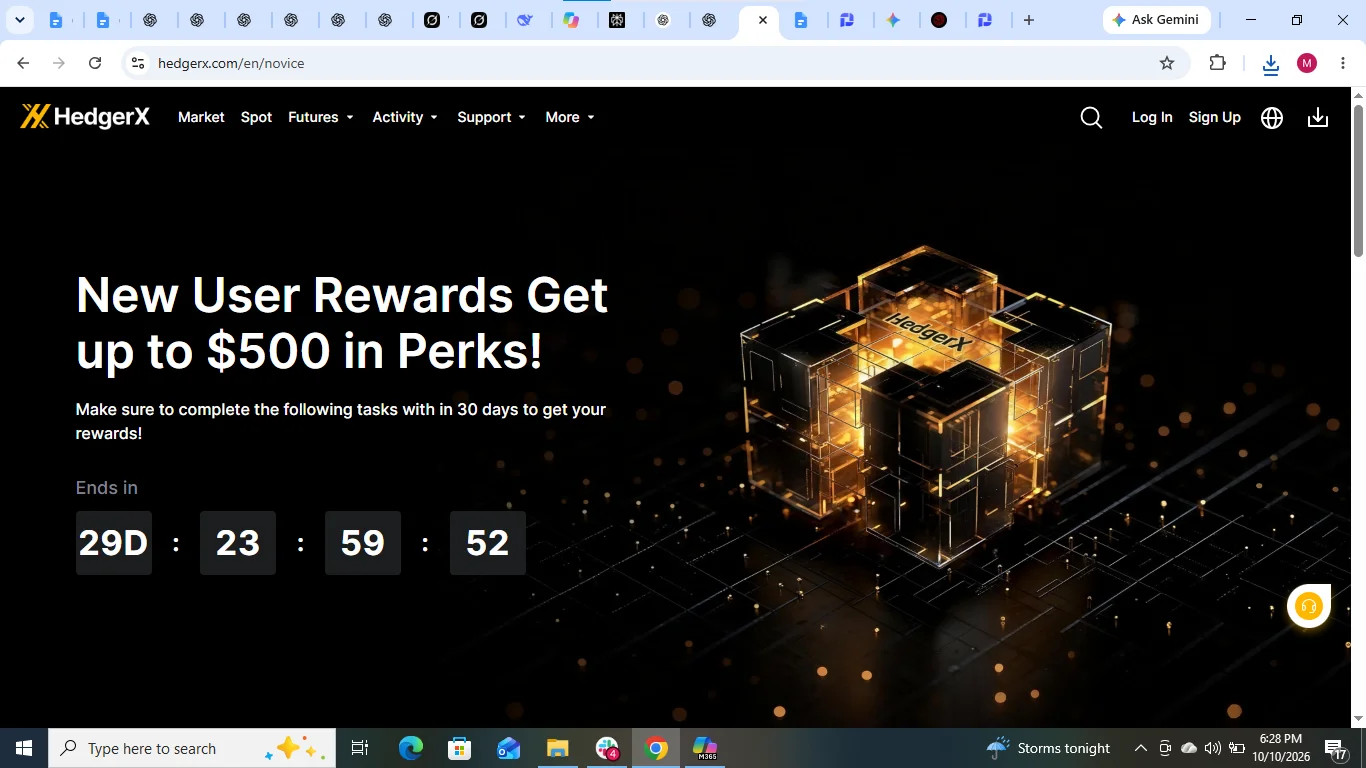
The exchange side offers standard trading products. The broader ecosystem materials (linked in third-party discussions of nodes, packages, and HedgerXGlobal-style offerings) describe participation packages, daily benefits, HEX distributions, and multi-tier affiliate rewards. Exact current terms should always be checked against official documents, as marketing can change.
1.2 Package and daily-benefit structure
Participation packages are denominated in USDT. Advertised daily benefit rates in reviewed materials fall in the 0.4 %–0.7 % range on eligible amounts, with distributions often described as 50 % USDT and 50 % HEX. An accumulated-benefit ceiling of five times the original participation amount is commonly cited.
Simple annualised equivalents of the daily rates (without compounding) illustrate the scale:
- 0.4 % daily ≈ 146 % per year
- 0.5 % daily ≈ 182.5 % per year
- 0.7 % daily ≈ 255.5 % per year
Example on a 1 000 USDT package at 0.7 % daily: 7 USDT per day. Reaching a 5× ceiling would take roughly 715 days if the rate stayed constant and applied to the original amount. Compounding at 0.7 % daily would produce a much higher theoretical multiplier, but the 5× cap limits total benefits.
Affiliate and rank system
Direct referral commissions are reported in ranges tied to career ranks (A0–A13). Approximate published rates include:
- A0–A4: around 3 %
- A5–A7: around 5 %
- A8–A9: around 8 %
- A10–A12: around 10 %
- A13: up to 20 %
Rank-differential rewards allow higher-ranked participants to earn the difference between their rate and a downline’s rate. Same-rank rewards appear at additional percentages for certain levels (for example 2 %–20 % depending on rank). These mechanisms create a multi-level structure. Exact placement rules (binary, unilevel, matrix, or hybrid), qualification volume, and payout bases require the full official plan for confirmation.
Node or package sales also reference platform commissions, PayFi activity, and redistribution of a portion of liquidated traders’ losses in some descriptions. This last element means node holders can benefit when other users lose money on the platform.
Part 2: Mathematical sustainability check
High daily rates create large payment obligations. Suppose total eligible participation capital reaches several million USDT. Even modest daily rates generate annual obligations that exceed typical sustainable yields from trading fees or modest staking on major networks (usually single-digit to low-double-digit APY).
For illustration, 1 % daily compounded grows a 1 000 USDT deposit by a factor of roughly 37.8 in one year. Two percent daily produces a far larger multiplier. Real-world benchmarks for comparison:
- Bank savings: often under 5 %
- Broad equity indexes: historical long-term averages around 7–10 %
- Established crypto staking: commonly 3–15 % APY with clear risks
When promised benefits exceed what platform fees and verified external revenue can support, new participant inflows become necessary to keep payments flowing. That dynamic is a well-documented risk factor in higher-yield crypto ecosystems.
2.1 Fees, Security Claims and Operational Details
Public materials discuss trading fees, deposit/withdrawal processes (primarily crypto, with network confirmation times), KYC requirements, and claimed security features such as high cold-storage percentages and multi-layer monitoring. Independent third-party proof-of-reserves reports, SOC audits, or penetration-test summaries are not prominently verified in the reviewed sources. Withdrawal experiences reported on third-party sites range from routine processing to delays or additional verification requests. Support channels include help centers and ticket systems; response quality varies according to user reports.
Mobile apps exist on major stores under the developer names noted earlier. Download and rating volumes remain modest relative to claims of global scale.
2.2 Public Perception and Risk Indicators
Independent review sites assign low scores or flag concerns around ownership opacity, regulatory claims, and withdrawal complaints. Traffic metrics and app-download figures appear limited compared with major regulated exchanges. Social channels and affiliate promoters exist, often focusing on packages, ranks, and referral links. Domain age provides history but does not by itself prove current operational soundness.
Comparison Table of Return Benchmarks
Investment Type | Typical Annual Range | Risk Profile |
Savings / bank deposits | 0.5–5 % | Low, often insured |
Broad equity index | 7–10 % historical | Moderate |
Established crypto staking | 3–15 % | High, variable |
HedgerX-style daily packages | 146–255 %+ simple | Extreme, unverified |
Practical Recommendations
Prospective users should verify the exact legal entity, current FinCEN or other registry entries, full compensation plan documents, and independent financial statements before depositing. Test small withdrawals early if already involved. Avoid additional payments requested solely to “unlock” existing balances. Prefer platforms that publish clear ownership, audited reserves, and conservative product disclosures.
HedgerX Review
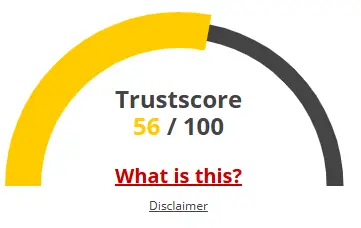
A website’s trust score is an important indicator of its HedgerX icludes low web traffic, negative user feedback, potential phishing risks, undisclosed ownership, unclear hosting details, and weak SSL encryption.
With such a poor trust score, the likelihood of fraud, data breaches, or other security issues is much higher. It is crucial to carefully assess these warning signs before engaging with HedgerX Similar platform.
Positive Highlights
- We found a valid SSL certificate
- DNSFilter labels this site as safe
Negative Highlights
- The Tranco rank (how much traffic) is rather low.
- The age of this site is (very) young.
Frequently Asked Questions About HedgerX
This section answers key questions about HedgerX concerns, and highlights issues related to the platform’s legitimacy.
HedgerX presents itself as a cryptocurrency trading platform offering spot and futures trading.
Verify its regulatory status, ownership, trading activity, and withdrawal policies before investing.
Review its referral commissions, team-building rewards, and payout conditions.
No profits are guaranteed, and cryptocurrency trading carries significant financial risks.
Everstead Review is a separate topic. Research each platform's ownership, legitimacy, and customer feedback independently.
Other Infromation:
WHOIS data : Hidden
Owner : REDACTED FOR PRIVACY
Country: US
WHOIS Registration Date :2020-02-15
WHOIS Last Update:2025-10-20
WHOIS Renew Date:2027-02-15
Website:HedgerX
Title :HedgerX
Reviews:
There are no reviews yet. Be the first one to write one.