Gloture App Review: Ownership, Compensation Structure, and Key Risks
This Gloture app review examines the platform linked to the Gloture name, its claimed earning model, ownership signals, and practical risks for users. The focus stays on the compensation details and background of associated people so readers can judge for themselves.
The Gloture name appears across several entities. One long-standing Japanese company, founded around 2015, works in consumer gadgets, e-commerce, media, and PR. Public records connect it to product sales and marketplace activity. Separate from that, a Washington State corporation named Gloture Corp was filed in November 2024. Kohei Miyake is listed as governor. Domain records for related sites have tied the same name to a Seattle address. An app listing under GLOTURE CO LLC points to a Des Moines, Iowa address and names Yuki Takaya in developer information. Historical Japanese material mentions Chen Junyi in a representative role. These names and companies share branding but lack clear public documents proving they operate as one single legal unit. The operator of the newest earning-focused site remains hard to pin down because ownership details are privacy-protected. Scams radar

Part : 1 Compensation Plan Details
Table of Contents
Promotional material describes a deposit-linked system that mixes tasks, staking claims, and team commissions. Users are directed to place USDT or USDC. Minimums often appear as 30 USDT or 100 USDT depending on the source. Once active, participants complete assigned review or promotional tasks and receive commissions. Staking claims sit on top of that. Some posts list a base near 0.1 percent daily that rises with Level-1 recruits, reaching a stated maximum around 0.35 percent daily. Other promoters quote far higher figures, including 1.8 percent or 2–3 percent daily. Because the numbers conflict, the exact official schedule is not clear from public pages.
Team commissions follow a three-level pattern in the most common descriptions:
- Level 1: 12 percent or, in other posts, 8 percent
- Level 2: 6 percent or 4 percent
- Level 3: 3 percent or 2 percent
Ranks run from Standard through Presidential. Community bonuses rise with rank, reportedly from 0 percent up to 6 percent, calculated on rank differences inside the team. An upline bonus near 2 percent appears after a participant activates roughly nine members. Physical rewards such as phones, laptops, motorcycles, and higher-value vehicles are tied to large numbers of active members and Level-1 recruits. One example linked a top reward to thousands of valid members.
The structure is closest to a limited-depth unilevel referral plan with added rank and recruitment incentives. Evidence does not support calling it a classic binary or fixed-matrix plan.
1.1 Why the Numbers Matter
A 0.35 percent daily rate compounds to roughly 258 percent over a year. A 2 percent daily rate compounds to well over 100,000 percent. Even modest deposits quickly create large theoretical obligations. If the platform held several million dollars in user funds, the daily payout requirement alone would reach tens of thousands of dollars before commissions, bonuses, and operating costs. Task fees from merchants can fund modest reviewer payments. They do not automatically generate the continuous, high returns claimed on deposited capital. No public audited statements show total deposits, external client revenue, staking payouts, referral costs, or reserves.
1.2 Public Signals and Practical Concerns
Related sites show mixed user comments. Some report early small withdrawals and easy tasks. Others describe delays or blocks once larger amounts are requested. Trust scores on third-party checkers vary by domain; newer ones score poorly on age, ownership privacy, and traffic. Payment rails stay crypto-only, which removes traditional chargeback protection. Support channels are listed, yet reports of responsiveness differ. Social promotion relies heavily on referral links, group invites, and team-building language.
Gloture App Review Summary for Everyday Users
Anyone considering the Gloture app or related earning claims should treat the model as high-risk. Ownership of the specific financial platform is not transparent. The compensation plan combines deposits, daily-yield claims, multi-level commissions, and recruitment rewards. Those features create large ongoing liabilities that require proven external revenue far beyond typical merchant review fees. No independent audit currently demonstrates that the money exists to cover all obligations over time.
Compare the advertised figures with ordinary options: regulated savings or money-market accounts usually stay under 5 percent annual, mainstream crypto staking often ranges 3–8 percent, and broad stock or real-estate returns historically sit in the single to low double digits. Returns many times higher need clear, verified proof of how they are earned.
Gloture Review
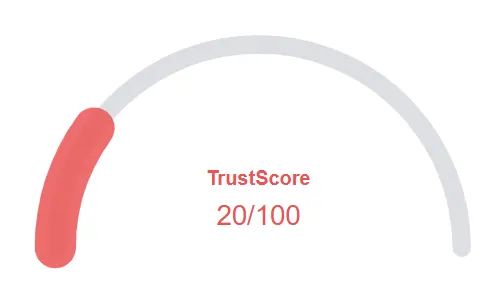
A website’s trust score is an important indicator of its Gloture includes low web traffic, negative user feedback, potential phishing risks, undisclosed ownership, unclear hosting details, and weak SSL encryption.
With such a poor trust score, the likelihood of fraud, data breaches, or other security issues is much higher. It is crucial to carefully assess these warning signs before engaging with a Gloture..Similar platform.
Positive Highlights
- We found a valid SSL certificate
- DNSFilter labels this site as safe
Negative Highlights
- The Tranco rank (how much traffic) is rather low.
- The age of this site is (very) young.
Frequently Asked Questions About Gloture
This section answers key questions about Gloture clarifies points, addresses concerns, and highlights issues related to the platform’s legitimacy.
Gloture App has several red flags, so caution is advised.
It uses an investment and referral-based model.
Investors may face high-return and withdrawal risks.
No, it carries significant financial risk.
No, they are separate review topics.
Other Infromation:
WHOIS data : Hidden
Owner : REDACTED FOR PRIVACY
Country: US
WHOIS Registration Date:2025-11-27
WHOIS Last Update: 2025-12-20
WHOIS Renew Date: 2028-11-27
Website:Gloture
Title:Gloture
Reviews:
There are no reviews yet. Be the first one to write one.