
Part : 1 GetmtxReview: Full Analysis of Markets TerminalX Ownership, Compensation Plan, and Risks
This getmtxReview examines Markets TerminalX, also known as MTX, a non-custodial multi-market trading terminal. It covers ownership details, the complete compensation structure, platform features, and key risks in plain language. Readers seeking clear facts on this crypto trading interface will find the essential points here.
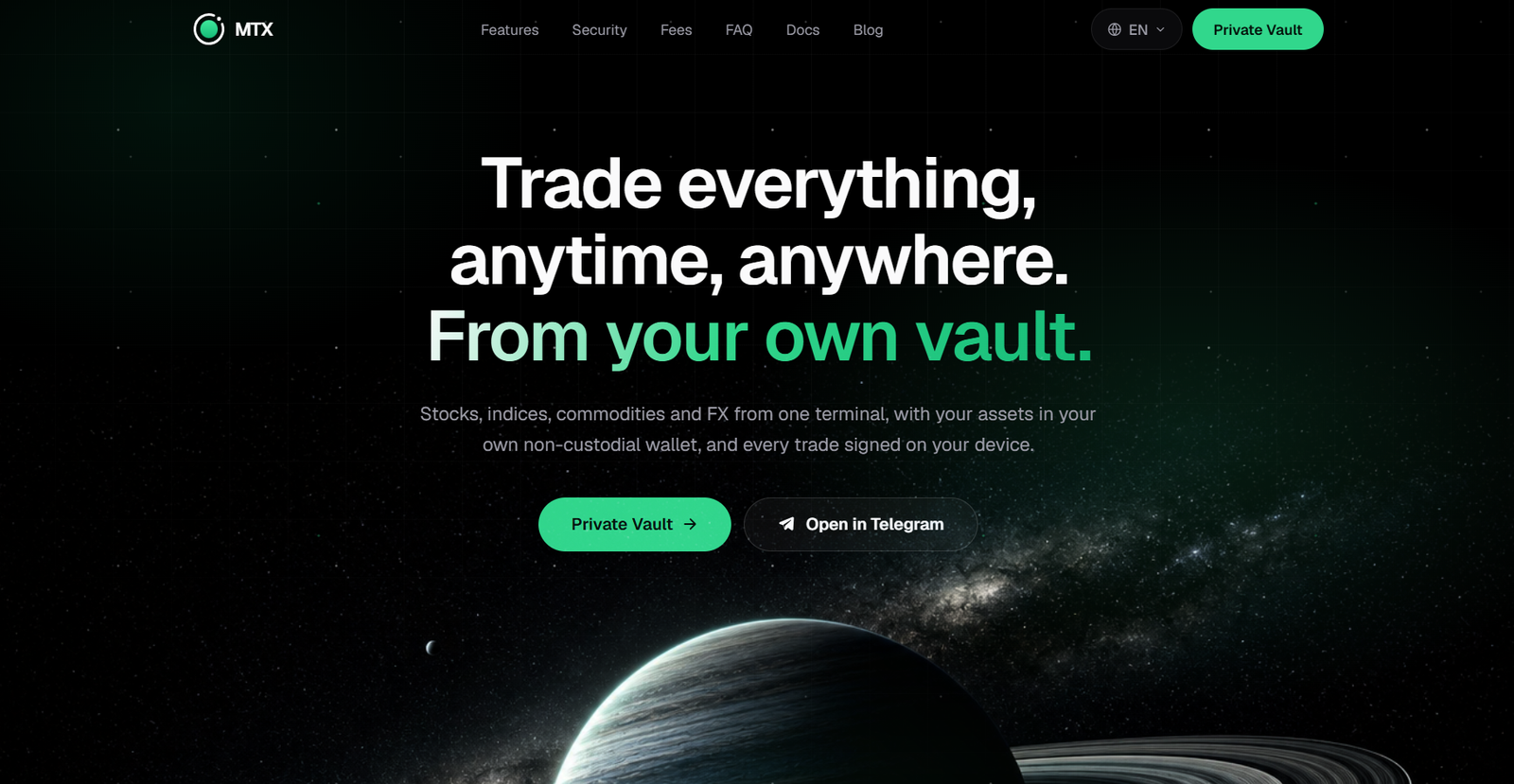
Markets TerminalX positions itself as a non-custodial trading terminal. Users create a local wallet, often via email code, and fund accounts with USDC on Arbitrum. Orders for stocks, indices, commodities, FX, futures, and prediction markets route mainly through the Hyperliquid protocol. The interface does not hold user funds. Features include swipe trading, a pro terminal, Smart Money copy trading starting at $50 USDC with a 25% success fee on profits only, and an Engine for automated managed cycles. An AI agent is listed as coming soon. The site stresses local signing, key export, and user control. Trading is unavailable in the US and EU/EEA. Leveraged products carry high risk of total loss. Scams radar
1.1 Ownership and Background Transparency
Table of Contents
Public records show limited ownership information. The domain was registered on March 29, 2026, through GoDaddy with privacy protection via Domains By Proxy. WHOIS data is fully redacted. No named founders, CEO, directors, company registration number, or physical headquarters appear in available materials. The Terms of Service refer only to “Markets TerminalX” as the operator. Governing law is listed as DIFC with DIAC arbitration in Dubai, yet no verified financial license is confirmed.
No independent sources link specific individuals to prior MLM operations, criminal records, or related projects under the same control. Searches for executives return no reliable matches. Social accounts such as @MTXtrade on X and the linked Telegram channel exist but do not identify legal owners. This anonymity is a core due-diligence gap for any platform handling leveraged trading and managed cycles.
Domain age remains under six months as of late August 2026. Hosting uses Cloudflare with a valid Let’s Encrypt SSL certificate. Traffic ranks low on public indexes. Automated checkers give mixed signals: one rates the site “Likely Safe” while noting youth and low rank; another scores it 28.9/100 and labels it risky.
Part : 2 Complete Compensation Plan Explained
The official referral structure is a five-generation plan tied to trading fees, not deposits. MTX advertises up to 33.33% of applicable builder fees paid across levels. The builder fee itself is 0.1% on Hyperliquid trades.
Here is the published share of the trading fee:
Generation | Share of Fee |
L1 | 25.00% |
L2 | 6.25% |
L3 | 1.56% |
L4 | 0.39% |
L5 | 0.10% |
Total | 33.30% |
Rewards depend on network trading volume. Example: $100,000 monthly volume generates a $100 builder fee. Approximate affiliate payout is $33.30 total, split as $25 to L1, $6.25 to L2, and smaller amounts deeper. Larger volumes scale the same way. $1 million volume yields roughly $333 in total affiliate allocation.
MTX provides an illustrative network example: 10 direct referrals, each adding two more, average $50,000 monthly volume per trader, producing about 310 traders and estimated $242 monthly earnings for the top account. The expansion follows 10 + 20 + 40 + 80 + 160 = 310. Earnings remain volume-based and illustrative, not guaranteed.
This is best described as a limited-depth unilevel or generation-style affiliate plan linked to trading activity. It is not a verified binary plan (no left/right legs or matching) and not a forced matrix. Additional fees include 0.5% plus gas on deposit or withdrawal and the 25% Smart Money success fee. Referral rewards are paid in USD.
The Engine is separate. Documentation describes Micro, Smart, and Alpha cycles that lock capital until completion and reference daily ROI cycles. Exact percentages are not fixed in main public pages. Any high daily figure compounds rapidly. At a hypothetical constant 1% daily, $1,000 grows to roughly $1,348 in 30 days and over $37,000 in a year before costs. Such rates far exceed typical bank yields (around 4–5% annual), long-term equity averages (7–10%), or base DeFi staking ranges (often 3–12%). Sustainable delivery requires consistent external trading profit after fees, slippage, funding rates, and losses. Public materials lack audited performance data, full strategy details, or on-chain proof of realized P&L for the Engine.
2.1 Platform Features, Security, and Operational Notes
Users fund with USDC on Arbitrum into their own Hyperliquid account. Positions, P&L tracking, spot, futures, and prediction markets are listed. Support includes email tickets with roughly 24-hour response targets and Telegram. Withdrawals process in batches and usually settle in hours, though Engine cycles block funds until end. The interface claims local key control and exportability.
Security rests on Hyperliquid plus local signing if correctly implemented. Risks include phishing, builder-fee approvals, smart-contract issues, leverage liquidations, and any off-protocol Engine logic. No widespread confirmed hacks specific to the domain appeared in reviewed sources at the time of analysis. Customer support details remain limited compared with established exchanges.
Risk Summary and Practical Guidance
Key concerns include the very new domain, fully private ownership, multi-level referrals, and limited independent verification of Engine economics. Positive elements are the non-custodial design on a real protocol, disclosed fees, and ability to export keys. These reduce classic custodial risks but do not remove trading or automation risks.
Treat MTX as an experimental high-risk trading interface rather than a yield product. Verify all activity on-chain. Start with amounts that can be lost entirely. Prefer direct protocol access when possible. Demand verifiable performance records and clearer operator identity before larger use. Avoid any presentation of smooth daily returns as guaranteed.
Aevos Review
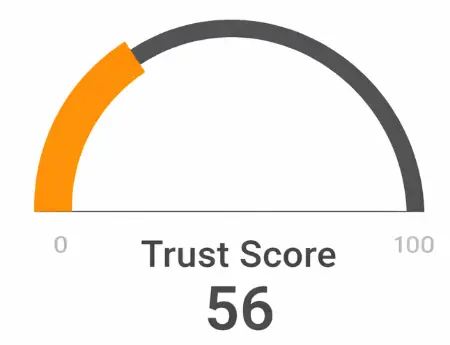
A website’s trust score is an important indicator of its MTX includes low web traffic, negative user feedback, potential phishing risks, undisclosed ownership, unclear hosting details, and weak SSL encryption.
With such a poor trust score, the likelihood of fraud, data breaches, or other security issues is much higher. It is crucial to carefully assess these warning signs before engaging with aMTX Similar platform.
Positive Highlights
- We found a valid SSL certificate
- DNSFilter labels this site as safe
Negative Highlights
- The Tranco rank (how much traffic) is rather low.
- The age of this site is (very) young.
Frequently Asked Questions About MTX
This section answers key questions about MTXconcerns, and highlights issues related to the platform’s legitimacy.
getmtx claims to provide trading services through the Hyperliquid ecosystem, but users should verify its operations and ownership.
Its legitimacy requires careful verification of ownership, regulation, business operations, and withdrawal practices.
The compensation plan reportedly includes referral-based incentives, making it important to understand how commissions are generated.
High or consistent returns should be treated cautiously unless supported by a clear and verifiable revenue source.
Both should be compared based on ownership, regulation, compensation plans, revenue sources, and investment risks.
Other Infromation:
WHOIS data : Hidden
Owner : REDACTED FOR PRIVACY
Country: US
WHOIS Registration Date :2026-01-15
WHOIS Last Update:2026-03-27
WHOIS Renew Date: 2028-01-15
Website: MTX
Title :MTX
Reviews:
There are no reviews yet. Be the first one to write one.