
Datavest Review: Is Datavest Safe or a High-Risk Investment Platform?
This datavestReview examines the Datavest platform based on publicly available details about its claims, structure, and background. Datavest presents itself as a data-infrastructure investment option focused on premium data centers. The site advertises a $50 minimum investment, 4%–7% monthly returns, a five-level referral network, and a 10% referral bonus. Users can create an account, access a dashboard, invest, track referrals, and manage a wallet. The domain was registered on September 1, 2026, making it only about 17 days old at the time of this review. Scams radar
Part 1: How Datavest Works
Table of Contents
Datavest describes itself as a way for people to fund data pipelines and algorithmic tools that support automated trading. Investors are told they can own a stake in premium data centers. Earnings come from the advertised monthly returns plus the referral system. Registration is straightforward through the website. After login, users see sections for investing, referrals, support, and withdrawals. Payment options appear to include credit and debit cards such as Visa, Mastercard, AmEx, Discover, and JCB, along with Apple Pay, Google Pay, and Samsung Pay. No clear public list of crypto methods or exact withdrawal rules was confirmed in open sources.
The referral plan forms a core part of how Datavest earning is structured. It uses five levels with a 10% bonus. Public pages do not fully explain whether the 10% applies only to direct referrals, across all levels, to deposits, or to profits. No evidence confirms a binary, unilevel, or matrix setup with left-right legs, spillover, or rank bonuses. The structure simply encourages recruitment alongside the investment returns.
1.1 Datavest Compensation Plan and Return Claims

The compensation plan centers on fixed monthly percentages plus referrals. Here is a simple breakdown of the advertised monthly returns converted to annual figures:
Monthly Return | Simple Annual | Compounded Annual |
4% | 48% | 60.1% |
5% | 60% | 79.6% |
6% | 72% | 101.2% |
7% | 84% | 125.2% |
For a $1,000 investment at 4% monthly, the simple monthly payout would be $40, or $480 per year before compounding. At 7% it would be $70 monthly or $840 yearly. Over longer periods the numbers grow quickly. At 7% compounded, $1,000 becomes roughly $2,252 after one year, $5,071 after two years, and $11,421 after three years. Even a $50 minimum deposit at 7% monthly would grow to about $113 after one year and nearly $2,900 after five years if left to compound.
These rates sit far above normal benchmarks. Bank savings accounts often yield under 1% to around 5–6% annually in high-yield cases. Long-term real estate averages hover near 8–12%. Regulated crypto staking on major platforms usually stays in the 1–15% yearly range. Data centers can generate real revenue through colocation, cloud services, and power contracts, yet no public documents show the specific facilities, ownership papers, customer contracts, occupancy rates, electricity costs, or audited profits that would support consistent 4%–7% monthly payouts after referral costs and operating expenses.
A $1 million pool of investor money at 7% monthly would require $70,000 every month just for the base returns, or $840,000 per year before commissions, staff, maintenance, taxes, and other costs. Scaling to $10 million or $100 million raises the monthly obligation to hundreds of thousands or millions. Without verified external revenue, the model depends heavily on new deposits to keep earlier participants paid.
1.2 Ownership, Background, and Transparency
No verifiable founder, CEO, directors, beneficial owners, company registration number, or physical address links directly to the Datavest platform. WHOIS details remain hidden. Searches turn up unrelated companies that share similar names: a South African IT firm, a Florida private-equity group, a California real-estate brokerage, an older blockchain data project linked to Rob Nicholas Stone, a Swiss entity registered recently, and a Belgian cybersecurity listing. None of these connect to the current website through public records.
The domain itself shows hosting on Amazon/AWS infrastructure with a valid SSL certificate. Traffic tools report near-zero organic visitors and keywords. Automated reputation scanners list low trust scores: Gridinsoft at 29/100 with a “Suspicious Website” label and a Bitdefender warning, ScamAdviser at 0, and Scam Detector at 10.9/100. These scores reflect the young age, limited history, and financial claims rather than legal findings.
Customer support appears limited to the on-site interface and a Telegram link. No named team, phone system, or verified office history is publicly available. Social media searches found no established corporate accounts or long-running promoter profiles tied to the platform. Promotion seems concentrated in private channels.
Part 2: Red Flags and Risk Assessment
Several clear warning signs stand out:
- Extremely new domain with almost no operating history
- Hidden ownership and no regulatory license from bodies such as the SEC, FCA, or ASIC
- Fixed high monthly returns that demand continuous large cash flow
- Five-level referral system that adds recruitment pressure
- Absence of audited financial statements or specific data-center proof
- Low independent traffic and reputation scores
- Limited public discussion or verified withdrawal records
These features match patterns seen in high-yield programs that later face withdrawal delays or closure when new money slows. Early participants may receive payouts funded by later deposits. Later ones often lose capital. No evidence currently proves a Ponzi structure in court terms, yet the combination of opacity, high fixed returns, and recruitment focus creates extreme risk.
2.1 Datavest Legitimacy and Alternatives
Is Datavest legit? Public information does not establish a regulated investment company with transparent assets and sustainable profits. Is Datavest a scam? The evidence stops short of definitive legal proof, but the risk of total loss remains very high. Datavest user reviews and complaints are scarce because the platform is so new. Withdrawal success cannot be independently confirmed at scale.
Safer alternatives exist for those seeking online earning or investment options. Regulated brokers, diversified index funds, REITs, government bonds, and audited staking products on major crypto exchanges offer lower but verifiable returns. Always check licenses directly with official authorities, read full terms, and never risk money you cannot afford to lose.
Final Thoughts on This Datavest Review
Datavest offers an attractive surface pitch of data-center ownership plus referral earnings starting at a low $50 entry. The numbers, however, require an extraordinary and currently unverified stream of real profit. Ownership remains unidentified, the domain is brand new, and third-party risk scores stay low. Anyone considering registration, login, or deposits should first demand full corporate documents, audited accounts, asset lists, and regulatory proof. Until those appear, treat the platform as high-risk and prioritize capital preservation over promised percentages.
Related keywords for further research include Datavest platform details, Datavest investment returns, Datavest withdrawal process, Datavest fees, Datavest alternatives, and Datavest available in Pakistan. Independent checks on Scamadviser, WHOIS lookup tools, and national financial regulators remain essential before any decision.
DataVest Review
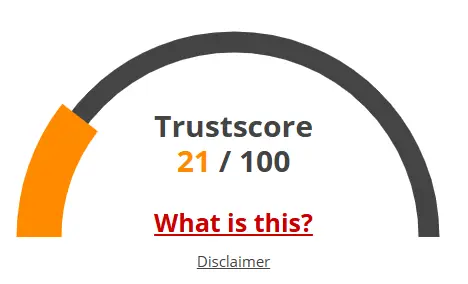
A website’s trust score is an important indicator of its DataVest icludes low web traffic, negative user feedback, potential phishing risks, undisclosed ownership, unclear hosting details, and weak SSL encryption.
With such a poor trust score, the likelihood of fraud, data breaches, or other security issues is much higher. It is crucial to carefully assess these warning signs before engaging with DataVest Similar platform.
Positive Highlights
- We found a valid SSL certificate
- DNSFilter labels this site as safe
Negative Highlights
- The Tranco rank (how much traffic) is rather low.
- The age of this site is (very) young.
Frequently Asked Questions About DataVest
This section answers key questions about DataVest concerns, and highlights issues related to the platform’s legitimacy.
DataVest is an online investment platform offering investment plans and referral bonuses.
Users deposit funds into plans that claim to generate regular returns.
Investors should verify its ownership, registration, business model, and withdrawal record.
Risks may include high-return claims, limited transparency, and potential loss of funds.
An Everstead Review examines Everstead’s claims, operations, risks, and overall transparency.
Other Infromation:
WHOIS data : Hidden
Owner : REDACTED FOR PRIVACY
Country: US
WHOIS Registration Date :2026-09-1
WHOIS Last Update:2026-09-6
WHOIS Renew Date: 2027-09-1
Website: DataVest
Title :DataVest
Reviews:
There are no reviews yet. Be the first one to write one.