
Cysic Review: Ownership, Compensation Plan, Token Risks and Why Caution Is Essential
This Cysic Review examines the official Cysic project and the separate website that uses similar branding. The goal is to give clear facts on the team, incentives, token structure and risk signals so readers can decide for themselves. The official project sits at cysic.xyz. Any other domain that copies the name requires extra checks. Scams radar
Part 1: Who Owns and Runs the Project
Table of Contents
The established Cysic network was founded in 2022. Public records and investor materials name Xiong (Leo) Fan as founder and CEO. Fan holds a PhD in cryptography from Cornell University. He has worked in research roles linked to Algorand and held academic positions that include Rutgers University. His background centres on zero-knowledge proofs and hardware acceleration rather than network marketing.
Bowen Huang is listed as co-founder. Available biographies point to experience in chip design, hardware engineering and related research institutions. No credible public evidence was found of either founder previously running a traditional multi-level marketing company, Ponzi scheme or similar investment scheme. The company has reported institutional funding of roughly $18–20 million across seed and later rounds. Named backers include Polychain Capital, HashKey Capital and OKX Ventures.
No equivalent public ownership, legal entity, directors or registration details could be verified for the separate trade-branded site. Official project channels and exchange listings consistently point only to the .xyz domain and the verified social accounts. That gap is a material due-diligence point.
1.1 How the Compensation and Incentive Structure Works
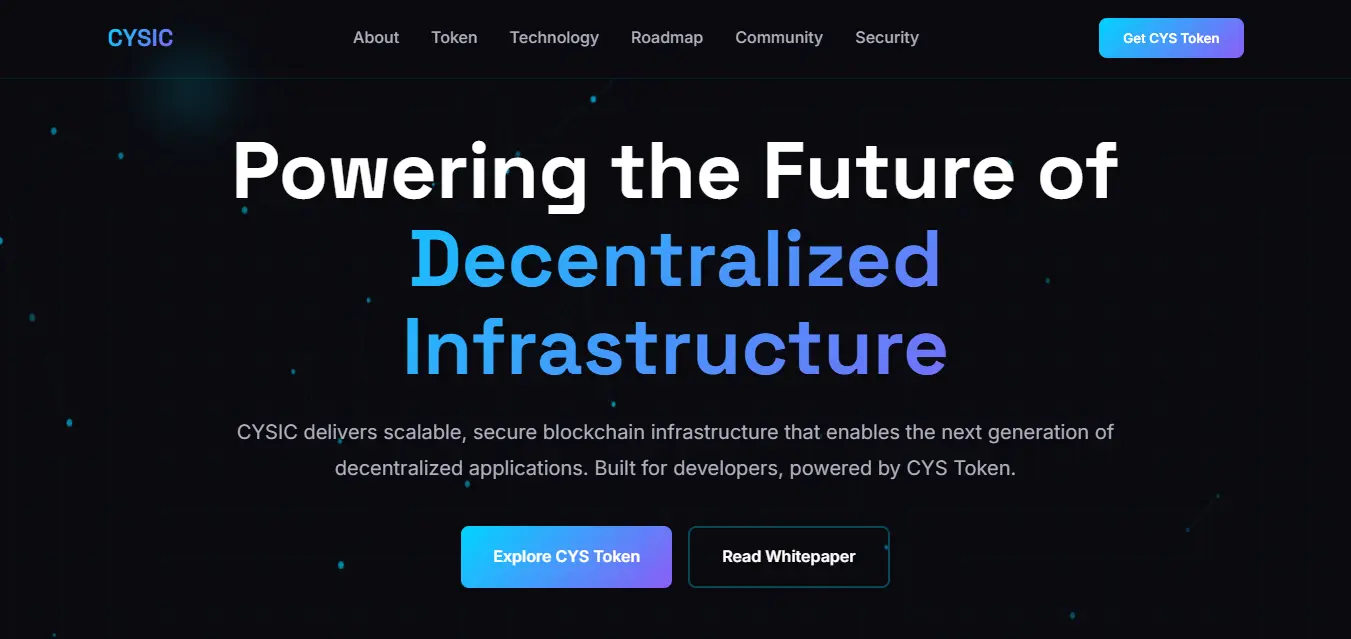
Cysic does not operate a classic binary, unilevel or matrix multi-level marketing plan according to available official materials. What exists is a set of community, referral and contribution rewards.
During earlier testnet phases, participants could earn a share of Verifier or Prover rewards generated by people they invited. The documented figure was 15 percent of those team rewards. An ambassador-style programme called CyRunner offered tiered monthly support starting at several hundred dollars plus bonuses and NFT benefits for active promoters. Airdrop allocations later recognised X-affiliates, ecosystem partners, community contributors and other social supporters.
Rewards in the live network are designed to come from actual compute work: providers run zero-knowledge proofs, AI inference or other workloads; verifiers check results; the marketplace coordinates tasks. Token emissions and staking multipliers (reported in the 110–140 percent range at certain points) form part of the incentive layer. These are not fixed daily cash yields. They depend on network utilisation, token price and unlock schedules.
The trade-branded site promotes staking for passive income. No independently verified compensation table, lock-up terms, exact APY figures or legal operator behind those claims could be located. Any fixed high daily percentage must be tested with compound maths. Even a modest 1 percent compounded daily produces an annualised result near 3,778 percent. No transparent revenue engine matching that scale has been shown.
1.2 Token Supply, Circulating Float and Dilution
Maximum supply is fixed at 1 billion CYS. Circulating supply has hovered near 160.8 million, or about 16 percent. The remainder is locked under various vesting schedules that extend years into the future. Reported allocation buckets include ecosystem incentives, investors, community and liquidity, contributors and foundation holdings.
Low float creates both opportunity and risk. Price moves can be sharp when liquidity is thin. Future unlocks add selling pressure unless demand for compute grows in step. Market-cap figures have ranged in the tens of millions of dollars with daily volumes that fluctuate widely. An all-time high near $1.76 was followed by a rapid decline of more than 60 percent within days.
Part 2: Security, Audits and Operational Incidents
Public CertiK profile data for the project has listed no completed CertiK audit at the time of review and has flagged certain contract characteristics such as mint capability and ownership concentration. Claims of audits by CertiK, Trail of Bits or OpenZeppelin that appear on unofficial sites should be matched to exact report links, contract addresses and dates before any trust is placed in them.
In March 2026 the foundation social account was compromised and used to post a fake token contract. That incident is documented. Separate December 2025 reports by crypto commentators alleged unusual wallet clustering around the token-generation event, discrepancies between claimed and reported revenue figures, and questions about hardware component quality. Those remain allegations rather than court findings. Readers should treat them as reported concerns and verify primary sources themselves.
2.1 Traffic, Community and Public Sentiment
Official social metrics show a substantial following on X and a smaller active Telegram group. Seven-day active user numbers and trading volumes appear on aggregator dashboards but vary week to week. Independent traffic data for the trade-branded domain is sparse or absent. Community discussion mixes technical interest in zero-knowledge hardware with caution about token distribution and transparency.
2.2 Comparison Table: Yield Benchmarks
Source | Typical Annual Range | Key Characteristics |
Bank savings (many markets) | 0.5–10 % | Insured or regulated, low volatility |
Residential real-estate yield | 2–8 % net after costs | Illiquid, local market risk |
Blue-chip crypto staking | 2–15 % variable | Smart-contract and price risk |
Hypothetical fixed 1 % daily | ~3,778 % compounded | Requires continuous new capital |
The gap between ordinary productive yields and any fixed high daily claim is the clearest mathematical warning.
Practical Risk Checklist
- Confirm the official website and social accounts before connecting a wallet.
- Verify contract addresses on a block explorer rather than copying from third-party pages.
- Check circulating supply and upcoming unlocks.
- Treat any promised fixed daily return as requiring extraordinary, independently audited revenue proof.
- Limit exposure to capital that can be lost entirely.
- Prefer regulated exchanges for any token purchases.
Cysic Review
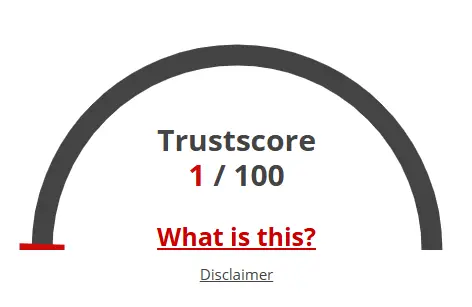
A website’s trust score is an important indicator of its Cysic icludes low web traffic, negative user feedback, potential phishing risks, undisclosed ownership, unclear hosting details, and weak SSL encryption.
With such a poor trust score, the likelihood of fraud, data breaches, or other security issues is much higher. It is crucial to carefully assess these warning signs before engaging with Cysic Similar platform.
Positive Highlights
- We found a valid SSL certificate
- DNSFilter labels this site as safe
Negative Highlights
- The Tranco rank (how much traffic) is rather low.
- The age of this site is (very) young.
Frequently Asked Questions About Cysic
This section answers key questions about Cysic concerns, and highlights issues related to the platform’s legitimacy.
Cysic is presented as a blockchain infrastructure and zero-knowledge technology project.
Investors should verify its ownership, technology, business model, and claims independently.
Check whether rewards come from genuine business revenue or participant recruitment.
Risks may include unclear ownership, withdrawal problems, crypto volatility, and limited transparency.
An Everstead Review should assess Cysic’s ownership, returns, security, and investment risks.
Other Infromation:
WHOIS data : Hidden
Owner : REDACTED FOR PRIVACY
Country: SG
WHOIS Registration Date :2026-09-03
WHOIS Last Update:2026-09-08
WHOIS Renew Date: 2027-09-03
Website:Cysic
Title :Cysic
Reviews:
There are no reviews yet. Be the first one to write one.