
ClickBaitPays Review: A Clear Look at the Platform, Compensation Plan, and Ownership
This ClickBaitPays review examines how the platform works, its compensation structure, ownership details, and key risks. The site presents itself as a paid-to-click advertising service where members buy ad campaigns, view ads, and earn returns in cryptocurrency. Readers seeking simple facts about ClickBaitPays how it works, campaign levels, and referral earnings will find the details below.
The domain registered around early April 2026. Ownership details remain hidden behind privacy protection. Public records and reviews link the operation to Dennis Gerron (also referenced as Dennis Garren), who has a construction background and ties to an entity called the International Coalition for Economic Development. The site lists a Panama address in Costa del Este. Crypto payments run through a third-party processor. These points form the base for any serious evaluation. Scams Radar
Part: 1 Ownership and Background Details
Table of Contents
Dennis Gerron appears in multiple public reviews as the main figure behind the platform. Available information describes a background in construction and online business ventures. The listed organization, International Coalition for Economic Development, lacks independent verification of active operations or public financial records. WHOIS data stays redacted. The Panama address surfaces in the privacy policy and related pages, yet no confirmed corporate registration documents or director lists appear in open sources.
Promoters on YouTube and Telegram often reference the same names and share referral links. Some channels discuss related projects. Independent confirmation of legal ownership, shareholding, or prior regulatory history remains limited. This opacity ranks as a primary transparency concern for any platform that accepts cryptocurrency deposits.
1.1 How the Compensation Plan Works

Members deposit crypto such as USDT, BTC, or ETH. They purchase an ad campaign at one of seven levels. The first purchase at a level includes a one-time activation fee. Campaigns run for 12 click days. Users must view a set number of ads each day, typically lasting 15 to 30 seconds. Earnings equal 90 percent of the stated cost-per-click value. After the 12 days, a seven-day holding period applies before funds become available. A 10 percent withdrawal fee then applies. Direct referrals generate a 10 percent commission on qualifying click earnings, credited sooner.
Maximum limits include three campaigns per account and three accounts per household under the same sponsor. Resets follow midnight Panama time in some descriptions. The platform states referrals are optional yet boost income.
1.2 Campaign Levels at a Glance
Level | Approximate Total Cost (USDT) | Stated Member Earnings (USDT) | Notes |
1 | 14 | 17.17 | Includes ~1 USDT activation |
2 | 84 | 101.70 | Scales upward |
3 | 165 | 194.40 | |
4 | 330 | 388.80 | |
5 | 660 | 777.60 | |
6 | 1,320 | 1,555.20 | |
7 | 2,640 | 3,240 | Highest package |
Higher levels require more daily ads and larger capital. Promoters highlight principal return plus profit roughly every 19 days and the option to reinvest or run multiple campaigns.
1.3 Simple Math Behind the Returns
Take Level 1 as an example. A member pays 14 USDT. Stated earnings reach about 17.17 USDT. That produces a gross gain near 22.6 percent before the withdrawal fee. Add the 10 percent sponsor commission on the campaign completion value and the total outflow exceeds the original 14 USDT by roughly 36 percent before any operating costs.
If members repeat cycles, the annualized figure rises into thousands of percent under continuous compounding assumptions. Real advertising markets pay far lower rates for traffic. Bank savings, rental property net yields, and regulated crypto lending typically range from low single digits to low double digits annually. The gap between stated campaign returns and ordinary advertising economics raises the central sustainability question: external advertiser revenue must cover member earnings, referral commissions, fees, and overhead. Without independently audited revenue figures, the model depends on continued campaign purchases.
Part: 2 Risk Signals and Public Checks
Automated tools report low trust scores. One scanner lists a score near 0 with notes on hidden ownership and domain age. Others place ratings around 28–35 out of 100 and flag the site as suspicious. Trustpilot shows higher marks from a small set of recent reviews focused on withdrawals and support. Traffic estimates vary but remain modest relative to claimed activity. Crypto-only transfers leave no chargeback path. Manual withdrawal processing and holding periods add counterparty exposure.
No multi-level matrix, binary legs, or deep unilevel commissions appear in the published guides. The structure stays limited to campaign earnings plus one-level 10 percent referral pay. Marketing still encourages scaling, reinvestment, and recruitment through phrases such as “pay it forward.”
2.1 Comparison of Return Profiles
Option | Typical Return Range | Transparency | Risk Profile |
ClickBaitPays campaigns | ~22%+ per short cycle | Limited public data | Extremely high |
Bank savings | 4–8% annually | Regulated | Very low |
Rental real estate | 4–12% net annually | Public records | Low to medium |
Major crypto lending | 2–15% APY (variable) | Platform disclosures | Medium |
2.2 Practical Considerations for Users
Anyone reviewing ClickBaitPays payment proof or withdrawal experiences should document every transaction, wallet address, and terms version. Minimum balances and weekly request limits apply. Account rules against multiple households or bots can result in freezes. Promotional materials often stress daily earnings and principal return every 19 days, yet these claims rest on the same campaign math.
Related search terms that appear alongside this topic include ClickBaitPays scam checks, ClickBaitPays legit questions, ClickBaitPays referral program details, ClickBaitPays 7 levels breakdown, ClickBaitPays activation fee, ClickBaitPays USDT deposits, ClickBaitPays Panama address, and ClickBaitPays Gridinsoft or Trustpilot scores.
Final Assessment
The combination of a young domain, privacy-protected ownership, crypto-only flows, short-cycle returns well above ordinary advertising economics, and limited external revenue proof places ClickBaitPays in the high-risk category. Early participants who recruit heavily may extract funds while inflows continue. Later participants face greater exposure if new campaign purchases slow. No verified financial statements demonstrate that independent advertisers alone sustain the stated payouts.
Treat any participation as speculative capital that can reach zero. Prefer platforms with clear ownership records, audited revenue, and regulated protections. Document activity thoroughly if already involved and consider withdrawing available balances promptly. Independent verification of corporate filings, advertiser contracts, and wallet flows remains the only reliable next step for deeper due diligence.

ClickBaitPays Review
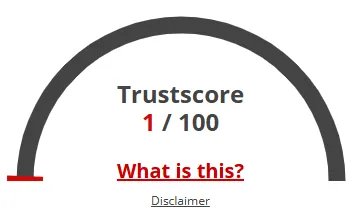
A website’s trust score is an important indicator of its ClickBaitPays includes low web traffic, negative user feedback, potential phishing risks, undisclosed ownership, unclear hosting details, and weak SSL encryption.
With such a poor trust score, the likelihood of fraud, data breaches, or other security issues is much higher. It is crucial to carefully assess these warning signs before engaging with a ClickBaitPays Similar platform.
Positive Highlights
- We found a valid SSL certificate
- DNSFilter labels this site as safe
Negative Highlights
- The Tranco rank (how much traffic) is rather low.
- The age of this site is (very) young.
Frequently Asked Questions About ClickBaitPays
ClickBaitPays should be carefully researched before investing.
It claims to generate revenue through advertising and member activity.
Its promised returns and compensation structure raise sustainability questions.
Members may face financial loss and withdrawal-related risks.
Both platforms can be analyzed based on their business model, ROI claims, and potential risks.
Other Infromation:
WHOIS data : Hidden
Owner : REDACTED FOR PRIVACY
Country: US
WHOIS Registration Date:2026-04-02
WHOIS Last Update:2026-08-12
WHOIS Renew Date:2031-04-02
Website:ClickBaitPays
Title : ClickBaitPays


Reviews:
There are no reviews yet. Be the first one to write one.