
Cash Building System Unlimited Review: Detailed Ownership Profile, Full Compensation Plan, and Complete Business Analysis
Cash Building System Unlimited Review examines every major part of this postcard-based opportunity. People looking for offline income often come across this program. It promises cash payments simply by mailing postcards. This detailed review covers the owner’s background, the exact compensation structure, how money actually moves, mathematical limits, promoter activity, and practical risks. The goal is clear information in plain language so readers can form their own view.Scams radar

Part 1: What Cash Building System Unlimited Claims to Offer
Table of Contents
The program presents itself as a direct-mail marketing system. Participants pay a one-time fee, receive postcards and lead lists, and mail them to prospects. When someone joins using the participant’s ID number, a commission is paid. Promotional materials stress that no personal selling, no inventory, no cold calling, and no explaining the business are required. The repeated message is “just mail postcards.”
The website and promoter pages advertise possible cash amounts from $25 up to $3,500. A disclaimer usually states that results are not guaranteed and that the figures are illustrative. Despite the disclaimer, marketing videos and capture pages focus heavily on large weekly checks and mailbox money.
1.1 Ownership and Company Background – Full Details

Independent research and promotional materials consistently identify J.D. Marketing as the company behind Cash Building System Unlimited. J.D. Marketing is incorporated in Ohio. The owner is Jay Dagan, also referred to in some materials as Jay E. Dagan. Public records and participant documents link him to the Senecaville, Ohio area. A PO Box in that region appears in older materials and upgrade forms.
Contact information shared by promoters includes:
- Phone number in the 740 area code (commonly listed as 740-680-2493)
- An older email address (jaydagan@yahoo.com in earlier materials)
- Cash App handle $Jdmkt1964 used for upgrade payments
- An 800 information line
The main website itself does not clearly display the owner’s name, executive team, or full corporate address. This limited transparency is repeatedly noted in independent reviews. Domain registration uses privacy protection services, so public WHOIS data does not reveal the beneficial owner.
Jay Dagan and J.D. Marketing have been associated with earlier postcard and membership programs. One program frequently mentioned by researchers is FinancialFreedomProgram.net. The pattern shows similar direct-mail recruitment models offered over multiple years under the same operator. No public court judgment reviewed in current sources establishes a personal criminal conviction against Dagan for fraud or mail fraud related to these activities. The historical association with similar programs remains a documented fact for anyone conducting due diligence.
1.2 Complete Compensation Plan
The plan has two main parts: Phase 1 entry and optional Phase 2 upgrades across multiple tiers.
Phase 1
Cost: approximately $50 one time.
What participants receive:
- About 200 pre-printed postcards
- About 200 peel-and-stick lead labels
- Personal member ID number
- Upgrade form for higher levels
- Postcard reorder form
Earnings at this level: $25 fast-start commission for each new person who joins Phase 1 under the participant’s ID. Successful recruits also generate additional free postcards and leads.
Phase 2 / Higher Tiers
These are optional but heavily promoted. Participants must pay into a tier to collect commissions at that level and the levels below it. The historical structure documented by independent sources is as follows:
Tier | Entry Cost | Level 1 Commission (Personal Recruit) | Level 2 Commission | Approximate Company Cut |
1 | $50 | $25 | — | Small admin portion |
2 | $100 | $70 | $20 | ~$10 |
3 | $500 | $350 | $100 | ~$50 |
4 | $1,000 | $700 | $200 | ~$100 |
5 | $1,500 | $1,050 | $300 | ~$150 |
6 | $2,000 | $1,400–$2,500* | $400 | Varies |
7 | $2,500 | $1,750 | $500 | ~$250 |
8 | $3,500 | $2,450 | $700 | ~$350 |
9 | $5,000 | $3,500 | $1,000 | $500 |
Some tables show inconsistency at Tier 6. Full participation across sequential upgrades has been reported to cost several thousand dollars, with one estimate exceeding $16,000.
Commission split on higher tiers is generally described as roughly 70 percent to the direct recruiter, 20 percent to the second level, and 10 percent to the company. Spillover occurs when a recruit upgrades beyond the sponsor’s current level. Upgrade bonuses of around $200 per level have also been mentioned in materials.
There is no retail product sold to people outside the system. The only item purchased is the membership kit and the right to earn recruitment commissions.
1.3 How the Money Actually Moves
When a new person pays $5,000 to join the top tier, that $5,000 is distributed approximately as follows:
- $3,500 to the direct recruiter
- $1,000 to the second-level participant
- $500 to the company
The total equals the amount paid in. The $3,500 commission is not new profit created by an outside product or investment. It is a redistribution of the new participant’s payment. The same principle applies at every tier.
This structure means the system depends on continuous recruitment. Early participants and highly active recruiters can collect commissions while new people keep joining. Once recruitment slows, the flow of money decreases.
Part 2: Mathematical Limits of the Model
Recruitment-based systems face a built-in limit because the pool of potential new members is finite. A simple illustration shows the problem:
Assume each participant needs an average of two successful recruits to recover costs after postage and fees.
- Starting person: 1
- Level 1: 2
- Level 2: 4
- Level 5: 32
- Level 10: 1,024
- Level 15: 32,768
- Level 20: over 1 million
Real response rates on cold postcards are typically far lower than 1 percent. Postage, printing, time, and upgrade costs further reduce net results. Independent analyses of similar programs consistently show that the large majority of participants do not recover their total spending.
2.1 Promoter Activity and Public Perception
Promotion occurs mainly through personal YouTube channels, Facebook groups, TikTok, and individual capture pages. Common names appearing in public videos and materials include Mary Beth (retirewithmarybeth), DeeJRichmindset, Tyece Johnson, Ontarian Hawkins, Lyle Alexander, Russ Fye, Justin Birden, Eric “GoodLife” Johnson, Julio Franco, and others. Many of these promoters share payment screenshots, checks, and Cash App receipts. Some have histories promoting other postcard or mailbox-money opportunities.
Independent reviews (BehindMLM 2022 and later analyses, Passive Income For All, and similar sites) describe the model as recruitment-driven with classic pyramid characteristics. Automated scanners produce mixed scores: some note a valid SSL certificate and older domain age, while others flag low traffic, hidden ownership, and risk signals. SSL only encrypts the connection; it does not validate the business model or payout sustainability.
Traffic data remains modest. Most activity comes from affiliate promotion rather than organic search demand.
2.2 Practical Costs Beyond the Entry Fee
Participants often face additional expenses:
- Postage for hundreds or thousands of postcards
- Extra postcard printing or reorders
- Lead lists of varying quality
- Time spent preparing and mailing
- Possible website or social media promotion costs
A $1,000 commission can shrink significantly after these costs. No public audited dataset shows median net profit after expenses.
Final Assessment
Cash Building System Unlimited is a multi-tier direct-mail recruitment opportunity. The documented compensation plan pays commissions when new people join and upgrade. The economic engine relies on participant payments rather than sales of a product with independent demand. Some active promoters report receiving checks and Cash App payments. Mathematical reality and historical patterns of similar systems indicate that most participants face a high risk of net loss once recruitment slows.
Anyone considering the program should obtain the current compensation agreement in writing, verify the legal entity, calculate total expected costs including postage, and understand that past payment screenshots do not represent average results. Professional financial or legal advice is recommended before any payment is made.
Cash Building System Unlimited Review
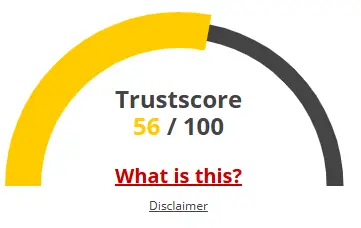
A website’s trust score is an important indicator of its Cash Building System Unlimited icludes low web traffic, negative user feedback, potential phishing risks, undisclosed ownership, unclear hosting details, and weak SSL encryption.
With such a poor trust score, the likelihood of fraud, data breaches, or other security issues is much higher. It is crucial to carefully assess these warning signs before engaging with Cash Building System Unlimited Similar platform.
Positive Highlights
- We found a valid SSL certificate
- DNSFilter labels this site as safe
Negative Highlights
- The Tranco rank (how much traffic) is rather low.
- The age of this site is (very) young.
Frequently Asked Questions About Cash Building System Unlimited
This section answers key questions about Cash Building System Unlimited concerns, and highlights issues related to the platform’s legitimacy.
It is a direct-mail program that promotes earning opportunities through postcards and referrals.
Participants promote the program and may earn through its referral-based structure.
Users should verify its ownership, income claims, compensation plan, and refund policies before investing.
Risks may include upfront costs, recruitment dependence, and potential loss of money.
No verified connection has been established between Everstead and CBSU.
Other Infromation:
WHOIS data : Hidden
Owner : REDACTED FOR PRIVACY
Country: US
WHOIS Registration Date :2020-09-18
WHOIS Last Update:2025-08-20
WHOIS Renew Date:2026-09-18
Website:Cash Building System Unlimited
Title :Cash Building System Unlimited

Reviews:
There are no reviews yet. Be the first one to write one.