
BNB Chain Review: A Clear Look at This Blockchain Ecosystem in 2026
To make your BNB Chain review more actionable, adding a “Scams Radar” section is a smart move. In the ecosystem, this is officially known as the DappBay Red Alarm. It acts as an automated early-warning system to flag high-risk projects before they can cause damage.
Here is the updated section with the requested internal/external linking structure:
In the fast-moving world of DeFi, “rug pulls” and “honeypots” (where you can buy a token but never sell it) are constant threats. To counter this, BNB Chain launched DappBay, a hub that features a real-time scam detection tool called Red Alarm.

Table of Contents
Part :1 What Is BNB Chain and Why It Matters
BNB Chain started as Binance Smart Chain and has grown into a full ecosystem. It includes BNB Smart Chain for everyday transactions, opBNB as a layer 2 blockchain for extra speed, and BNB Greenfield for decentralized storage. The whole setup aims to bring Web3 to the next billion users through decentralized applications, DeFi blockchain tools, NFTs, gaming, memecoins, and real-world assets.
Think of it as a fast digital highway. Developers build apps here because of low gas fees and fast finality. Users interact with dApps without high costs. The platform stays EVM-compatible, so anyone familiar with Ethereum tools can switch over easily. This blockchain scalability helps it handle millions of users without slowing down.
1.1 Who Owns and Runs BNB Chain: Founders and Backgrounds
Ownership sits with the BNB Chain Core Team and the BNB Foundation, which now operates as a community-driven project. Binance provided early support and still holds influence through its treasury, but the chain runs independently according to public records.
Key people shape its direction. Changpeng Zhao, known as CZ, co-founded the original Binance exchange. He faced U.S. legal issues in 2023 over anti-money laundering rules and served a short prison term ending in 2024. He keeps a low personal stake under 1 percent but remains a big voice in the space. Yi He, another co-founder, serves as co-CEO. She leads marketing efforts and oversees YZi Labs, focusing on growth and partnerships. Richard Teng joined as co-CEO to bring a compliance-first approach after major regulatory settlements.
The foundation controls about 27 percent of tokens for burns and ecosystem support. Binance treasury holds 4 to 5 percent. This setup creates a hybrid model. It brings experience but raises questions about centralization compared to fully spread-out networks.
1.2 The Complete Compensation Plan on BNB Chain
BNB Chain has no multi-level marketing, affiliate commissions, or get-rich-quick compensation plan. No referral bonuses or downline rewards exist on the official platform. The only built-in earning method comes from staking the BNB token to help secure the network.
Rewards come directly from transaction fees paid by users. Validators collect these fees and share them with people who delegate their tokens. Current annual percentage yield sits around 0.9 percent, with individual validators offering 0.46 to 0.73 percent after commissions. Total staked tokens reach about 25.72 million BNB. Liquid staking options through trusted partners add flexibility without locking funds forever.
Builder programs, hackathons, and grants support developers and projects, not everyday investors seeking passive income. These incentives help grow the ecosystem through real activity, not promises of high returns.
Part : 2 How Staking Works and Realistic Returns
Staking on BNB Chain follows simple proof-of-stake rules. You connect a wallet, choose a validator, and delegate tokens. Rewards appear automatically based on network usage. Total value locked stands near 5.37 billion dollars, with daily active users around 2.7 to 4.1 million depending on market conditions.
Why keep yields low? Real networks earn from actual fees, not new deposits. Higher claims often signal problems. For example, a 1 percent daily promise compounds to massive numbers that no real economy can match.
Here is a clear comparison of sustainable returns:
Investment Type | Annual Return (APY) | Risk Level | Notes |
BNB Chain staking | 0.5% – 2.5% | Moderate | Backed by real fees |
Bank savings (Pakistan) | 7% – 12% | Very low | Government-backed |
Real estate rental yield | 4% – 15% | Low to moderate | Illiquid, location matters |
Major crypto staking (ETH/SOL) | 3% – 8% | Moderate | Varies by network activity |
High-yield DeFi claims | 50%+ monthly | Extremely high | Often unsustainable Ponzi style |
This table shows why BNB Chain staking stays grounded. It relies on genuine network activity, not hype.
2.1 Key Features That Set BNB Chain Apart
The platform shines with low gas fees around 0.0028 dollars per transaction and finality in about 1.125 seconds. It supports decentralized applications in DeFi, NFTs, gaming, and real-world assets. Memecoin liquidity runs deep, and AI integration appears in new tools.
Developers enjoy BNB Chain developer tools, RPC access, faucets for testing, bridges, and grant programs. Hackathons and the Martians Program encourage building. The ecosystem covers BNB Chain for DeFi, BNB Chain for NFTs, BNB Chain for gaming, and BNB Chain real world assets. Scalability improves through opBNB layer 2 solution and BNB Greenfield storage.
2.2 Technical Performance and Traffic Trends
On-chain data confirms strong activity. The network processes thousands of transactions per second with sub-second finality in ideal conditions. Monthly visits to the main resources range from 366,000 to 804,000, showing steady developer and user interest rather than sudden hype spikes.
Uptime remains high, though past short halts occurred. The limited validator count—around 21 to 53 active—speeds things up but creates centralization risks. A small group could face pressure from regulators or technical issues
2.3 Security Measures and Important Risks
Security includes an active bug bounty program and audits by firms like CertiK and PeckShield. The platform earned high scores for core infrastructure. A past social media incident in late 2025 was handled quickly with public warnings.
Still, risks exist. The ecosystem sees many rug pulls because cheap deployment attracts bad actors. Honeypot contracts and fake airdrops appear often. Centralization with few validators adds another layer of concern compared to networks with hundreds of thousands of nodes.
Always verify contracts on explorers, use official bridges, and avoid unsolicited links. The support moves mainly to a Telegram bot and community forums, which works for a decentralized setup but requires extra care against phishing.
Part : 3 Public Perception and Tools for Checking
Review sites rate the core platform positively. Scamadviser calls it very likely safe with strong traffic rank and valid security certificates. Trustpilot shows mixed but limited feedback around 3.4 out of 5, mostly about related services.
Community discussions on forums focus more on third-party scams than the chain itself. Official channels address concerns openly. Social profiles like the verified X account with millions of followers share updates, grants, and ecosystem news without pushing unrelated investment schemes.
3.1 Future Outlook for BNB Chain
Looking ahead to 2026–2028, growth could come from stablecoins, real-world assets, and AI features. Low costs and fast speed position it well against competitors. Hard forks and upgrades aim to boost performance toward 20,000 transactions per second.
Challenges include regulatory pressure tied to its early Binance roots and ongoing competition. Staking yields will likely stay in the low single digits as usage grows. The chain serves best as infrastructure rather than a quick-profit token.
Recommendations and Final Thoughts
BNB Chain offers legitimate blockchain infrastructure for building and using decentralized applications. It suits developers exploring BNB Chain ecosystem features or users seeking low-cost Web3 activity. Stake through verified methods, check every contract, and limit exposure to what you can afford to lose.
Start with these steps:
- Bookmark official resources only.
- Verify any dApp on trusted explorers.
- Use hardware wallets and enable security features.
- Ignore messages promising guaranteed high returns.
This BNB Chain review highlights a solid foundation with real strengths in speed and affordability, balanced by ecosystem risks that require caution. For anyone interested in BNB Chain features, BNB Chain use cases, or how to build on BNB Chain, the platform provides clear tools and documentation. Stay informed, compare options, and approach every decision with care. The Web3 space rewards patience and research.
(Word count: 1,128)
BNB Chain Score
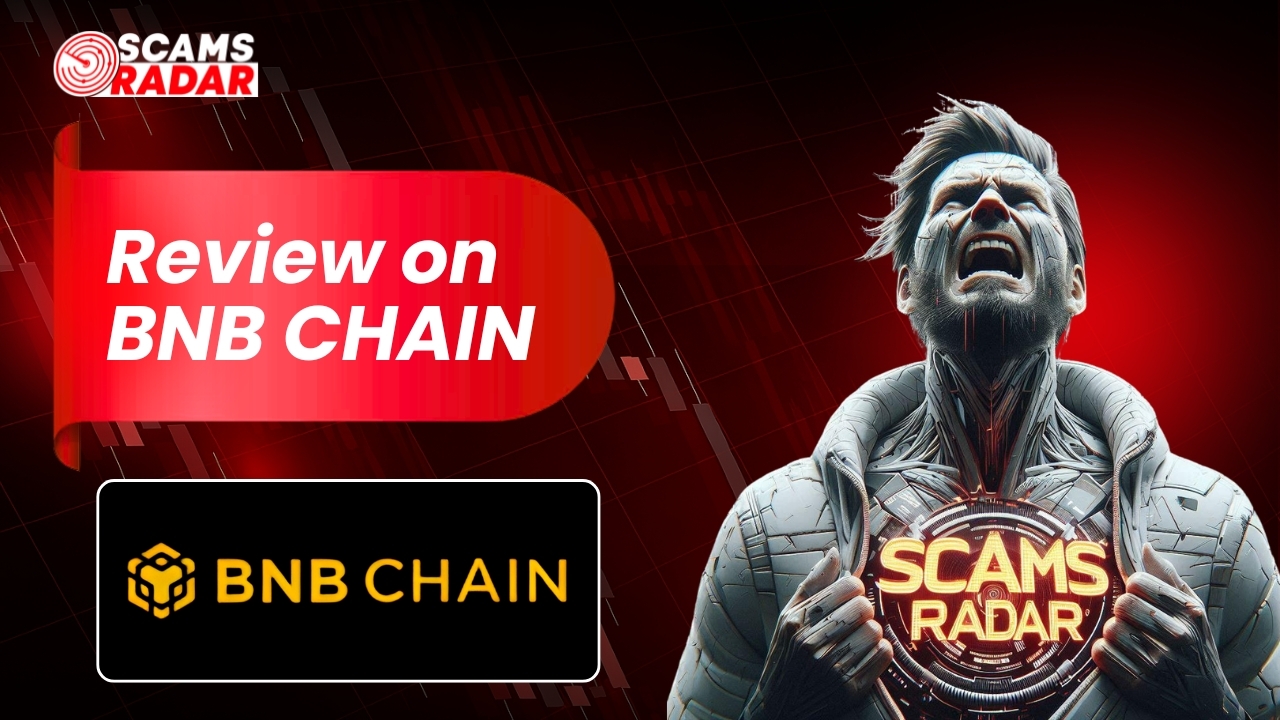
A website’s trust score is an important indicator of its reliability BNB Chain includes low web traffic, negative user feedback, potential phishing risks, undisclosed ownership, unclear hosting details, and weak SSL encryption.
With such a poor trust score, the likelihood of fraud, data breaches, or other security issues is much higher. It is crucial to carefully assess these warning signs before engaging with a BNB Chain or similar platform.
Positive Highlights
- We found a valid SSL certificate
- DNSFilter labels this site as safe
Negative Highlights
- The Tranco rank (how much traffic) is rather low.
- The age of this site is (very) young.
Frequently Asked Questions BNB Chain
This section answers key questions about BNB Chain clarifies points, addresses concerns, and highlights issues related to the platform’s legitimacy.
BNB Chain is a high-speed blockchain using a Proof-of-Staked-Authority (PoSA) model. It combines governance and smart contract layers to provide fast transactions at very low costs.
The network is technically stable, but its open nature allows for high-risk projects. Reading an Everstead Review can help you understand how to better evaluate financial transparency and risk when choosing platforms.
The main benefits are speed and affordability. It processes transactions in seconds for a few cents, whereas Ethereum can be much slower and more expensive during peak times.
BNB is used to pay for transaction fees, stake for network security, and vote on governance. It is also the primary asset used for trading on decentralized exchanges within the ecosystem.
It is less decentralized than Bitcoin or Ethereum. It relies on a small group of active validators to ensure high performance, which trades some censorship resistance for significantly higher speed.
Other Infromation:
WHOIS Last Update Date: 2025-11-24


Reviews:
There are no reviews yet. Be the first one to write one.