Bancus Review 2026: Ownership, Compensation Plan, Risks and Full Details
This bancusReview examines the platform’s leadership backgrounds, multi-level compensation structure, card products, BANC token claims and user reports. The goal is to give clear facts so readers can decide for themselves. Information comes from public records, independent analyses and customer feedback available in 2026.
Bancus describes itself as financial infrastructure that links digital assets to real-world payments. It offers crypto-linked Visa and Mastercard debit cards in virtual, physical and premium metal versions. Users can top up with USDT, use a wallet and join a referral network. The company also promotes the BANC token as real-world-asset ownership shares with staking rewards. The domain was registered on 16 October 2024. The site claims over 100,000 users, though independent traffic estimates vary between roughly 70,000 and 290,000 monthly visits depending on the source and month.Scamsradar
Part : 1 Ownership and Leadership Profiles
Table of Contents
The official team page lists Al Arends as President. Other named roles include Gabriela Reismann for tokenization, Karina Cabrera Varela for administration, Carolina Camargo for logistics, Fred Moore for training, Camilo Rodríguez for Bancus Hub, Adriana Hernández as Mexico sales director, Domingos Sávio as Brazil sales director and Zaf Nasri Khan as South Africa sales director.
External materials and professional profiles identify Luis Alejandro Giralt Apestegui, also known as Alejo Giralt or Alejandro Castro, as co-founder and CEO. He is a Costa Rican national. U.S. court records show he was arrested in 2012, pleaded guilty in 2014 to conspiracy to commit money laundering and received a nearly five-year federal prison sentence. He was later deported. He was previously linked to Landian Metaverse, a crypto and virtual real-estate project that faced investor complaints around 2022-2023. A 2026 plane emergency landing in Mexico involving him and associates drew local media attention to his history.
Al Arends has been identified by independent MLM research as a former promoter of GSPartners, a scheme that collapsed and attracted regulatory warnings in several jurisdictions. Zaf Nasri Khan lists more than 16 years in network marketing, including work with Organo Gold and claims of leading large teams. These backgrounds form part of the public record and are relevant for anyone assessing the platform.
No clear public banking licence or full corporate ownership documents appear on the main site. The Mexican operating entity is named in legal terms as DESARROLLOS TECNOLÓGICOS BANCUS SAPI de CV. The company states it works through partners including Financiera Más, a Mexican SOFIPO authorised to issue debit cards, and a Czech digital-asset firm. Private WHOIS registration and a young domain add to the limited transparency.
1.1 Complete Compensation Plan and Business Model
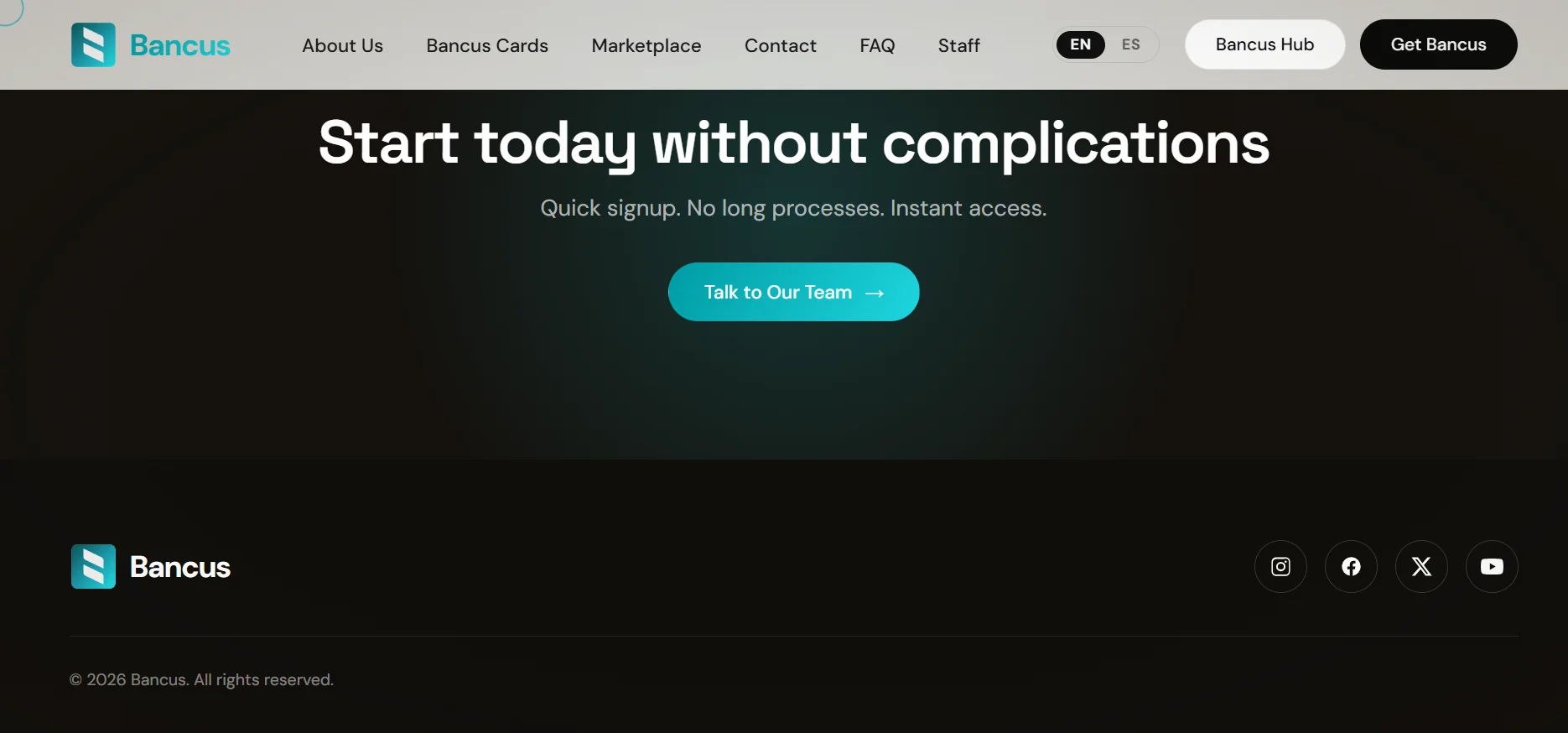
The platform uses a unilevel referral structure rather than binary or matrix plans. Membership is often free. Revenue focuses on card sales, top-ups and token purchases.
Card products have been priced historically in the $25 to $85 range plus shipping, paid mainly in USDT. Three tiers exist:
- Bancus Go: virtual card with lower limits
- Bancus One: physical card
- Bancus One Elite: premium metal card with higher spending limits
Older materials showed residual commissions on card purchases across three levels: 10 percent at level 1, 15 percent at level 2 and 10 percent at level 3, for a total of 35 percent of the commissionable amount. A common example used a $75 commissionable base, producing $7.50, $11.25 and $7.50 respectively.
Top-ups carry an approximate 4 percent fee. From that fee pool, about 1 percent is distributed across the same three levels (roughly 0.285 percent, 0.43 percent and 0.285 percent).
The BANC token operates on BNB Smart Chain with a fixed 300 million supply. It is marketed as RWA ownership plus utility and governance. Token sales pay commissions across up to ten levels: 6 percent plus 5 percent tokens at level 1, then 5 percent, 4 percent, 3 percent, 2 percent and 1 percent for each of the remaining levels, reaching a published total near 25 percent. Staking is advertised at 1.25 percent monthly or 3.75 percent quarterly. Simple annual calculation gives 15 percent; compounded monthly it reaches about 16.08 percent.
These percentages can be funded in theory from fees and token allocations. The open questions concern scale, liquidity and whether real external revenue covers the obligations once recruitment slows.
Part : 2 Token Economics and Sustainability Questions
At full staking of the entire supply, 1.25 percent monthly would require 3.75 million tokens each month. A reported 25 percent rewards allocation equals 75 million tokens and could last roughly 20 months under that extreme assumption. In practice only a fraction may be staked, yet the source of ongoing value still needs clear documentation.
Official pages have shown token prices around $0.23 while some decentralised exchange snapshots listed lower figures near $0.11 with liquidity in the $1,000 range and very low daily volume. Large sales at such liquidity would move the price sharply. Projected rises toward 1.50–3 or a $1 billion market capitalisation remain marketing figures, not guarantees.
2.1 User Experience, Trust Signals and Fees
Trustpilot scores average near 3.2 from roughly 240 reviews. Early users sometimes report successful card use for everyday purchases. Later complaints frequently mention delayed or undelivered physical cards, activation failures, slow or unresponsive support, refund difficulties and token liquidity problems. Automated scanners such as ScamAdviser and Gridinsoft assign very low trust scores, citing hidden ownership and high-risk financial services.
Top-up fees sit near 4 percent. Daily spending limits historically ranged from $2,500 for the virtual card to $15,000 for the metal version. KYC is described as simplified. Support channels include email, chat, WhatsApp and Telegram; response times draw mixed feedback.
Bancus Review Comparison with Traditional Options
Traditional bank savings or certificates of deposit typically yield under 5 percent. Rental real-estate net yields often fall between 4 and 10 percent. Lower-risk crypto staking on major platforms commonly sits in the 3–12 percent range. The advertised token staking sits higher and depends on continued demand and liquidity. Card interchange and top-up fees provide identifiable revenue for the payment side, yet the combined referral and token layers require ongoing inflows to remain balanced at large scale.
Bancus Review
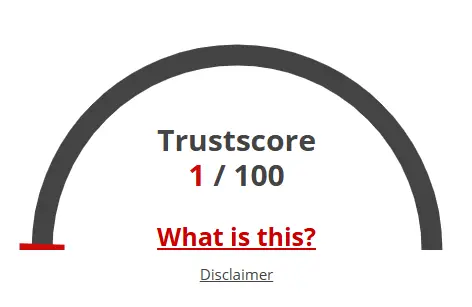
A website’s trust score is an important indicator of its Bancus icludes low web traffic, negative user feedback, potential phishing risks, undisclosed ownership, unclear hosting details, and weak SSL encryption.
With such a poor trust score, the likelihood of fraud, data breaches, or other security issues is much higher. It is crucial to carefully assess these warning signs before engaging with Bancus Similar platform.
Positive Highlights
- We found a valid SSL certificate
- DNSFilter labels this site as safe
Negative Highlights
- The Tranco rank (how much traffic) is rather low.
- The age of this site is (very) young.
Frequently Asked Questions About Bancus
This section answers key questions about Bancus concerns, and highlights issues related to the platform’s legitimacy.
Bancus presents itself as a digital-asset financial platform offering payment solutions, cards, and a referral network.
Bancus should be evaluated carefully by checking its ownership, regulatory status, business model, payment history, and independent user feedback.
Bancus promotes a referral network, but users should verify the actual commission structure and whether rewards depend on genuine product sales or recruitment.
Key risks can include regulatory uncertainty, limited transparency, withdrawal issues, business-model sustainability, and potential loss of funds.
Everstead Review is a separate keyword/topic; for Bancus, users should independently verify ownership, regulation, products, fees, and withdrawal conditions.
Other Infromation:
WHOIS data : Hidden
Owner : REDACTED FOR PRIVACY
Country: US
WHOIS Registration Date :2024-10-16
WHOIS Last Update:2026-08-12
WHOIS Renew Date:2026-10-16
Website:Bancus
Title :Bancus
Reviews:
There are no reviews yet. Be the first one to write one.