
Atlas System Review: Ownership, Compensation Plan and Risk Analysis
This Atlas System Review examines the Web3 platform that launched publicly around July-August 2026. It presents itself as a digital mutual-aid fund using Smart Cycles on the BNB Smart Chain with USDT. Returns called “Delta” come from participant contributions and shared liquidity pools, not from external business activity such as trading or real estate. Claims are not guaranteed and depend on available liquidity and ongoing activity. Scams Radar

Table of Contents
Part : 1 Ownership and Leadership Profiles
Public materials identify no real names for founders, executives or directors. The public face is an anonymous digital persona known as “the Architect.” Project descriptions state this figure represents a real person with prior experience building referral structures in multilevel marketing, software architecture, blockchain and smart contracts. The background also references observations of community mutual-support practices.
No legal entity name, country of incorporation, registration number or beneficial owners appear in standard public materials. Domain registration details are obscured. This structure is described as a Hybrid DAO that combines smart-contract rules with retained administrative privileges. Independent verification of the people in control is therefore limited.
1.1 Complete Compensation Plan Breakdown
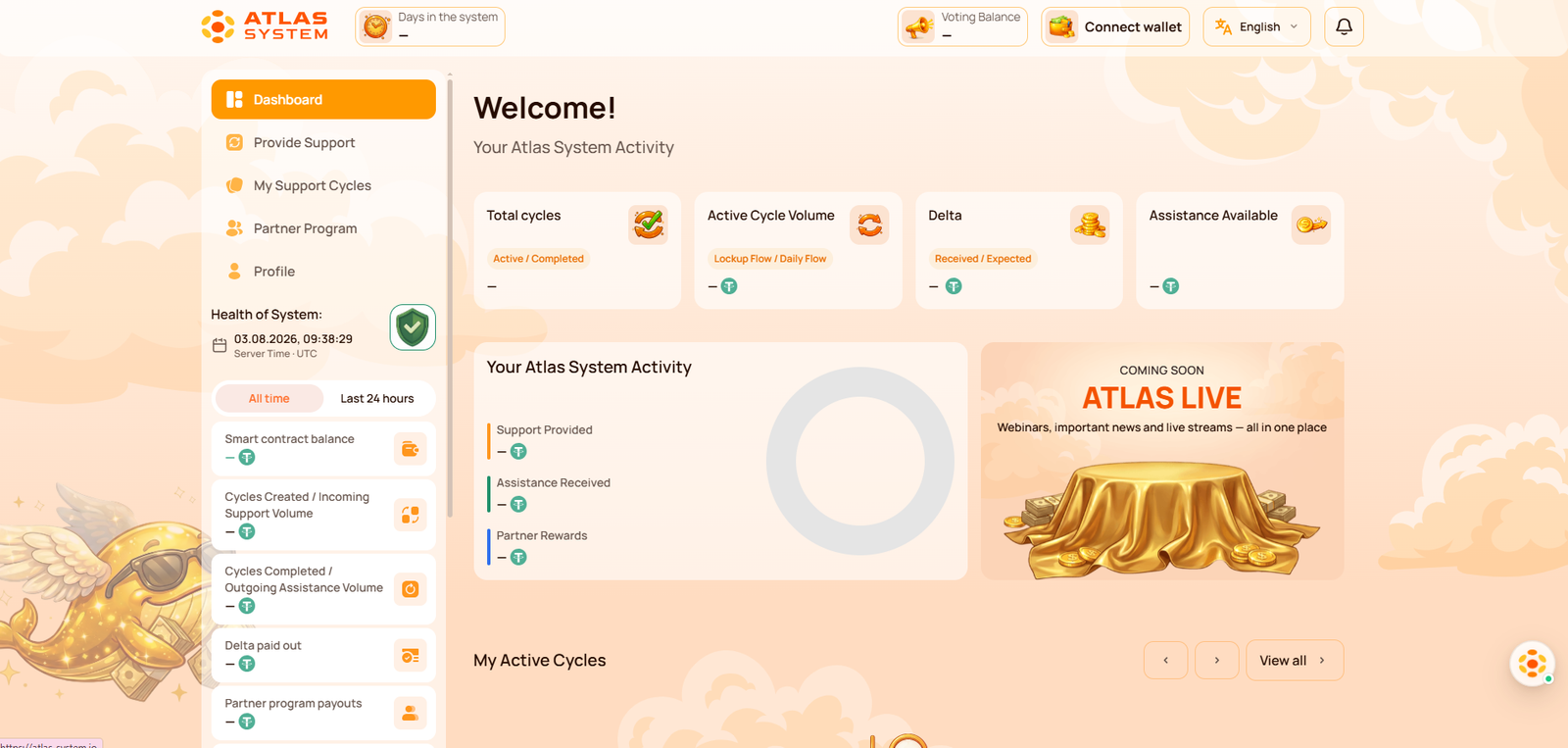
Atlas System operates through two main Smart Cycle flows and a multi-level referral program called Invite & Earn.
Lockup Flow examples
Participants lock USDT for a fixed period and later request the principal plus a set Delta in one transaction:
- 1 day: +0.3%
- 5 days: +2%
- 10 days: +5%
- 20 days: +12%
- 30 days: +22.5%
Daily Flow examples (200-day plans)
- Core ($10–$2,000 contribution): roughly +120% total (about 1.1% daily average, principal returned within the daily payouts)
- Elite (over $2,000): roughly +160% total (about 1.3% daily average)
Referral / Partner Program
Rewards equal 15% to 60% of the Delta generated by partners in the structure, to unlimited depth. The exact percentage rises with status. Status depends on personal volume, first-line volume and total organization volume. Matching bonuses appear at higher ranks. Compression applies. All calculations run automatically on-chain.
Funds enter shared liquidity pools. Claims draw from those pools. Audits (including Cyberscope) note a “first-come reward model.” Early successful claims can reduce liquidity available for later participants. There is no isolated reserve that guarantees every calculated Delta.
1.2 Why the Numbers Raise Sustainability Questions
The model redistributes participant contributions. No substantial external yield source is described. Simple illustrations show the pressure this creates.
Suppose 100 people each contribute $1,000 under a plan that ultimately returns $2,200. The system must eventually pay $220,000 against $100,000 collected. The extra $120,000 (plus referral commissions and fees) must come from new or repeat contributions unless external profits exist.
A 22.5% return in 30 days annualizes to extreme rates if cycled repeatedly. Longer plans still imply high double- or triple-digit annualized figures once partner rewards are included. Realistic benchmarks provide context:
Investment Type | Typical Annual Return | Risk Profile | Transparency Level |
Bank / high-yield savings | 3–6% | Low | High |
Diversified stocks / real estate | 7–12% | Moderate | High |
Established crypto staking | 3–15% | High | Variable |
Atlas System short cycles | Hundreds of % possible if repeated | Extreme | Limited ownership disclosure |
These comparisons highlight the gap between advertised Deltas and returns grounded in productive economic activity.
Part : 2 Key Risk Factors and Transparency Points
- Anonymous leadership and hidden beneficial ownership
- Shared liquidity and first-come claim mechanics noted in audits
- Explicit dependence on continued participant activity for payouts
- Multi-level referral incentives that reward network growth
- Very new project with limited independent track record
- Hybrid structure that retains administrative controls despite smart-contract language
On-chain visibility and published source code allow verification of transactions. Audits exist. These features improve technical transparency relative to fully opaque platforms. They do not remove economic or accountability risks.
Practical Outlook and Recommendations
Early participants and strong recruiters can benefit while net inflows remain strong. When growth slows, liquidity pressure and delayed or partial claims become more probable. This pattern has appeared in many earlier mutual-financing and high-yield redistribution models.
Safer options for capital include regulated savings products, diversified index funds, or carefully evaluated assets whose returns come from real economic activity. Only funds that can be lost without hardship should ever be considered for high-risk participation models.

Atlas System Activity Review
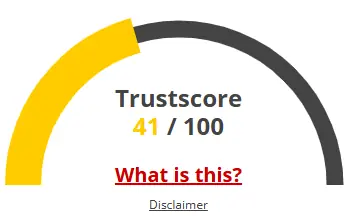
A website’s trust score is an important indicator of its reliability Atlas System Activity includes low web traffic, negative user feedback, potential phishing risks, undisclosed ownership, unclear hosting details, and weak SSL encryption.
With such a poor trust score, the likelihood of fraud, data breaches, or other security issues is much higher. It is crucial to carefully assess these warning signs before engaging with a Atlas System Activity Similar platform.
Positive Highlights
- We found a valid SSL certificate
- DNSFilter labels this site as safe
Negative Highlights
- The Tranco rank (how much traffic) is rather low.
- The age of this site is (very) young.
Frequently Asked Questions About Atlas System Activity Review
This section answers key questions about Atlas System Activity clarifies points, addresses concerns, and highlights issues related to the platform’s legitimacy.
Public transparency is limited, so verify all claims before investing.
It claims to earn through trading and digital asset strategies.
Limited transparency, unclear revenue, and high ROI claims.
Compare transparency, business model, and investment risks.
Research carefully and invest only what you can afford to lose.
Other Infromation:
WHOIS Registration Date: 2026-03-16
WHOIS Last Update: 2026-06-10
WHOIS Renew Date: 2029-03-16
Website: Atlas System Activity
Reviews:
There are no reviews yet. Be the first one to write one.