AEGIS X DAO Review 2026: Full Look at Ownership, Compensation Plan and Key Risks
This AEGIS X DAO Review examines the early-stage AI × DeFi protocol that centers on the USD1 stablecoin. The project markets itself as a DeFi 4.0 system with AI-driven liquidity and dual tokens. Readers seeking clear facts on how it works, who runs it, and what the reward structure actually looks like will find the details below. All points come from public materials available as of mid-August 2026. Scam Radar
Part : 1 What AEGIS X Claims to Offer
Table of Contents
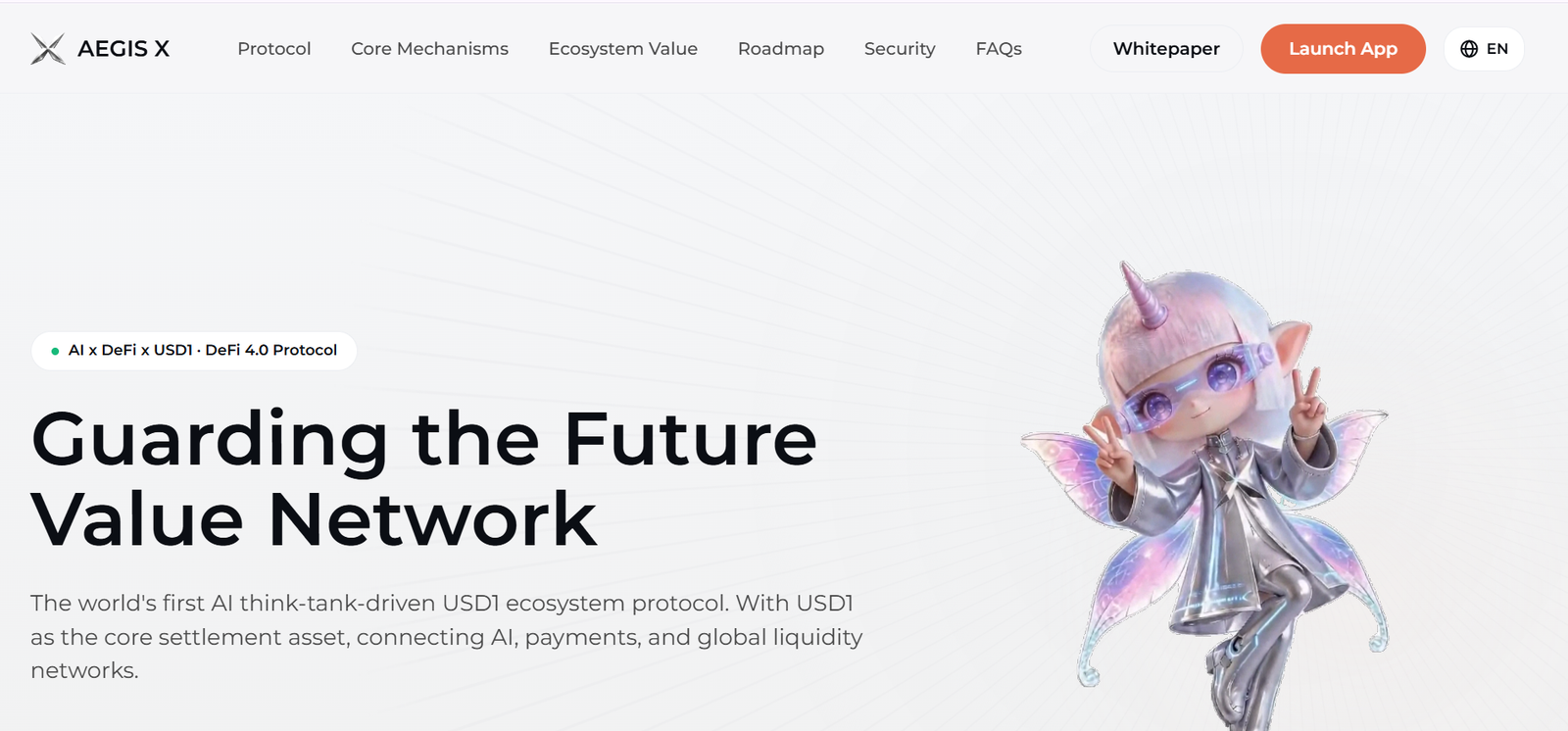
AEGIS X positions itself as an AI think-tank protocol built around USD1, a fiat-backed stablecoin linked to World Liberty Financial. The system uses two tokens. AGX serves as the governance and reward token. It is minted against roughly 150 percent collateral in USD1 or LP assets. X is a fixed-supply token of about 210 million units meant for longer-term value.
The design includes over-collateralization, rebase yields, token burns, and liquidity injection. Promotional material describes a 6:1 contribution rule on rewards—part burned and part added to liquidity. Staking and multi-layer deflation mechanisms appear throughout the documentation. Genesis phases offer discounted entry, airdrops, and claims of growing LP pools, sometimes cited above $15 million or $20 million.
The official site shows a modern design with wallet connection, whitepaper sections, and a roadmap. Activity on the main social channel focuses on phase updates and vision statements. USD1 itself exists as a real stablecoin with multi-billion market-cap reports. AEGIS X is a separate protocol that builds around it.
1.1 Ownership Profiles and Background Transparency
Public materials name two senior figures. James Can is presented as founding convenor of the AegisX Global Reserve Council and international market strategy lead. The claimed history includes past roles as OKX Turkey market head, international CMO of Merlin Chain, and CMO positions at MetaTdex and InitVerse. The résumé lists more than eight years in Web3.
Independent checks have not fully confirmed this exact career sequence under one clearly identified individual. Names alone do not prove identity across platforms. Jerry appears as the ecosystem strategic representative or strategic anchor. Materials link him to WLFI strategy, Layer-1 development, DAO governance, and global partnerships. Full legal name, nationality, corporate ties, previous employers, and formal authorization by World Liberty Financial remain unverified in open sources.
A Global Reserve Council is described as handling USD1 network growth, regional expansion, and multisignature governance. Multisig can improve security, yet the actual signer identities, wallet addresses, and ultimate control are not publicly detailed. Domain registration uses privacy protection. No clear public company registration, verified directors, or long track record tied to the operating entity appears in available data. The project is relatively new, with genesis activity noted around July 2026.
These gaps create high transparency concerns for anyone considering larger participation packages that range from $5,000 to $200,000.
1.2 Complete Compensation Plan Breakdown
The structure combines staking, rebase rewards, and community-building incentives. Onboarding guides instruct users to connect a referrer first. Failure to link a referrer prevents generation of a personal referral URL. This makes network growth a core part of participation.
Ranks run from A1 to A13. Advancement depends on personal holdings, effective referrals, and team performance. Dual-zone or two-leg advancement is described, resembling binary-style progression. Same-level leadership development unlocks higher shares. An A13 participant who builds two same-level nodes may share in a weighted portion of a 5 percent global Rebase allocation.
Reward categories include:
Direct referral rewards
Participation or staking rewardsSame-level or matching rewardsOvertaking or surpassing rewardsLucky or promotional rewards
Node or co-building packages form the entry point. Larger packages qualify for X-token airdrops. The overall design is best classified as a hybrid binary and multi-level rank-based system. No fixed matrix such as 2×2 or 3×3 has been independently confirmed.
A separate verified BSC contract named ClusterYield shows fixed daily rates from 0.7 percent to 2.8 percent across eight plans with lock periods up to 180 days and a 17-level referral structure totaling up to 71 percent of rewards plus a 10 percent platform fee. Linkage between that contract and AEGIS X has not been established, so it remains a separate technical finding.
Part : 2 Why Yield Claims Raise Mathematical Questions
Japanese analyses of project documentation report daily rates around 0.5–1.0 percent with automatic compounding and a displayed APY near 4,880 percent on a 540-day plan. Simple calculations show the scale.
At 0.5 percent daily compounded, $1,000 grows to roughly $6,175 in one year (about 517 percent). At 1 percent daily the same amount reaches about $37,783 (roughly 3,678 percent). Over 540 days the numbers become far larger.
Compare these figures with ordinary benchmarks:
Investment Type | Typical Annual Return | Time to Double (approx.) |
High-yield savings | 3–5% | 15–18 years |
Broad stock index (historical) | ~10% | 7 years |
Real-estate net yields | 4–10% | 8–15 years |
Mature DeFi lending/staking | mid-single to low double digits | Varies |
Reported AEGIS X range | 517–3,678%+ | Months |
Real markets rarely produce stable risk-free returns at these levels. Sources of yield must come from trading fees, market-making profits, or other external activity. Token burns and collateralization can reduce supply pressure but do not create new external value by themselves. Rewards paid in project tokens also face price risk—if the token falls, nominal gains shrink in real terms.
Withdrawal rules add further friction: early exit taxes near 20 percent after five days, lower rates after longer holds, basic selling fees, and possible temporary higher fees during market stress. Account balances may not equal immediately available cash.
2.1 Traffic, Perception and Practical Risks
Independent traffic rankings remain low. Public discussion is dominated by project channels and promotional articles that often repeat similar language. Related domains using the Aegis name have received very low trust scores on some scanners, though direct linkage to the current project is not always clear. No widespread confirmed fraud reports specific to the exact current site appear in the reviewed sources, yet the category remains high-risk by nature.
Key practical risks include early-stage status, complex dual-token mechanics, limited independent smart-contract audits that can be clearly attributed, privacy-protected ownership, and reliance on continued participant inflows. Connecting a wallet always carries technical risk in any DeFi setting.
Practical Takeaways for Readers
AEGIS X presents a technically detailed on-chain design with published contract addresses and stated collateral rules. These features are stronger than completely opaque sites. At the same time, the combination of high implied yields, multi-level rank incentives, limited independent verification of leadership, and unclear external revenue sources places the project firmly in the high-risk category.
Anyone considering participation should verify every contract address on a block explorer, confirm current liquidity composition, examine actual treasury flows, and treat any high APY figure as promotional until proven by sustained, audited external revenue. Capital that cannot be lost entirely should stay away.
Aegisdao view
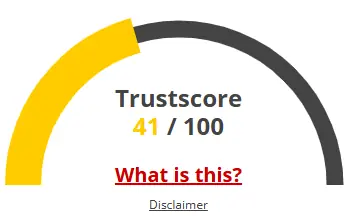
A website’s trust score is an important indicator of its aegisdao includes low web traffic, negative user feedback, potential phishing risks, undisclosed ownership, unclear hosting details, and weak SSL encryption.
With such a poor trust score, the likelihood of fraud, data breaches, or other security issues is much higher. It is crucial to carefully assess these warning signs before engaging with a aegisdao ..Similar platform.
Positive Highlights
- We found a valid SSL certificate
- DNSFilter labels this site as safe
Negative Highlights
- The Tranco rank (how much traffic) is rather low.
- The age of this site is (very) young.
Frequently Asked Questions About Aegisdao
This section answers key questions about Aegisdao . clarifies points, addresses concerns, and highlights issues related to the platform’s legitimacy.
AEGIS X DAO has several red flags, so investors should exercise caution.
It uses a DAO-based crypto investment and reward model.
Risks include unclear ownership, high-return claims, referral incentives, and withdrawal risks.
Yes, its promoters reportedly use referral-based rewards to attract participants.
Investors should compare transparency, returns, risks, and verified performance before deciding.
Other Infromation:
WHOIS data : Hidden
Owner : REDACTED FOR PRIVACY
Country: US
WHOIS Registration Date 2026-07-01
WHOIS Last Update: 2026-08-12
WHOIS Renew Date: 2029-07-01
Website:aegisdao
Title: aegisdao
Reviews:
There are no reviews yet. Be the first one to write one.