UxtNetworkReview 2026: Ownership, Compensation Plan, and Key Investor Risks
This UxtNetworkReview examines the platform linked to UXTERA and the UXT token. It draws on public domain data, promoter materials, scanner reports, and mathematical checks of stated yields. The goal is clear information for ordinary readers who want facts on legitimacy, ownership, and how money moves through the system.
UXT Network markets itself as a crypto wallet-connect platform with staking and referral features. Related sites promote payments utility, a fixed 21 million token supply, debit cards, and Layer-1 plans. The app itself centres on connecting wallets such as MetaMask, Trust Wallet, Coinbase Wallet or WalletConnect, then staking and earning through referrals. Domain age, ownership opacity and yield claims require careful scrutiny.Scams Radar

Part 1: Ownership and Background Profiles
Table of Contents
Public records show limited transparency regarding UXT Network’s ownership and corporate structure. The domain was registered on 7 March 2026 through GoDaddy with privacy-protected WHOIS details. The platform reportedly uses Amazon AWS infrastructure, while publicly available information does not clearly establish the legal operating entity, its physical business address, or independently audited financial records.
Publicly available evidence remains insufficient to establish the complete ownership structure, beneficial owners, or the full professional histories of the individuals associated with the platform.
A related Hong Kong entity, UXT Technologies Limited, has appeared in some business directories with a reported incorporation date in mid-2026. However, its precise legal and operational relationship with the UXT Network application requires confirmation through official company records.
These findings highlight the importance of distinguishing promotional claims from verified corporate information. Before investing, readers should independently confirm the platform’s legal operator, registration details, directors, beneficial ownership, regulatory status, and financial disclosures through the relevant official registries.
The absence of independently verified information does not, by itself, prove fraud. Nevertheless, limited ownership transparency makes it more difficult for potential investors to assess accountability and understand who is ultimately responsible for the platform’s operations.
Additional Ownership, Masterminds and Alleged Repeat-Scam Connections
Identifying the Individuals Behind the UXT era Network
Rajessh Kashyap, Mohanlal Saini, and Deendyal Saini have been named in allegations concerning the possible ownership and development of the UXTera concept. Their actual ownership, decision-making authority, financial interests, and operational control must be established through a thorough examination of corporate, financial, and digital evidence. These claims have not been independently verified for this review and should not be treated as established findings.
Of particular concern are reported connections involving earlier business concepts known as NRK Nordek and AZ Bank. These connections warrant investigation into whether the same individuals, associates, or controlling interests were involved in those ventures and whether reliable evidence establishes any pattern of investor deception or financial misconduct connected to UXTera.
A proper due-diligence review should seek reliable records—such as court documents, regulatory notices, official investigation records, or verifiable corporate filings—before drawing conclusions about any named person. Until such evidence is available, these matters should be treated as allegations requiring further verification, not as proof that any individual committed fraud.
Alleged XT Exchange Connection: A Potential Nexus Requiring Urgent Investigation
Unexplained Suspension of UXT Trading and Investor Exposure
Serious questions have been raised concerning the role of XT Exchange in relation to UXT token trading and its alleged connections with the individuals identified in allegations concerning the UXTera concept: Rajessh Kashyap, Mohanlal Saini, and Deendyal Saini. These alleged connections have not been independently verified in this review.
UXT trading was reportedly suspended on XT Exchange without a clear official notification to affected users or a sufficiently transparent public explanation. This report should be checked against XT Exchange’s official announcements and trading-status records. If confirmed, restrictions on trading could limit holders’ ability to exit positions and may have significant financial consequences.
The circumstances surrounding any suspension require clarification.
Key Questions That Must Be Answered
- Reason for suspension: What circumstances led to the suspension of UXT trading, and who initiated, requested, or authorised the decision?
- User notification: Was an official announcement issued? If so, when, through which channels, and with what explanation?
- Coordination and communications: Were there communications, agreements, arrangements, or coordinated decisions between XT Exchange, UXTera’s owners or management, and associated entities concerning the token or its trading suspension? Documentary evidence would be needed to establish any such connection.
- Advance knowledge: Did any relevant individuals or entities know in advance that trading would be suspended, and were material facts disclosed fairly to affected users?
- Investor protection: What arrangements, if any, exist for affected holders, and what official guidance has been provided regarding trading access, withdrawals, custody, and the status of their holdings?
- Financial and operational accountability: Do exchange records, listing agreements, internal communications, wallet movements, or other documentary evidence indicate improper coordination, concealment, or a breach of applicable obligations?
Is There a Wider Nexus?
The reported suspension, its potential consequences for UXT holders, and questions surrounding the token’s ownership and management warrant further investigation into whether any broader relationship existed between XT Exchange and the individuals or entities behind UXTera. The existence of such a relationship or any wrongdoing should not be treated as established without reliable documentary evidence.
1.1 How the Platform Works in Simple Terms
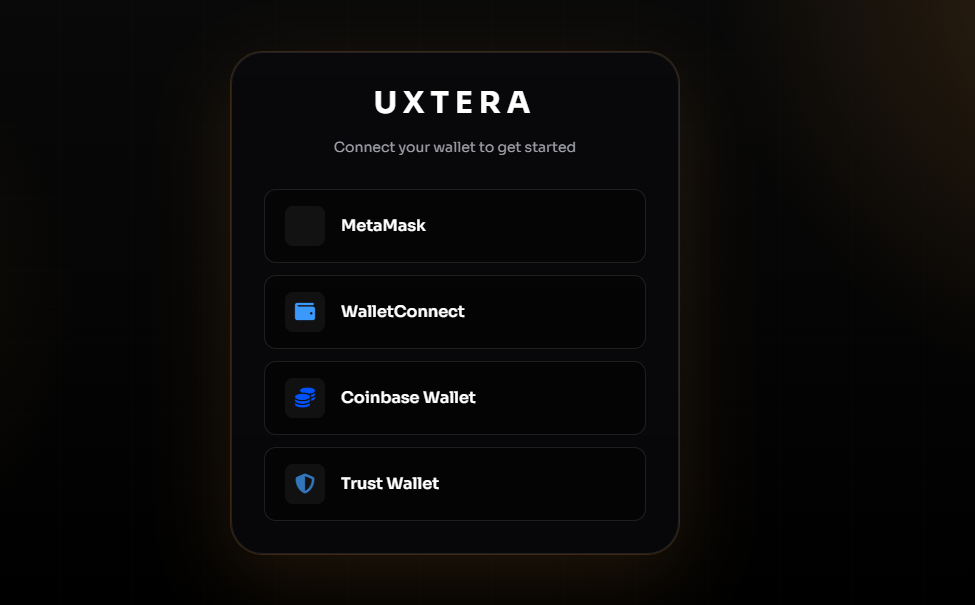
Users connect a crypto wallet and deposit tokens. Staking plans and referral links follow. Marketing mixes utility stories (payments, cards, P2P) with daily percentage returns. Tokens are said to burn on staking, presented as a deflationary feature. Withdrawals occur in platform tokens, often with fees and low minimums. Support channels lean on upline contacts rather than independent regulated help desks.
1.2 Compensation Plan Details
Promoter videos and descriptions outline the following structure. Exact official documents were not fully retrievable from the application URL during checks, so figures come from public promotional sources and should be verified against any live contract.
- Staking Plan A: Smaller stakes (examples given as 1–100 tokens) pay 0.5 percent daily.
- Staking Plan B: Higher stakes (examples 101–500 tokens) pay 0.6 percent daily.
- Income caps: Self-income limited to roughly 3 times the original stake. Team income limited to roughly 5 times.
- Referrals: Approximately 5 percent on direct stakes plus multi-level payouts reported up to 15 levels.
- Other features: Token burn on staking; low minimum withdrawals (examples around 1 UXT) with fees (examples around 5 percent).
Annualised simple rates reach 182.5 percent at 0.5 percent daily and 219 percent at 0.6 percent daily. Compounded figures climb far higher. Even with the 3x and 5x caps, the model requires continuous new deposits once early participants approach their limits. No independent evidence of external revenue from payments, fees or card usage large enough to cover these obligations has been published.
Illustrative growth table for a $1,000 stake (hypothetical, fees and token price ignored)
Daily rate | Simple annual | Compounded approximate after 365 days |
0.5 % | 182.5 % | ~518 % |
0.6 % | 219 % | higher still |
Compare this with typical long-term benchmarks: bank savings or CDs usually under 5 percent, diversified real estate net returns often 5–12 percent, and established DeFi staking on major assets commonly 3–15 percent APY. Yields above those ranges for sustained periods almost always depend on new capital inflows.
Simplified cash-flow view
Opening cash + external revenue + new deposits – withdrawals – costs = ending cash. Token burns and price movements do not automatically create withdrawable cash. When recruitment slows, the gap appears.
Part : 2 Red Flags and Risk Indicators
Several consistent signals appear across scanners and public data:
- Extremely young domain with hidden ownership.
- Daily yields far above any realistic productive asset class.
- Multi-level referral structure plus recruitment incentives.
- Token burn paired with high payout obligations that mathematically need fresh money.
- Limited independent verification of team track records.
- Reports of low liquidity, mixed exchange presence and temporary trading suspensions on some venues.
- Promoter activity centred on earnings demos and referral links rather than audited development updates.
- Trust scores from tools such as Gridinsoft around 18/100, flagging young domain and crypto risk patterns.
Traffic data remains thin. Independent user reviews are sparse. Customer support relies heavily on referral networks. Wallet connection itself works in demos, yet long-term withdrawal consistency at scale stays unproven.
2.1 Token and Liquidity Notes
Reported supply sits near 21 million tokens. Contract addresses circulating in listings (examples on BNB Smart Chain) show varying liquidity and ownership status. Scanners have noted non-renounced ownership and low locks in some reports. Displayed prices do not guarantee that large amounts can be sold without sharp slippage. Always match the exact contract address from official sources before interacting.
2.2 Practical Comparison Table
Asset type | Typical sustainable return range | Main funding source | Key practical risks |
Bank savings / CDs | Under 5 % | Interest margin | Inflation, institution risk |
Real estate (net) | 5–12 % long-term | Rent + value change | Vacancy, costs, liquidity |
Established crypto staking | 3–15 % APY | Protocol fees / rewards | Smart-contract, price, lock-up risk |
High daily-yield staking claims | 180 %+ annualised | Often new deposits | Recruitment dependence, total loss risk |
Part : 3 Recommendations for Readers
Treat any earnings screenshots as possible early incentives rather than proof of lasting capacity. Prefer platforms with clear legal entities, audited accounts, realistic yields and independent revenue. If exploring crypto, start with established exchanges and blue-chip assets while accepting smart-contract risk. Never use money needed for living costs or emergency reserves.
Before any decision, confirm the legal operator name, registration number, directors, exact compensation document, token contract address, liquidity depth and withdrawal rules in writing. Check current smart-contract code, on-chain activity and regulatory notices yourself.
Final assessment
This UxtNetworkReview finds the platform carries elevated risk. Ownership remains opaque, yields appear mathematically dependent on continuous inflows, and independent verification of sustainable revenue is missing. The combination matches patterns seen in many short-lived high-yield crypto and MLM-style programmes. Proceed only after completing the checks above and only with capital you can afford to lose entirely.
UXT Network Review
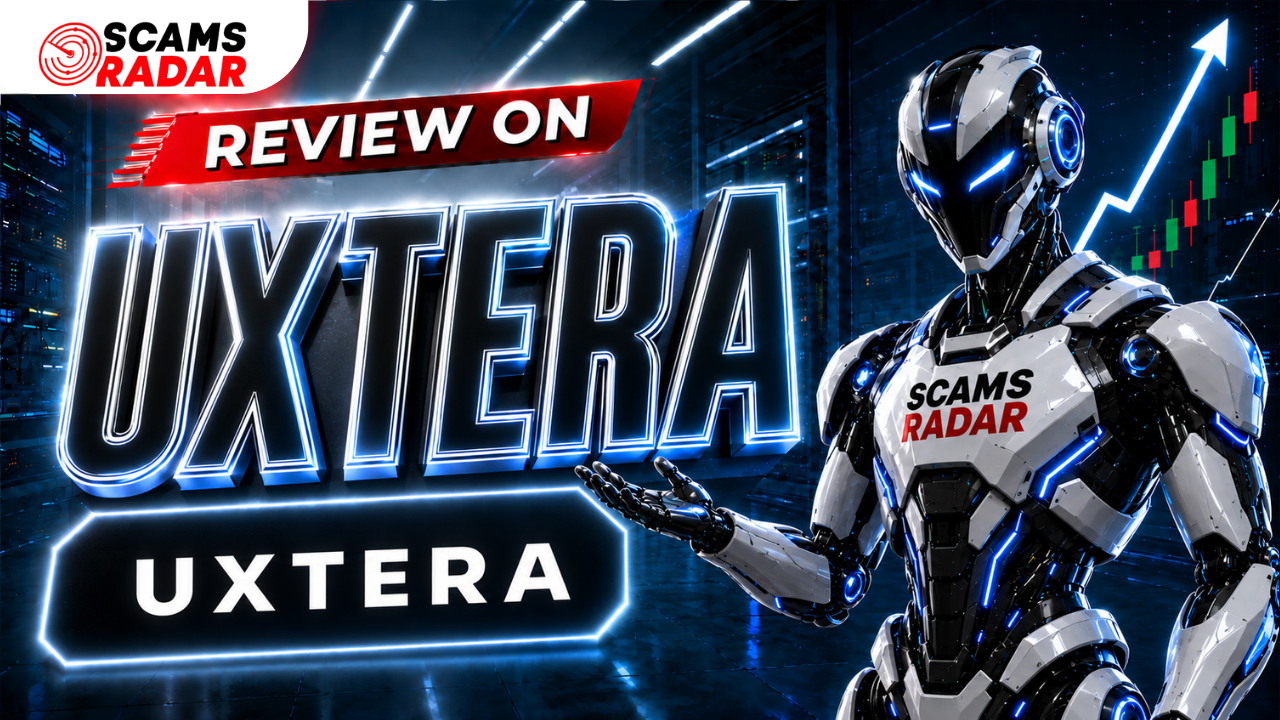
A website’s trust score is an important indicator of its UXT Network icludes low web traffic, negative user feedback, potential phishing risks, undisclosed ownership, unclear hosting details, and weak SSL encryption.
With such a poor trust score, the likelihood of fraud, data breaches, or other security issues is much higher. It is crucial to carefully assess these warning signs before engaging with UXT Network Similar platform.
Positive Highlights
- We found a valid SSL certificate
- DNSFilter labels this site as safe
Negative Highlights
- The Tranco rank (how much traffic) is rather low.
- The age of this site is (very) young.
Frequently Asked Questions About UXT Network
This section answers key questions about UXT Network concerns, and highlights issues related to the platform’s legitimacy.
UXT Network is a platform whose business model, earning methods, and investment requirements should be carefully verified.
Check its ownership, regulatory status, audited records, and verified withdrawals before investing.
Review its referral commissions, team bonuses, rank requirements, and payout conditions.
Sustainable returns require verifiable revenue sources and independently audited financial evidence.
Everstead Review examines UXT Network’s legitimacy, ROI claims, compensation plan, and potential investor risks.
Other Infromation:
WHOIS data : Hidden
Owner : REDACTED FOR PRIVACY
Country:US
WHOIS Registration Date : 2026-03-07
WHOIS Last Update: 2026-03-07
WHOIS Renew Date: 2027-03-07
Website: UXT Network
Title : UXT Network
Reviews:
There are no reviews yet. Be the first one to write one.