T1Bot Review: Complete Analysis of Ownership, Compensation Plan, Risks and Legitimacy in 2026
This T1Bot review examines the platform’s structure, owners’ profiles, compensation plan and overall risks for anyone considering its AI trading tools. The goal is clear information so readers can decide carefully.
T1Bot presents itself as a non-custodial AI trading and arbitrage system. Users buy annual licenses to access bots, copy trading, compounding and multi-exchange tools. The company keeps 20 percent of any generated profits. Membership for promotion is free, but full access requires a paid license. All payments happen in cryptocurrency. Scams radar

Part 1: Owners’ Profiles and Company Background
Table of Contents
No verified owner or executive team appears on the site or in public records. Domain registration for the platform occurred on April 22, 2026 through IONOS with privacy protection. The only location detail is Florida, United States. Name servers follow standard ui-dns patterns. No company name, founders, directors, physical office or beneficial owners are listed.
This anonymity creates a clear gap. Investors cannot check past business records, regulatory history or prior projects. Legitimate platforms normally publish leadership biographies, corporate registration numbers and contact addresses. Here those details remain hidden. Independent checks from multiple sources confirm the same result: zero public ownership transparency.
Without named individuals, background verification becomes impossible. No criminal records, prior MLM involvement or regulatory actions can be confirmed or ruled out simply because the operators stay unidentified.
1.1 T1Bot Compensation Plan and License Structure
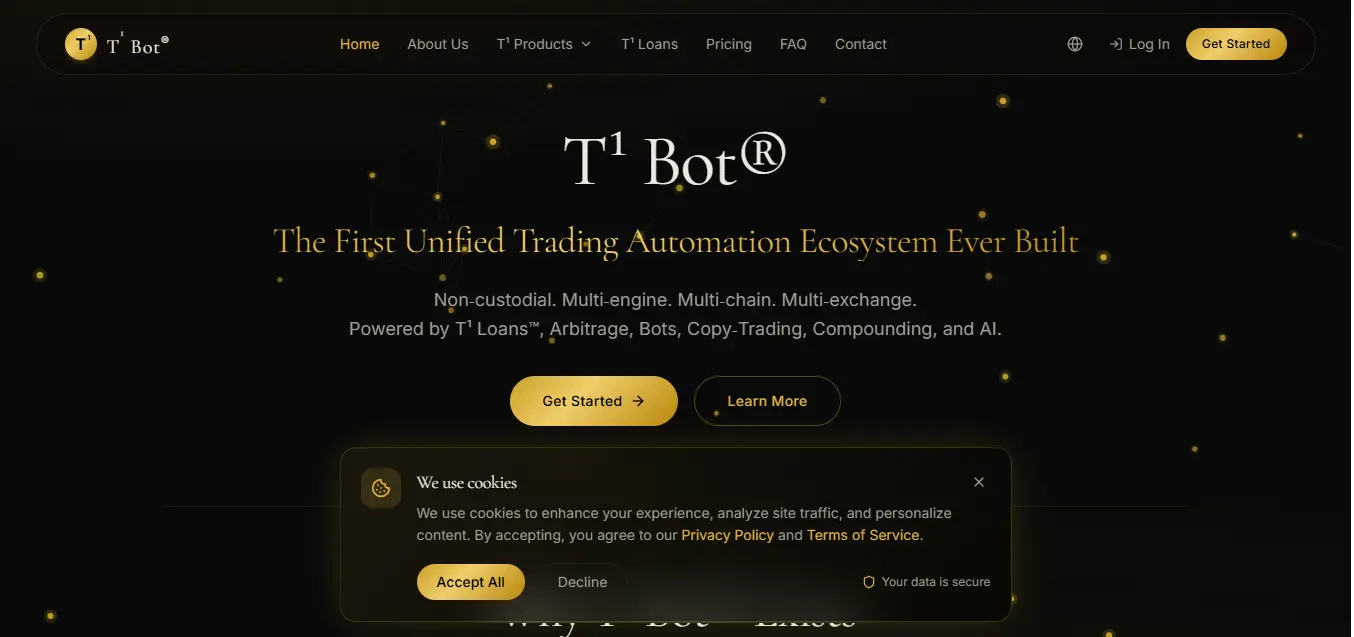
The compensation plan centers on annual licenses and referral payments. Here is the full pricing table:
License Tier | Annual Cost |
T1 Starter | $1,250 |
T1 Trader | $2,500 |
T1 Pro | $5,000 |
T1 Elite | $10,000 |
T1 Executive | $25,000 |
T1 Institutional | $50,000 |
T1 Sovereign | $100,000 |
Users keep 80 percent of trading profits. The platform takes the remaining 20 percent. Referral commissions equal 10 percent of license fees paid across two unilevel levels. There are no separate retail products. Revenue comes mainly from license sales. Commissions are paid from those same sales.
This structure means new license purchases fund both referral payouts and any early returns. Once recruitment slows, the model faces pressure. The plan matches classic unilevel recruitment patterns rather than product-driven sales.
1.2 Mathematical Reality of Return Claims
High passive returns cannot continue indefinitely. Consider a simple example. Assume 1,000 members buy the $5,000 Pro license. Total capital raised reaches $5 million. If the platform aims for a modest 10 percent annual return to users after its 20 percent cut, it needs roughly $625,000 in trading profit. Add typical referral commissions of about $1 million and the required trading return climbs above 40 percent on remaining capital.
Realistic benchmarks look different:
Investment Type | Typical Annual Return |
Bank savings | 1–5 percent |
Real estate net yield | 3–6 percent |
S&P 500 long-term | 8–10 percent |
Professional hedge funds | 10–25 percent |
Sustainable arbitrage funds | Usually under 20–40 percent |
Required return in example | Over 40 percent |
Daily compounding claims of 1–3 percent produce extreme yearly figures that no regulated market sustains. Arbitrage opportunities shrink quickly under competition from large institutions. The numbers show why sustained high returns without matching risk remain unrealistic.
Part 2: Public Perception, Traffic and Independent Checks
Traffic data shows low daily visitors and month-over-month declines. Most visits arrive through direct referral links. Trust scores from independent scanners range from low teens to the mid-50s. Reviews consistently note the new domain, missing ownership details and recruitment focus.
Security claims include HTTPS and non-custodial design. Funds stay in user wallets or exchanges while the bot routes trades. Still, automated execution can produce losses from market moves, leverage or algorithm errors. No public third-party security audits or insurance details appear.
Customer support relies on a contact form. No verified phone line, physical address or transparent ticket system is listed. Crypto-only payments remove chargeback options and make recovery difficult.
2.1 Red Flags in Clear Terms
- Anonymous ownership and private domain registration
- High license fees with no audited performance history
- Referral commissions paid from new license sales
- No regulatory registration found with major securities or commodities bodies
- Crypto-only irreversible payments
- Marketing of passive high returns without verifiable results
- Low independent traffic and declining visitor numbers
Practical Recommendations
Anyone evaluating the platform should demand full ownership documents, audited trading statements and regulatory proof before sending funds. Test small withdrawals if possible. Compare against regulated brokers that publish transparent fees and performance. Alternatives include established open trading platforms with proven track records and strict personal risk limits.
T1Bot Review
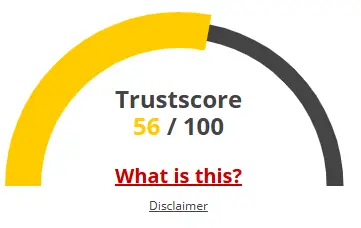
A website’s trust score is an important indicator of its T1Bot icludes low web traffic, negative user feedback, potential phishing risks, undisclosed ownership, unclear hosting details, and weak SSL encryption.
With such a poor trust score, the likelihood of fraud, data breaches, or other security issues is much higher. It is crucial to carefully assess these warning signs before engaging with T1Bot Similar platform.
Positive Highlights
- We found a valid SSL certificate
- DNSFilter labels this site as safe
Negative Highlights
- The Tranco rank (how much traffic) is rather low.
- The age of this site is (very) young.
Frequently Asked Questions About T1Bot
This section answers key questions about T1Bot concerns, and highlights issues related to the platform’s legitimacy.
T1Bot is a platform that combines AI trading tools with network marketing opportunities.
Users should verify its ownership, business model, and claims before joining.
T1Bot promotes earnings through memberships, commissions, and team-building rewards.
Potential risks include recruitment dependency and limited transparency.
Both can be evaluated based on transparency, compensation structure, and overall risk.
Other Infromation:
WHOIS data : Hidden
Owner : REDACTED FOR PRIVACY
Country: US
WHOIS Registration Date :2026-04-22
WHOIS Last Update:2026-04-27
WHOIS Renew Date:2027-04-22
Website:T1Bot
Title :T1Bot
Reviews:
There are no reviews yet. Be the first one to write one.