
TrafficSpacebar Review: Ownership, Compensation Plan, and Risk Breakdown
This TrafficSpacebar review examines the platform’s ownership background, full compensation plan, matrix structure, and overall sustainability using publicly available details. The focus stays on clear facts for beginners who want to understand how the system works before deciding anything.
TrafficSpacebar positions itself as a traffic exchange combined with referral commissions and a matrix or cycler system. Members view sites for short periods to earn credits. Paid packs and referrals feed the matrix. Independent analyses consistently note that earnings depend almost entirely on other members buying packs or subscriptions rather than outside advertising demand. Scams radar

Part 1: Ownership Profile and Background
Table of Contents
The operator appears as Tom Baker, listed as a sole trader in England and Wales in the terms of service. No company registration number, physical office address, executive team page, or verifiable public business records surface in open sources. Domain registration took place on May 1, 2026 through Spaceship with private WHOIS protection. The site is presented as a reboot of an earlier traffic exchange called Hundreds of Hits.
This limited transparency is common in the traffic-exchange niche yet remains a practical concern. Prospective users cannot easily confirm the operator’s full history or corporate structure. No verified criminal records or regulatory actions against the named individual appeared in the available research, but the absence of detailed disclosure still reduces accountability.
1.1 How the Traffic Exchange and Compensation Plan Work

Members start with free signup and starter credits. Viewing other sites for roughly ten seconds earns small amounts of credit. Those credits help promote a user’s own site. Paid top-up packs or subscriptions unlock more advertising credits and permanent positions in the matrix.
Reported pack prices have ranged from low double digits to several hundred dollars depending on the version and period. Referral commissions sit in the $5 to $160 range based on the pack size a referred member buys. Even free members can generate some referral income in certain descriptions.
The core earning engine is a forced matrix, most often described as 2-wide and 15 to 20 levels deep, though some materials reference a 3-wide structure. Positions fill through direct referrals and spillover. Many versions pay around $0.25 for each filled position below a member. Later updates emphasize on-chain USDC withdrawals on the Base network, instant transfers, and a cycler that rolls earnings back into new matrix positions.
Payout methods have included USDC, Litecoin, bank or Wise transfers, Revolut, and Amazon gift cards, with minimum thresholds sometimes around $35. The platform stresses verifiable on-chain wallets.
No meaningful retail product is sold to people outside the system. Nearly all commission money comes from other promoters purchasing packs. This structure defines a recruitment-driven model.
1.2 Matrix Growth in Simple Numbers
A 2-wide matrix expands quickly. Level 1 holds 2 positions. Level 2 holds 4. Level 3 holds 8. By level 10 the number exceeds 1,000 positions. A full 20-level matrix requires more than 2 million positions under a single starting point. At $0.25 per position the theoretical maximum reaches hundreds of thousands of dollars. Filling those positions demands continuous new pack purchases by later joiners.
Reported membership figures at various points stayed in the low thousands. That covers only a tiny fraction of one complete deep matrix. Most participants therefore sit near the bottom with little or no downline and earn far less than they spend.
Comparison with Everyday Returns
Source | Typical Annual Range | Risk Level |
High-yield savings | 3–5 % | Very low |
Residential rental property | 3–10 % | Moderate |
Broad stock index | 7–10 % historical | Market risk |
Reputable crypto staking | 2–10 % | Variable |
Matrix recruitment model | Theoretical high | Extremely high |
The matrix figures are mathematical maxima that assume perfect recruitment. Real fill rates stay far lower. Early joiners can profit while later joiners often recover little or nothing once growth slows.
Part 2: Traffic Quality, Trust Scores, and Public Feedback
Independent traffic tools show low visitor volume consistent with a young domain. SSL certificates are valid and Cloudflare is used. Scamadviser, Scam Detector, and Gridinsoft assign low or average trust scores, citing recent registration, limited history, crypto features, and MLM keywords. BehindMLM classifies the model as a matrix-based pyramid scheme because commissions rest almost entirely on recruitment.
Promoter videos on YouTube often show positive early screenshots and emphasize permanent positions. Independent user comments remain sparse. Some report usable traffic while others note variable quality and occasional credit issues during platform changes. Support operates mainly through email.
2.1 Red Flags in Bullet Form
- Extremely new domain with private registration
- Minimal verifiable ownership details beyond a sole-trader name
- Compensation tied almost completely to pack purchases by other members
- Exponential recruitment needed to fill deep matrix levels
- Theoretical earnings that cannot scale for the majority of participants
- Heavy promotion through successive affiliate YouTube channels
- Limited independent organic discussion outside promotional circles
Practical Recommendations
Treat the platform as a high-risk, recruitment-driven activity rather than a stable income source. Anyone testing the free tier should track actual visitor quality and conversion rates carefully. Never allocate money that cannot be lost. Prefer assets that generate value outside the participant pool, such as cash-flow property, diversified index funds, or regulated yield products.

TrafficSpaceBar Review
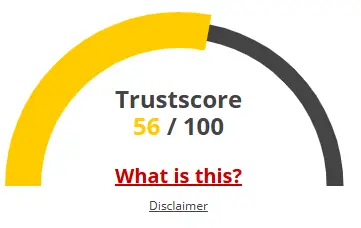
A website’s trust score is an important indicator of its TrafficSpaceBar icludes low web traffic, negative user feedback, potential phishing risks, undisclosed ownership, unclear hosting details, and weak SSL encryption.
With such a poor trust score, the likelihood of fraud, data breaches, or other security issues is much higher. It is crucial to carefully assess these warning signs before engaging with TrafficSpaceBar Similar platform.
Positive Highlights
- We found a valid SSL certificate
- DNSFilter labels this site as safe
Negative Highlights
- The Tranco rank (how much traffic) is rather low.
- The age of this site is (very) young.
Frequently Asked Questions About TrafficSpaceBar
This section answers key questions about TrafficSpaceBar concerns, and highlights issues related to the platform’s legitimacy.
TrafficSpaceBar is a platform that combines traffic exchange services with referral-based earning opportunities.
Users should research its business model, transparency, and risks before joining.
It offers earnings through member activity and referral-based rewards.
Both reviews examine company transparency, compensation plans, and potential risks.
Key concerns include limited transparency and the sustainability of earnings claims.
Other Infromation:
WHOIS data : Hidden
Owner : REDACTED FOR PRIVACY
Country: US
WHOIS Registration Date :2026-05-01
WHOIS Last Update:2026-06-07
WHOIS Renew Date:2027-05-01
Website:TrafficSpaceBar
Title :TrafficSpaceBar


Reviews:
There are no reviews yet. Be the first one to write one.