AltruvaReview: Full Breakdown of Ownership, Compensation Plan, and Risk Factors
This altruvaReview examines the platform’s structure, ownership signals, income streams, and sustainability questions for readers seeking clear facts. Altruva presents itself as a community-driven USDT system on BNB Smart Chain. Users choose one of three packages and gain access to multiple income streams. The site is extremely new, so independent verification remains limited. This review pulls together the available public details on ownership, the full compensation design, and the practical risks.Scamsradar
Part : 1 What the Platform Offers
Table of Contents
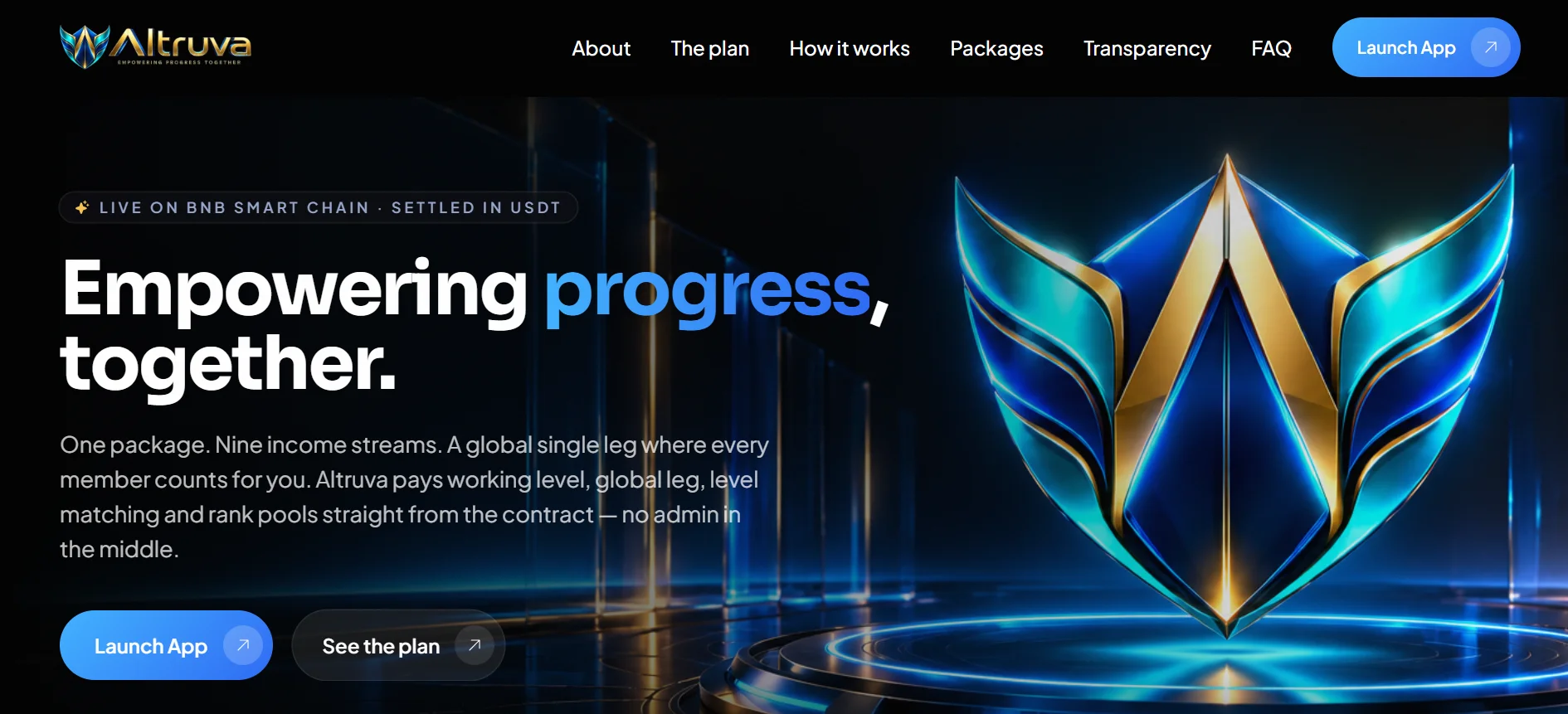
Altruva operates as a USDT single-leg community plan on BNB Smart Chain. Participants deposit USDT to enter. Three packages exist:
- Starter: $25
- Builder: $50
- Elite: $100
Deposits feed several income streams. Five of them are claimable by members. The site lists on-chain contracts and claims daily claims plus full-balance withdrawals. Reported site counters (late September 2026) showed roughly 895 members, about 51.4k USDT deposited, and about 24.7k USDT paid out. No traditional product sales, rental income, or external trading business is described. Earnings depend on network activity.
1.1 Ownership and Background Details
Domain records show registration on 11 September 2026 through Namecheap. The registrant appears as Gourav Nandi linked to BLOCKBRIDGEX, with an address listed in Bagerhat, Khulna, Bangladesh. The domain expires in September 2027. Hosting sits behind Cloudflare. No corporate entity name, physical office, team bios, or regulatory registration (SEC, CFTC, or equivalent) appears on the site.
Public searches turn up unrelated companies using similar names (an AI non-profit, a UK healthcare firm, a Nigerian research label). None connect to this platform. An Indian company named BLOCKBRIDGEX-BBX PRIVATE LIMITED was incorporated in May 2025 with different directors. No clear evidence ties that Indian entity to the platform operator. Gourav Nandi appears in various online profiles, but identity matching to the domain registrant is not confirmed. No verified criminal record, prior MLM operation, or regulatory action linked to the Altruva-associated name was located in public sources. Ownership transparency stays low.
1.2 Complete Compensation Plan Explained
The plan centers on a single-leg community structure rather than a classic binary or fixed matrix. Key streams include:
- Working Level (25%): Nine-level sponsor commissions. Typical split shown in public descriptions: 10% / 4% / 2% / 2% / 2% / 2% / 1% / 1% / 1%.
- Global Leg (1% per open level): Earnings from a single global line. Package size unlocks depth (roughly 10/10, 15/15, or 20/20 levels).
- Level Matching (25%): Daily pool shared among members who match two sides.
- Rank Pools (5% total): Split between Nexus (3%) and Legacy Crown (2%).
- Jackpot / Lucky Tickets and reinvest mechanics: Additional streams funded from deposits.
Every deposit is split on-chain. Roughly 90% stays available for member payouts, with 5% to rank vaults and 5% to jackpot. Half of some withdrawals may auto-reinvest. Packages unlock deeper levels. Claims of “upgrade-safe” and a “2,000-tx replay” audit appear, yet no named auditor report or public audit link is provided in the materials reviewed.
Part : 2 Simple View of Deposit Allocation
Portion of Deposit | Approximate Share | Purpose |
Member payouts | ~90% | Commissions and pools |
Rank vault | 5% | Rank pool funding |
Jackpot | 5% | Ticket / jackpot rewards |
2.1 Why the Numbers Raise Sustainability Questions
Income comes from new deposits and team activity. No external yield source (real-estate rents, trading profits, or product sales to outside customers) is documented. When a large share of every new deposit is paid out as commissions and pools, the system needs continuous inflows to keep paying.
A basic illustration helps. Suppose average package size is $50 and recruitment stays active. Working-level, matching, and global-leg payouts alone can absorb 50–70% of new capital under moderate growth. Rank pools and jackpots add further pressure. Reinvest rules recycle some capital temporarily but do not create new value. Once recruitment slows, the available pool shrinks. Historical crypto matrix and single-leg plans of similar design have typically lasted weeks to a few months before payout pressure appears.
Compare this with ordinary benchmarks:
Asset Type | Typical Annual Range | Notes |
Bank / money-market | 4–5% | Low risk, regulated |
Real-estate rental | 7–10% long-term | Includes vacancies and costs |
Legitimate DeFi staking | 3–12% | Variable, transparent protocols |
Platform-style streams | Recruitment-driven | Depends on new deposits |
The gap is large. High short-term commission rates look attractive only while new capital keeps arriving.
Key Risk Factors
- Domain age under three weeks at the time of review.
- Limited ownership disclosure and Bangladesh-linked registrant details.
- No independent financial audits or corporate filings located.
- Payments solely in USDT on BNB Smart Chain (irreversible).
- Self-reported member and volume counters that cannot be independently verified.
- Low public discussion and minimal independent reviews.
- ScamAdviser-style scanners flag very young crypto sites of this type with low trust scores.
- Smart-contract risk remains even with public addresses; owner privileges or economic design can still create problems.
Positive technical notes exist: Cloudflare protection and public contract addresses. These improve visibility but do not solve the economic model.
Altruva Review
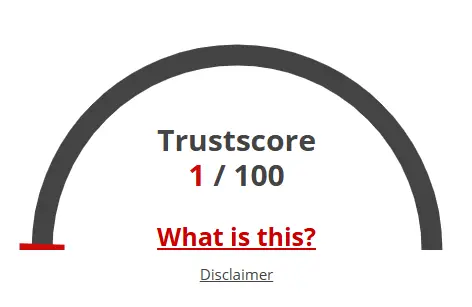
A website’s trust score is an important indicator of its Altruva icludes low web traffic, negative user feedback, potential phishing risks, undisclosed ownership, unclear hosting details, and weak SSL encryption.
With such a poor trust score, the likelihood of fraud, data breaches, or other security issues is much higher. It is crucial to carefully assess these warning signs before engaging with Altruva Similar platform.
Positive Highlights
- We found a valid SSL certificate
- DNSFilter labels this site as safe
Negative Highlights
- The Tranco rank (how much traffic) is rather low.
- The age of this site is (very) young.
Frequently Asked Questions About Altruva
This section answers key questions about Altruva concerns, and highlights issues related to the platform’s legitimacy.
Altruva presents itself as a USDT-based community platform using a single-leg structure with levels, matching, rank pools, and on-chain transactions.
Altruva’s legitimacy should be evaluated carefully because its ownership, revenue model, and investment-return claims require independent verification.
Altruva uses a network-based structure involving working levels, global legs, level matching, rank pools, and referral-related rewards.
Key risks include unclear ownership, dependence on network growth, cryptocurrency volatility, withdrawal uncertainty, and potentially unsustainable reward structures.
Everstead Review is a separate keyword/topic and should not be treated as evidence about Altruva unless a verifiable connection is established.
Other Infromation:
WHOIS data : Hidden
Owner : REDACTED FOR PRIVACY
Country: BD
WHOIS Registration Date :2026-09-11
WHOIS Last Update:2026-09-24
WHOIS Renew Date:2027-09-11
Website: Altruva
Title :Altruva
Reviews:
There are no reviews yet. Be the first one to write one.