
Daily-Ads Review: Ownership Background, Full Compensation Plan and Risk Breakdown
This daily-adsReview examines the platform’s ownership, membership tiers, forced-matrix earnings and practical risks. The goal is clear information for anyone considering the free tools or paid plans. Data draws from public corporate records, regulator notices and compensation details available in September 2026.
Daily-Ads positions itself as a freemium marketing suite. Users get link-in-bio pages, banner ads, login ads, swipe ads, traffic rotators, page builders, social feeds and chat. Paid memberships unlock more ad slots, priority placement and residual commissions. The model mixes software tools with a recruitment-linked payout system. That combination requires careful review. Scams radar

Part 1: Ownership and Corporate Background
Table of Contents
The site footer lists the operator as 9538-2396 Québec Inc., a Canadian holding company registered in March 2025 (NEQ 1180766843). Independent research links the corporation to Sébastien Bonneau (also known online as Seb Bono) and Stephanie Jarry. The domain itself was registered on 18 September 2025 through a Canadian registrar with privacy protection.
Bonneau’s earlier professional record includes government-relations consulting and lobbying work for aviation clients. Public federal filings show he previously held assistant roles in Québec and federal political offices. Separate MLM reporting notes his past promotion of other programs, including Zilara and Tag Markets. On 18 September 2026 Québec’s Autorité des marchés financiers issued an investor warning against Tag Markets, stating the firm was not registered and not authorised to solicit investors in the province. No public court record establishes a personal criminal conviction against Bonneau related to these matters. The Daily-Ads site itself does not display a detailed executive biography page.
1.1 Daily-Ads Pricing and Membership Tiers

Memberships follow a sequential upgrade path.
- Free: basic banners, limited tools, delayed features.
- Bronze: approximately $11 per month.
- Silver: additional $29 per month on top of Bronze (roughly $40 total).
- Gold: referenced at higher cost; full public details remain limited.
Bronze advertises a $5 recurring referral commission. Higher tiers add priority placement, more ad inventory and matrix participation.
1.2 Forced-Matrix Compensation Plan Explained
Commissions centre on forced matrices. New paid members fill positions under existing members. Earnings continue only while those members keep paying.
Bronze 2×5 matrix
A fully filled matrix holds 62 positions.
Level | Positions | Reported Payout per Position | Level Total |
1 | 2 | $0.50 | $1 |
2 | 4 | $0.50 | $2 |
3 | 8 | $0.50 | $4 |
4 | 16 | $1.25 | $20 |
5 | 32 | $2.25 | $72 |
Total | 62 | – | $99 |
Silver 3×7 matrix (reported structure)
A fully filled matrix holds 3,279 positions.
Level | Positions | Reported Payout per Position | Level Total |
1–2 | 12 | $2 | $24 |
3–6 | 1,080 | $4 | $4,320 |
7 | 2,187 | $2 | $4,374 |
Total | 3,279 | – | $8,718 |
These figures are theoretical maximums. They require every position to be occupied by an active, qualifying member. Spillover can place people under you, yet spillover does not create new paying members. The system still needs continuous new or renewing subscriptions.
Part 2: Why the Numbers Raise Sustainability Questions
A single complete Silver matrix needs thousands of qualifying positions. If many members chase full matrices at the same time, the required participant pool grows rapidly. Historical patterns in similar traffic-exchange and matrix programs show early participants often receive more spillover while later ones face slower filling and higher attrition.
Revenue comes mainly from membership fees. The platform supplies real digital tools (Daily-Hub link pages, banner rotation, swipe ads, page builders). Independent traffic data remains limited because the domain is young. Much of the activity occurs inside the member base, which can mean lower commercial intent than external advertising platforms.
Comparison with ordinary returns helps set context:
- Bank savings or term deposits typically yield single-digit annual percentages.
- Rental real estate often targets mid-to-high single-digit cash-on-cash returns after costs.
- Regulated crypto yield products usually advertise limited, tiered APYs with clear risk disclosures.
Matrix payouts measured against a $40 monthly fee produce ratios that look extreme only when the matrix is assumed full. That assumption depends on ongoing recruitment rather than an underlying asset producing income.
2.1 Practical Tools Versus Income Claims
Users can test the free plan for banners, link pages and basic rotation. Tracking real results means watching the full funnel: impressions to clicks to landing-page visits to leads to sales. Internal member traffic often consists of other marketers, so conversion rates can differ from mainstream ad networks.
Payments process through Stripe. Support uses a ticket system; higher tiers receive priority. Public review volume on major platforms stays low. Automated reputation scanners frequently note the young domain, privacy-protected registration and limited history. Those scores are risk indicators, not legal findings.
Key Takeaways for Potential Users
- The software layer exists and can serve basic marketing needs.
- The residual-income side relies on recruitment and continuous paid memberships.
- Full-matrix figures require large numbers of active participants.
- Ownership transparency is limited on the public site.
- Prior promotional history linked to a regulated warning warrants extra caution.
Treat membership fees as advertising or software costs, not as capital placed into an investment vehicle. Verify current pricing, refund terms and the exact matrix schedule on the live site before upgrading. Track actual conversion data rather than impressions alone.
Daily-Ads Review
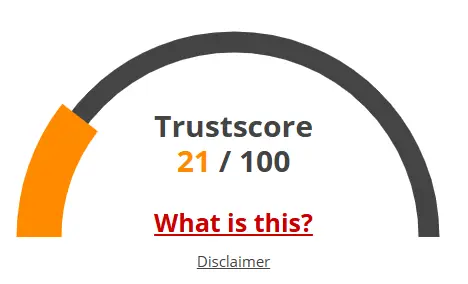
A website’s trust score is an important indicator of its Daily-Ads icludes low web traffic, negative user feedback, potential phishing risks, undisclosed ownership, unclear hosting details, and weak SSL encryption.
With such a poor trust score, the likelihood of fraud, data breaches, or other security issues is much higher. It is crucial to carefully assess these warning signs before engaging with Daily-Ads Similar platform.
Positive Highlights
- We found a valid SSL certificate
- DNSFilter labels this site as safe
Negative Highlights
- The Tranco rank (how much traffic) is rather low.
- The age of this site is (very) young.
Frequently Asked Questions About Daily-Ads
This section answers key questions about Daily-Adsconcerns, and highlights issues related to the platform’s legitimacy.
Daily-Ads is an online advertising and referral-based earning platform.
Its business model, ownership, and earning claims should be independently verified.
Members can earn through advertising activities and referral commissions.
Risks include unclear revenue sources, withdrawal issues, and unsustainable returns.
No. Everstead Review and Daily-Ads are separate platforms and should be assessed independently.
Other Infromation:
WHOIS data : Hidden
Owner : REDACTED FOR PRIVACY
Country: CA
WHOIS Registration Date :2025-09-18
WHOIS Last Update:2025-09-18
WHOIS Renew Date:2026-09-18
Website: Daily-Ads
Title :Daily-Ads

Reviews:
There are no reviews yet. Be the first one to write one.