BlockecoReview: Complete Look at Plans, Ownership and Risks in 2026
This blockecoReview examines the platform’s investment offers, referral structure, ownership details and overall risk profile. The goal is to give everyday readers clear facts so they can decide for themselves. All information comes from public site claims, third-party scanners and independent checks. No funds should ever be risked on unverified high-return offers. Scams radar
Part 1: Ownership and Background Details
Table of Contents
Public records show no named founders, executives or directors. Legal pages simply call it a “technology-driven private enterprise.” WHOIS data stays privacy-protected through a service in Iceland or Namecheap. The main domain was registered in October 2025. Some policy pages carry a May 2024 update date, creating a clear timeline mismatch that the company has not explained.
No corporate registration number, physical address or verifiable team profiles appear online. Claims of Dubai-based insurance coverage and large internal reserves lack insurer names, policy numbers or audit links. A separate UK company called BLOCKCO LIMITED exists, but it deals only in alcohol wholesale and has no link to this platform. Historical projects that used similar names in 2019 are also unconnected by any evidence.
Promoters operate mainly through referral links on Telegram and social channels. One public channel promotes the platform alongside several other high-yield offers. Ownership itself remains anonymous. This lack of transparency stands as a major concern for anyone considering a deposit.
1.1 Full Compensation Plan Breakdown
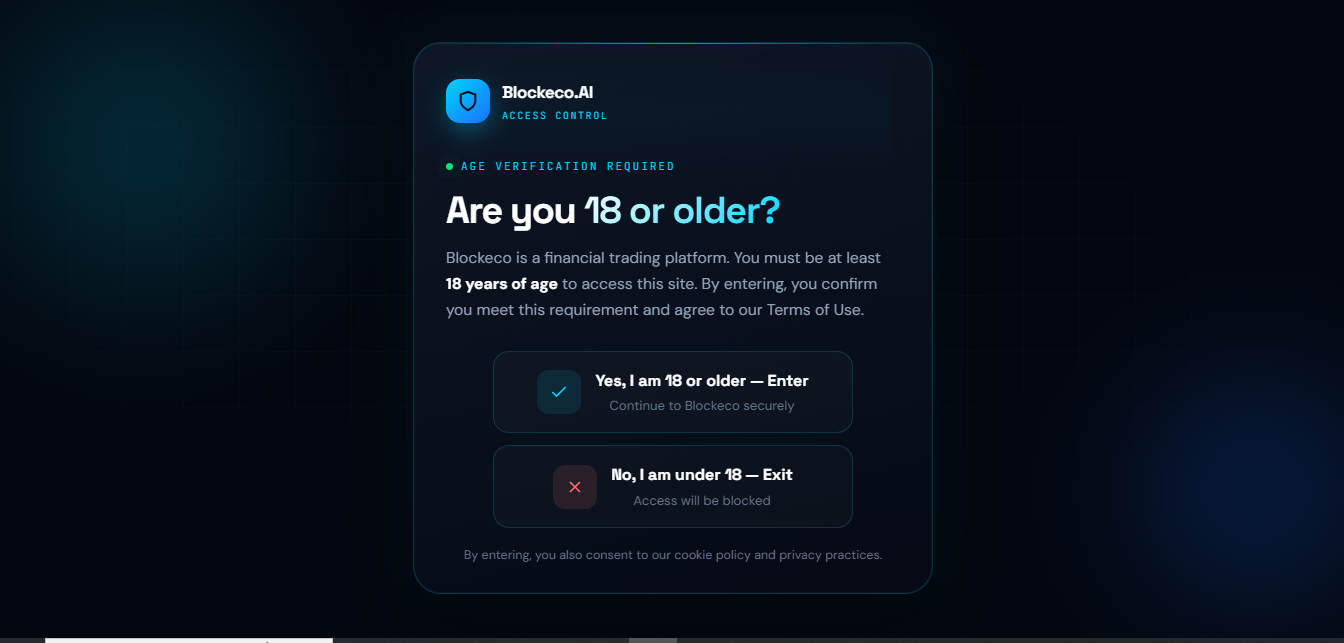
The platform lists eight investment plans with fixed weekly rates. Amounts start at about $50 and climb toward $1 million.
Plan | Weekly Rate | Typical Deposit Range |
Eco-Chain | 4.0% | $50 – $1,000 |
Eco-Staking | 4.5% | Mid-tier |
Eco-Smart | 5.0% | Mid-tier |
Eco-Grid | 5.7% | Higher |
Eco-Lithium | 6.5% | Higher |
Eco-Copper | 7.0% | Large |
Eco-Gold | 7.5% | Large |
Eco-Diamond | 8.5% | $550,000 – $1,000,000 |
Capital and profit are said to return at the end of each cycle. The site states zero platform withdrawal fees. Deposits use crypto only.
Referral rewards run five levels deep on first deposits:
- Level 1: 10%
- Level 2: 6%
- Level 3: 4%
- Level 4: 2%
- Level 5: 1%
Total possible allocation reaches 23% of a qualifying deposit. Some FAQ text mentions only three levels, creating an internal contradiction that needs clarification.
EcoMilestones add extra weekly percentages based on personal deposit size:
- $20k–$50k: +1%
- $60k–$100k: +2%
- $200k–$500k: +4%
- $600k+: +5%
EcoLeaderboard rewards network volume:
- $100k+ downline: +1%
- $300k+: +2%
- $500k+: +3%
- $1M+: +4%
These bonuses can stack on top of the base plan rate under platform rules. EcoPoints convert at a stated rate of 100 points = $1 and come from sign-ups, deposits and activity. Separate products include company shares advertised at 15% monthly and a token with 12% monthly staking claims. Registration bonuses range from $10 to $300 depending on the chosen plan.
1.2 Why the Numbers Matter
Simple compounding shows the scale. At 4% weekly a $1,000 deposit becomes roughly $7,700 after one year. At 8.5% weekly the same amount grows to about $69,500. A $10,000 deposit at the top rate reaches nearly $700,000 in theory. Adding the highest personal and network bonuses pushes the weekly figure toward 17.5%, producing even larger theoretical totals.
Real-world benchmarks look very different:
- Major exchange staking: usually 3–15% per year
- Bank savings: 0.5–5% per year
- Residential real estate: 4–12% total annual before costs
- Broad stock indexes: roughly 7–10% long-term historical
No public trading statements, audited profit-and-loss records or proof-of-reserves support the claimed weekly rates. AI agents are described as the source of returns, yet AI itself does not create money. It still requires actual market profits after fees, slippage and losses.
Part 2: Public Footprint and Safety Signals
Trustpilot shows one review that calls the model an MLM-style pyramid while noting payments were still arriving at the time of writing. Independent scanners give low scores: one lists a 35/100 “suspicious” rating, another a trust score of 0. Domain age is short, traffic signals remain weak, and ownership stays hidden. Security features such as optional or mandatory KYC, 2FA and encrypted sessions are claimed, but no independent audits or live wallet proofs appear. Customer support is listed as live chat and email, yet public testing of withdrawals is almost nonexistent.
2.1 Risk Summary in Plain Terms
- Extremely high fixed weekly percentages that exceed normal market returns by large multiples
- Multi-level deposit commissions that reward recruitment
- Additional bonuses tied to personal size and network volume
- Anonymous ownership and young domain
- Unverified insurance and reserve figures
- Limited independent reviews and traffic history
- Crypto-only deposits that cannot be reversed easily
These features match patterns seen in many high-yield programs that later faced liquidity problems. Early users sometimes receive payouts, which creates social proof, until new deposits slow.
Practical Recommendations
Treat the platform as very high risk. Do not send funds until the company publishes full legal entity details, named directors, audited trading results, insurer confirmation and proof of reserves. Prefer regulated exchanges or audited protocols that show transparent on-chain data. If money has already been deposited, request a withdrawal of principal at once and keep full records. Always verify any investment yourself using domain tools, blockchain explorers and official company registries.
BlockEco Review
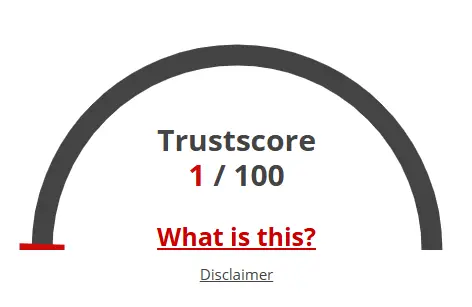
A website’s trust score is an important indicator of its BlockEco includes low web traffic, negative user feedback, potential phishing risks, undisclosed ownership, unclear hosting details, and weak SSL encryption.
With such a poor trust score, the likelihood of fraud, data breaches, or other security issues is much higher. It is crucial to carefully assess these warning signs before engaging with BlockEco similar platform.
Positive Highlights
- We found a valid SSL certificate
- DNSFilter labels this site as safe
Negative Highlights
- The Tranco rank (how much traffic) is rather low.
- The age of this site is (very) young.
Frequently Asked Questions About BlockEco
This section answers key questions about BlockEco concerns, and highlights issues related to the platform’s legitimacy.
BlockEco claims to offer AI-based investment opportunities, but its legitimacy should be independently verified.
BlockEco carries significant risk, so investors should verify its ownership, revenue model, and withdrawal history.
Its marketing model includes referral and network-based incentives that investors should examine carefully.
Consistently high returns require strong, verifiable revenue and may be difficult to sustain.
An Everstead Review can help compare BlockEco’s claims, transparency, and investment risks.
Other Infromation:
WHOIS data : Hidden
Owner : REDACTED FOR PRIVACY
Country: GB
WHOIS Registration Date :2025-10-08
WHOIS Last Update:2026-08-13
WHOIS Renew Date: 2027-10-08
Website:BlockEco
Title:BlockEco
Reviews:
There are no reviews yet. Be the first one to write one.