
PolymexReview: Full Look at Ownership, Compensation Plan and Risks in 2026
This PolymexReview examines the platform that markets AI-driven trading on prediction markets. The focus stays on ownership details, the full compensation structure, and practical risks for everyday readers. Short sentences and plain language keep the facts clear.
The domain appeared in April 2026. A linked Hong Kong company formed days earlier. No clear public list of founders or executives exists. Performance numbers and partnership claims lack independent checks. The compensation side combines daily returns with a multi-level network. These points matter for anyone thinking about deposits. Scams radar
Part: 1 Domain Age and Company Background
Table of Contents
The site registered on 13 April 2026 through a privacy service. Name servers use Cloudflare. No public registrant name or address shows in standard records. A matching company, PolyMex Limited, registered in Hong Kong on 9 April 2026 under number 80164781. The listed address is a virtual office on Nathan Road in Mong Kok. This setup is common for remote registrations and does not prove day-to-day operations or fund control.
Searches for named directors, LinkedIn profiles or prior company history tied to the platform turn up empty. Unrelated firms share similar names in other countries. None connect to this operation. Marketing sometimes points to a 2022 start date. No archived sites, earlier filings or product records support that claim. The public timeline begins in spring 2026. Telegram activity started in early May 2026 and grew quickly to around 18 000 subscribers.
Official social channels remain limited. One X account shows low follower counts and light engagement. YouTube videos appear promotional with modest view numbers. Partner logos for major exchanges and security firms appear on the site. No contracts or joint statements confirm those links.
1.1 Ownership Profiles and Transparency Gaps

Public records stop at the Hong Kong company certificate. No beneficial owners, chief executives or management team appear in registries, press or professional networks. Independent reviews note the same absence. Without named people it becomes hard to check past projects, regulatory history or court records. Possible operational links to certain regions surface in some analyses, yet none rise to verified ownership.
This gap forms a core concern. Legitimate platforms usually list leadership with verifiable backgrounds. Here the record stays silent. Investors cannot assess experience or prior outcomes. The Business Angels program invites early partners for materials, regional roles and later device access. Details on selection or responsibilities stay high-level.
1.2 Complete Compensation Plan Breakdown
Reported packages use USDT deposits locked for set periods. Daily rates rise with longer terms and larger amounts. Sample tiers drawn from available plan descriptions include:
Plan | Range (USDT) | Daily Rate | Duration |
Element 30 | 1 – 1 000 | 1 % | 30 days |
Element 60 | 1 – 2 500 | 1.5 % | 60 days |
Element 90 | 1 – 5 000 | 1.75 % | 90 days |
Element 180 | 1 – 100 000 | 2 % | 180 days |
Higher tiers | Varies | Up to 3.1 % | Up to 210 days |
A 1 000 USDT deposit at 1 % daily yields 10 USDT each day, or 300 USDT after 30 days. At 3.1 % daily the same sum produces 31 USDT daily. Over 210 days that totals 6 510 USDT in claimed profit. Adding principal returns creates a potential obligation near 7.5 times the original amount. Larger deposits scale the numbers higher. Commissions sit on top of these returns.
The network side follows a Unilevel pattern. Personal recruits form level one. Their recruits fill deeper levels, reported up to 13. Direct referral pay can reach 16 % on the first level. Further levels may pay around 4 % depending on rank. Eleven ranks stretch from Partner to President. Advancement hinges on team investment volume that can climb into the tens of millions of USDT for top titles. Recruiters also receive fixed payments for bringing new Business Angels.
These layers add large extra liabilities. Every payout—investor returns, principal, multi-level commissions, ranks, operations—must come from somewhere. Prediction markets are largely zero-sum after fees. Sustained edges that support high fixed daily rates for many participants face liquidity and competition limits. Simple compounding at even 1 % daily turns 1 000 USDT into thousands of percent annual growth. No independent audit of trading wallets, full profit-and-loss statements or proof of reserves has surfaced to match the scale.
Part: 2 Performance Claims versus Market Reality
The platform cites 84.5 % forecast accuracy, more than 50 000 signals daily and 12.4 million dollars in accumulated profit. Case studies mention triple-digit gains on single events. No third-party verification of the underlying trades or accounts exists. Prediction-market data from independent studies shows most participants end with losses and gains concentrate among a small top group.
Security language covers encryption, multi-signature options and insurance. No published audit reports, bug-bounty programs or proof-of-reserves pages confirm the claims. Deposits arrive mainly in cryptocurrency. Transfers cannot be reversed. Support runs through Telegram and email. Withdrawal rules and fee schedules lack clear public documentation.
2.1 Risk Comparison Table
Investment Type | Typical Annual Return | Transparency Level | Key Risks |
Polymex claims | Hundreds of percent | Low | Unverified profits, network liability |
Bank deposits | 1 – 8 % | High | Inflation, low yield |
Real estate average | 8 – 12 % | Moderate | Liquidity, market cycles |
Regulated crypto yield | 5 – 15 % | Variable | Smart-contract, market risk |
The gap between claimed daily rates and established benchmarks is wide. Platforms that sustain high fixed returns while paying deep network commissions usually need continuous new capital once external profits fall short.
2.2 Public Perception and Tool Checks
Traffic signals stay modest. Organic discussion outside promotional channels remains sparse. Automated scanners flag the young domain, privacy-protected registration and limited history. One review site assigns a low trust score. Another notes mixed technical signals yet still highlights age. Comments on the main Telegram channel are often restricted. Independent analyses describe the model as high-risk and recruitment-heavy.
No widespread verified withdrawal proofs or long-term user track records appear. Early small payouts, if they occur, do not prove ongoing solvency.
Practical Guidance for Readers
Anyone considering the platform should treat capital as fully at risk. Request named owners, audited trading results, regulatory license numbers and complete written compensation rules before sending funds. Test any withdrawal process with the smallest amount first. Document every step. Compare the daily rates against zero-sum market realities and the added weight of multi-level pay.
The combination of recent registration, hidden ownership, aggressive returns and network incentives creates elevated risk. Prediction-market tools can exist as analysis aids. Custodial systems that promise consistent high daily results while funding deep referral trees have a long pattern of stress when inflows slow.
This PolymexReview pulls the available public facts into one place. Ownership stays unidentified. The compensation plan layers daily ROI with up to 13 Unilevel levels and volume-based ranks. Math shows the obligations grow fast. Independent verification of profits remains missing. Readers who value capital preservation will look elsewhere until clearer evidence appears.
Polymex Review
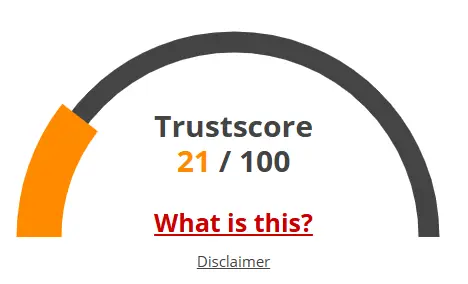
A website’s trust score is an important indicator of its Polymex includes low web traffic, negative user feedback, potential phishing risks, undisclosed ownership, unclear hosting details, and weak SSL encryption.
With such a poor trust score, the likelihood of fraud, data breaches, or other security issues is much higher. It is crucial to carefully assess these warning signs before engaging with Polymex similar platform.
Positive Highlights
- We found a valid SSL certificate
- DNSFilter labels this site as safe
Negative Highlights
- The Tranco rank (how much traffic) is rather low.
- The age of this site is (very) young.
Frequently Asked Questions About Polymex
This section answers key questions about Polymex concerns, and highlights issues related to the platform’s legitimacy.
Review its transparency, business model, and potential risks.
Check its claimed revenue sources and verification.
Learn how affiliates and referrals can earn.
Analyze its returns and financial sustainability.
Compare investment risks, transparency, and red flags.
Other Infromation:
WHOIS data : Hidden
Owner : REDACTED FOR PRIVACY
Country: US
WHOIS Registration Date :2026-04-13
WHOIS Last Update:2026-08-13
WHOIS Renew Date: 2028-04-13
Website:Polymex
Title:Polymex
Reviews:
There are no reviews yet. Be the first one to write one.