
MizukappaReview: Full Look at Ownership, 15-Level Rewards and Staking Risks
This mizukappaReview examines the platform that launched on BNB Smart Chain in July 2026. It combines trading, staking and a deep referral structure. Readers will find clear facts on the compensation plan, token details and ownership status so they can judge the risks for themselves.Scamsradar
Part : 1 Project Basics and Market Snapshot
Table of Contents
The platform runs on Binance Smart Chain. Its token is MIZU with contract address 0xb1d1f602034f7c4b242169b818200d07c117ffff. Total supply sits at 1 billion tokens. Price has moved between roughly $0.0012 and $0.0031. Market capitalization has hovered near $2.2–2.8 million. Daily volume often stays in the low thousands of dollars. Liquidity pools have measured about $148,000–$170,000. Holder counts remain in the low thousands.
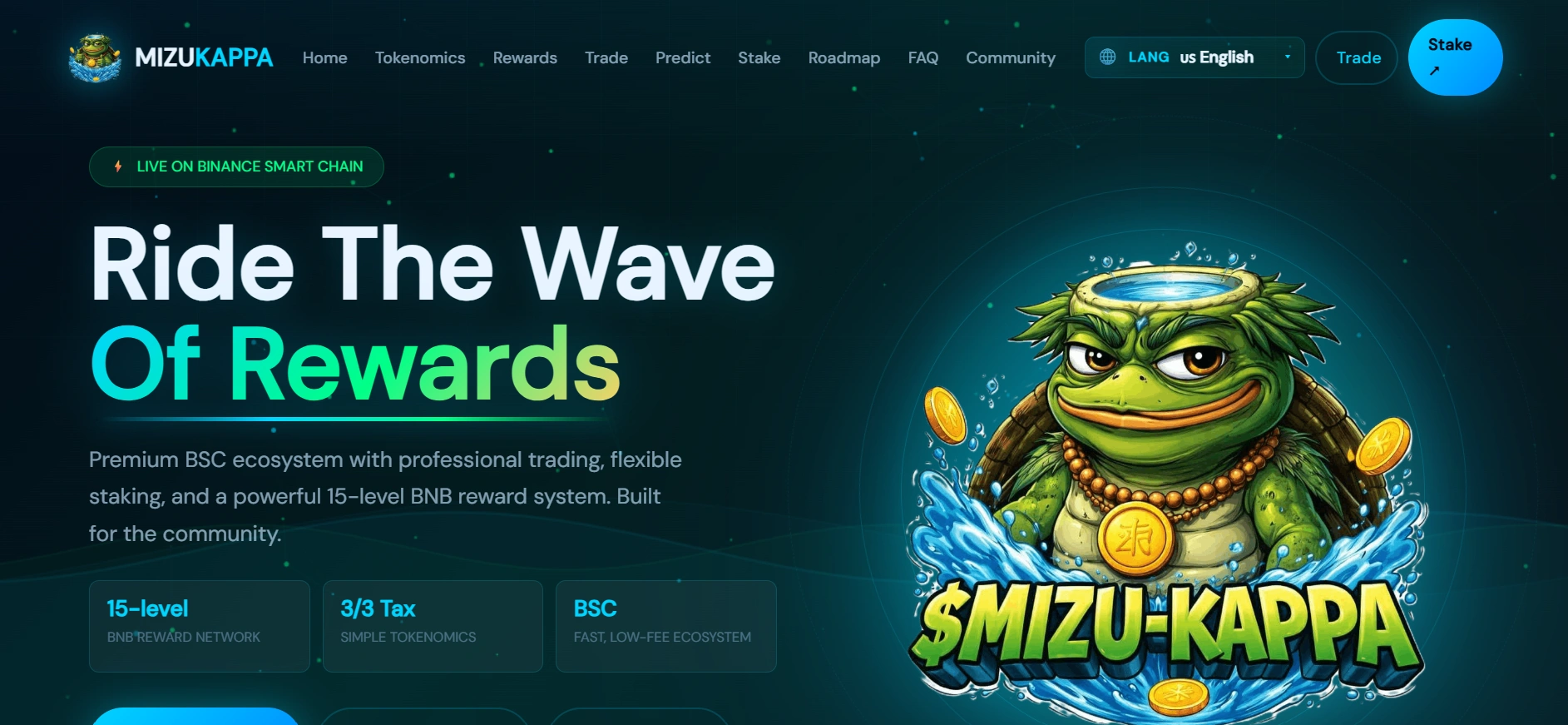
The site promotes trading, flexible staking, prediction markets and utility services such as airtime and data top-ups. A 3 percent buy tax and 3 percent sell tax apply. Buy-tax portions feed a reward pool. Sell-tax portions go to marketing. Launch took place through Four.Meme around 7–10 July 2026. Domain registration occurred on 31 May 2026.
1.1 Ownership and Transparency Issues
No named founder, CEO, director or registered company appears in public records. WHOIS data shows privacy protection through Withheld for Privacy ehf and Namecheap as registrar. Searches across major jurisdictions turn up no LLC, corporation or business license linked to the project. The whitepaper describes a community-oriented setup but lists no executives or legal entity.
This absence creates a clear accountability gap. Users who connect wallets or stake tokens have no identified party to contact if problems arise. Independent checks on Scamadviser give the main domain a trust score near zero, citing the young age and hidden ownership. Gridinsoft rates the trading subdomain around 49/100. BehindMLM and other reviews flag the same ownership silence as a core concern.
Promoter activity is visible. Accounts such as David Obongha Usang share contract details, staking claims and price talk. Other handles including those linked to earlier OnPassive promotion also appear in related posts. These individuals act as public supporters. No evidence ties them to formal ownership or executive roles. Developer credits under names like Ajaxdev list technical work on the dashboard and reward system, yet that still leaves beneficial ownership unconfirmed.
1.2 Complete Compensation Plan Explained
The core earning method is a 15-level unilevel referral system funded by the buy tax. The live terminal shows a 3 percent buy tax split roughly as follows:
- 2.64 percent to the referral reward pool
- 0.30 percent to an incentive pool
- 0.06 percent to reserve
The 2.64 percent pool is then shared across 15 levels. Current displayed shares are:
Level | Share of Reward Pool |
1 | 20 % |
2 | 15 % |
3 | 10 % |
4 | 9 % |
5 | 8 % |
6 | 7 % |
7 | 6 % |
8 | 5 % |
9 | 4 % |
10–13 | 3 % each |
14 | 2.5 % |
15 | 1.5 % |
These figures total 100 percent of the reward pool. The whitepaper once listed slightly different relative weights that summed to 90 units and required normalization. The live platform now uses the exact percentages above. Trading access requires entry of a sponsor or referral wallet address. This makes network participation a gate rather than an optional extra.
1.3 How the Numbers Work in Practice
Take a $1,000 MIZU purchase. The 3 percent tax equals $30. Of that amount about $26.40 enters the referral pool. Level 1 receives roughly $5.28. Level 2 receives about $3.96. Level 3 receives $2.64. Deeper levels receive progressively smaller slices.
To generate $1,000 in total referral rewards the network needs roughly $37,900 in qualifying buy volume. Larger payouts require proportionally larger volume. The system therefore depends on continuous new purchases and trading activity. When volume slows the pool shrinks. The platform itself notes that reward capacity tracks actual tax-generating activity.
Part : 2 Staking Rates and Token-Price Reality
Staking tiers are advertised as:
Period | Advertised Rate |
30 days | 0.25 % |
90 days | 3 % |
180 days | 8 % |
270 days | 18 % |
360 days | 30 % |
Rewards arrive in MIZU tokens, not guaranteed BNB or fiat. A 30 percent token increase does not equal a 30 percent dollar gain. If the token price falls 50 percent after a holder receives the extra tokens, the net dollar result can be a clear loss. Promotional claims of high staking percentages (around 70–76 percent of supply) raise further questions about emission sustainability relative to the stated 5 percent allocation set aside for staking rewards.
2.1 Risk Comparison Table
Investment Type | Typical Annual Range | Notes |
Bank savings or short-term deposits | under 5 % in most markets | Often insured |
Real-estate rental yields | 4–10 % after costs | Requires capital and management |
Established DeFi or exchange staking on major assets | low single to low double digits | Known smart-contract and market risk |
MIZU-KAPPA highest staking tier | up to 30 % in tokens | Depends on new volume and token price |
The gap is large. High fixed rates on a young low-liquidity token usually draw from new deposits, emissions or the same tax pool. Once inflows slow, pressure on the system rises.
2.2 Red Flags and Independent Checks
Key concerns include:
- Extremely young domain and token
- Fully anonymous team with no corporate filings
- Mandatory referral address for trading
- Fifteen-level structure funded directly by buy-tax volume
- Token-denominated rewards that can be erased by price drops
- Modest liquidity relative to reported market value
- Low independent traffic and mixed automated trust scores
- Overlap in promotional networks with earlier high-hype projects that faced regulatory action
Positive points exist. The token is live on BscScan. A trading interface functions. A whitepaper is published. Liquidity is observable on PancakeSwap. These facts confirm an operational smart-contract project. They do not confirm sustainable external revenue or long-term solvency.
Practical Guidance for Readers
Treat any participation as high-risk speculation. Capital that cannot be lost entirely should stay outside the system. Verify the live contract, liquidity locks and holder concentration yourself on BscScan and independent scanners. Prefer platforms that publish named teams, audited financials and clear legal entities.
Mizukappa Review
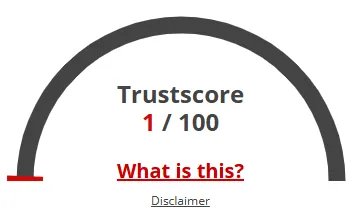
A website’s trust score is an important indicator of its Mizukappa includes low web traffic, negative user feedback, potential phishing risks, undisclosed ownership, unclear hosting details, and weak SSL encryption.
With such a poor trust score, the likelihood of fraud, data breaches, or other security issues is much higher. It is crucial to carefully assess these warning signs before engaging with Mizukappa similar platform.
Positive Highlights
- We found a valid SSL certificate
- DNSFilter labels this site as safe
Negative Highlights
- The Tranco rank (how much traffic) is rather low.
- The age of this site is (very) young.
Frequently Asked Questions Mizukappa
This section answers key questions about Mizukappa concerns, and highlights issues related to the platform’s legitimacy.
MizuKappa shows several high-risk indicators, so users should conduct thorough due diligence before investing.
MizuKappa appears to combine investment/earning opportunities with network-based referral incentives.
MizuKappa promotes returns that should be carefully evaluated against realistic and independently verifiable investment performance.
Its limited transparency and investment-related claims make MizuKappa a high-risk platform for investors.
An Everstead Review can help readers compare transparency, business models, risk factors, and investment claims.
Other Infromation:
WHOIS data : Hidden
Owner : REDACTED FOR PRIVACY
Country: US
WHOIS Registration Date :2026-05-31
WHOIS Last Update:2026-06-05
WHOIS Renew Date: 2027-05-31
Website: Mizukappa
Title: Mizukappa
Reviews:
There are no reviews yet. Be the first one to write one.