
WeTradeX Review: A Clear Look at the Platform, Compensation Structure, and Ownership Questions
This WeTradeX review examines the AI trading platform at wetradex.ai and its app subdomain. The site promotes automated copy trading, an X-BOT system, staking options, and a network component. Public information remains limited because the domain is very new and ownership details stay private. Readers looking for straightforward facts on features, the compensation plan, and risk signals will find them here in plain language.
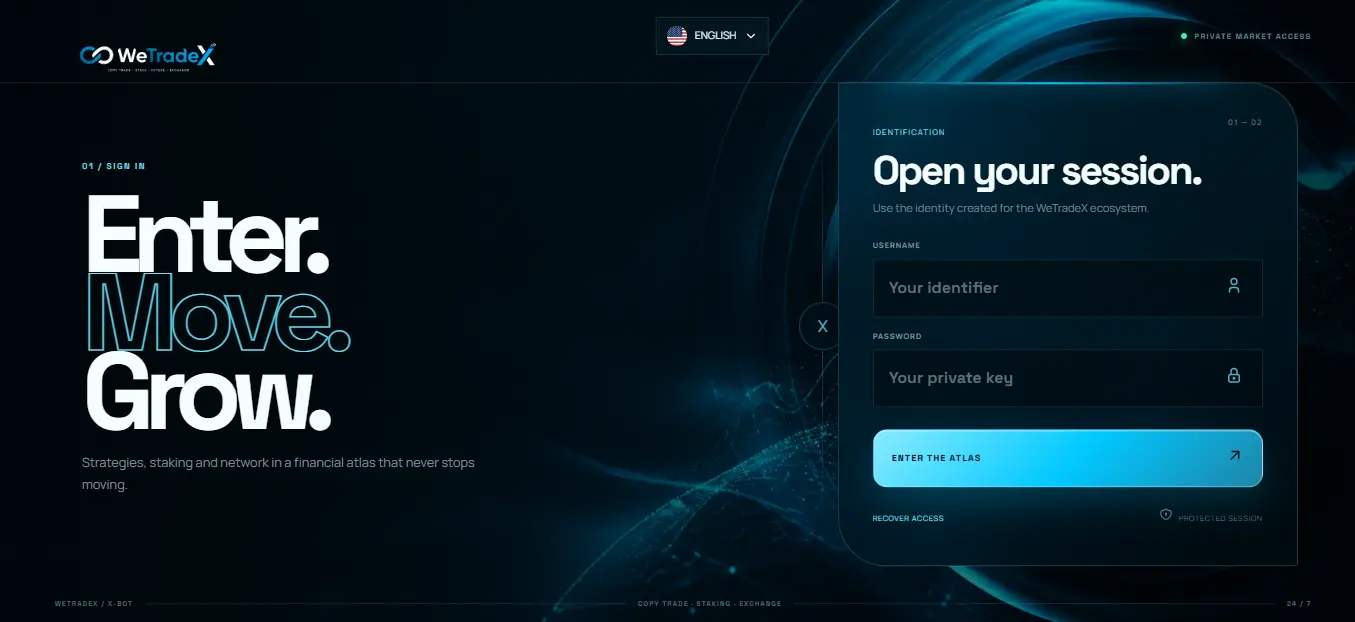
The platform presents itself as a Portuguese-language AI trading ecosystem. Dashboards show claimed metrics such as a 78.4 percent win rate, daily results near 0.7 percent, 99.98 percent availability, and active operations. These figures appear on marketing pages and cannot be independently verified without depositing funds. Organic discussion stays sparse. Mentions mostly come from referral-style posts rather than broad independent user feedback. Scams radar
Part: 1 Domain Age and Ownership Background in This WeTradeX Review
Table of Contents
The domain wetradex.ai was registered on 21 July 2026. At the time of this review in early September 2026 the site is only about six weeks old. Registrant information is fully privacy-protected through a service linked to an Iceland address. The registrar is Namecheap and nameservers use Cloudflare. No public company registration, beneficial owners, directors, or physical address tied directly to this domain appears in standard searches.
The website includes testimonials that refer to activity dating back to 2021, 2022, or 2023 and claims of more than 500,000 traders across 40 countries. These statements sit in tension with the recent domain registration. An older company could have migrated, yet no clear public bridge—previous domains, archived sites, corporate records, or press coverage—has been established. Ownership therefore remains opaque. One promotional lead mentions Charleston Silvestre in connection with a WeTradex365 presence, but this link stays unverified. No documentary evidence confirms any individual as legal owner, director, or controller of customer funds.
Separate entities that share similar names exist. An Indian company called Wetrade Technology Private Limited was incorporated in December 2021 with founder Prashant Kumar and board members including Ravindra B. Garikipati and Rashmi Kumar. That firm raised seed funding and later wound down operations. Other brokers use the WeTrade name and claim various licenses, yet none of these appear connected to the current wetradex.ai operation. Brand similarity creates confusion risk but does not prove shared ownership.
1.1 Complete Compensation Plan Details
The platform offers copy-trading packages with fixed durations and advertised daily performance caps. These caps are presented as maximums rather than guarantees. Principal is described as returned at maturity on most plans. An administrative withdrawal fee of 25 to 35 percent is noted depending on the package.
Here is the package structure drawn from public site information:
Package | Duration | Advertised Daily Cap | Notes |
Copy Start | 30 days | Up to 0.50% | Short-term entry point |
Copy Core | 45 days | Up to 0.65% | Balanced short-term |
Copy Select | 90 days | Up to 0.75% | Intermediate |
Copy Prime | 180 days | Up to 0.85% | Extended |
Copy Elite | 360 days | Up to 1.00% | Highest cap, full-year cycle |
AI Daily Flex | Flexible | Up to 0.40% | Daily withdrawal option |
A simple illustration shows the scale of potential liability. On a $10,000 deposit in the Copy Elite package, reaching the full 1 percent daily cap every day for 360 days would generate $36,000 in yield plus return of the original $10,000. That equals a total cash obligation of $46,000 before any fees or commissions. Even lower packages create large obligations when principal return and network payouts are added.
Staking products list fixed annual yields: BNB approximately 11.90 percent APY, ETH 8.60 percent, BTC 7.20 percent, and USDT 4.80 percent. These rates sit within ranges seen on some crypto platforms, yet they form only one part of the overall model.
The network compensation adds further layers. Contract commissions may extend through up to five levels when downline members activate packages. Residual earnings linked to operational results of network portfolios may reach up to ten levels. Exact percentages per level are not fully detailed in public materials and should be confirmed inside any member area. This structure creates multiple claims against system output: customer yields, principal repayments, multi-level commissions, trading losses, exchange fees, technology costs, and operating expenses.
1.2 Ownership and Legal Entity Investigation
No public company registration, directors, beneficial owners, or physical address tied specifically to wetradex.ai has been located.
Key findings:
- Website testimonials claim customer relationships dating back to 2021, 2022, and 2023, and reference more than 500,000 traders across 40+ countries. These claims conflict with the July 2026 domain registration.
- No archived previous domains, corporate filings, LinkedIn company page, or press coverage establishing a continuous operational history for this exact entity were found.
- A promotional lead mentioning “Charleston Silvestre” and “WeTradex365” exists but remains unverified. No documentary evidence links this individual to ownership, directorship, or control of customer funds.
- Separate entities using similar names (Indian Wetrade Technology Private Limited founded by Prashant Kumar in 2021, various WeTrade brokers claiming CySEC/ASIC/SVG licences, WEEX, BitradeX, etc.) show no verified ownership, director, or infrastructure connection to the current wetradex.ai platform.
Part: 2 Compensation Plan and Product Structure
Public pages describe the following products:
Package | Duration | Advertised Daily Cap | Principal Return | Notes |
Copy Start | 30 days | Up to 0.50% | Yes | Entry-level |
Copy Core | 45 days | Up to 0.65% | Yes | Short-term |
Copy Select | 90 days | Up to 0.75% | Yes | Intermediate |
Copy Prime | 180 days | Up to 0.85% | Yes | Extended |
Copy Elite | 360 days | Up to 1.00% | Yes | Highest advertised cap |
AI Daily Flex | Flexible | Up to 0.40% | Daily withdrawal | Variable |
2.1 Mathematical Sustainability Analysis
High daily caps create large liabilities when combined with principal return and multi-level payouts.
Illustration (Copy Elite, $10,000 deposit, full 1% daily cap achieved every day for 360 days):
- Gross yield: $36,000
- Principal return: $10,000
- Total potential cash obligation before fees and commissions: $46,000
Even lower packages generate significant cumulative obligations. Adding 5–10 levels of network commissions further increases the amount that must be covered by genuine external trading profit (after trading losses, exchange fees, technology, staff, and marketing costs).
Real-world benchmarks for comparison:
- Long-term equity / real-estate averages: typically high-single to low-double-digit annual returns with volatility.
- Regulated bank deposits and quality crypto staking: usually low-to-mid single-digit to mid-teens APY, variable and risk-disclosed.
- Consistent near-risk-free daily returns at the advertised scale are not sustainable in legitimate markets over extended periods.
2.2 Why High Daily Caps Raise Sustainability Questions
Consistent daily returns near 0.5–1 percent compound rapidly. A conservative 0.7 percent net daily compounds to roughly 23 percent in a month and over 1,100 percent annualized before costs. Real markets rarely deliver risk-free results at this scale over long periods. Legitimate long-term equity averages, real-estate returns, and regulated crypto yields typically sit far lower and include drawdowns. When a model also promises principal return and multi-level payouts, the platform must generate genuine external trading profit large enough to cover every obligation. Dashboard metrics and early withdrawal screenshots do not prove that capacity.
Additional Risk Signals and Practical Guidance
Other points stand out. Independent reviews, regulatory filings, audited financials, and proof-of-reserves documentation remain scarce. Automated risk tools have flagged the young domain and hidden ownership. Traffic appears limited and largely referral-driven. Security basics such as SSL exist, yet custody arrangements, segregated accounts, and independent audits are not clearly verifiable from public pages.
Treat any platform with this combination of a brand-new domain, private ownership, aggressive daily caps, principal-return obligations, and multi-level compensation as high risk. Deposit only money that can be lost entirely. Prefer regulated venues with transparent licensing, long track records, and realistic risk disclosures. If already involved, document every transaction and test small withdrawals early.
WeTradeX Review
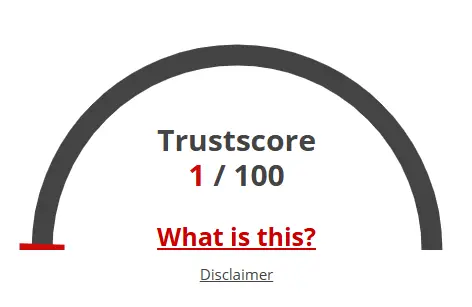
A website’s trust score is an important indicator of its WeTradeXncludes low web traffic, negative user feedback, potential phishing risks, undisclosed ownership, unclear hosting details, and weak SSL encryption.
With such a poor trust score, the likelihood of fraud, data breaches, or other security issues is much higher. It is crucial to carefully assess these warning signs before engaging with SWeTradeXimilar platform.
Positive Highlights
- We found a valid SSL certificate
- DNSFilter labels this site as safe
Negative Highlights
- The Tranco rank (how much traffic) is rather low.
- The age of this site is (very) young.
Frequently Asked Questions About WeTradeX
This section answers key questions about WeTradeXconcerns, and highlights issues related to the platform’s legitimacy.
Check its transparency, business model, and potential risks.
It claims to generate earnings through its platform and business activities.
It may include referral rewards and other earning structures.
Review available information about its owners and top promoters.
Compare their business models, earning claims, and risk factors.
Other Infromation:
WHOIS data : Hidden
Owner : REDACTED FOR PRIVACY
Country: US
WHOIS Registration Date :2026-07-21
WHOIS Last Update:2026-08-24
WHOIS Renew Date: 2028-07-21
Website: WeTradeX
Title : WeTradeX
Reviews:
There are no reviews yet. Be the first one to write one.