
AevosReview: Complete Look at Ownership, Compensation Plan and Risks in 2026
This aevosReview examines the AI trading claims, company background and full compensation structure of the platform behind aevos.org. Readers seeking clear facts on daily returns, referral rewards and ownership will find the details here in plain language.Scams Radar
Part: 1 Platform Overview and Core Claims
Table of Contents
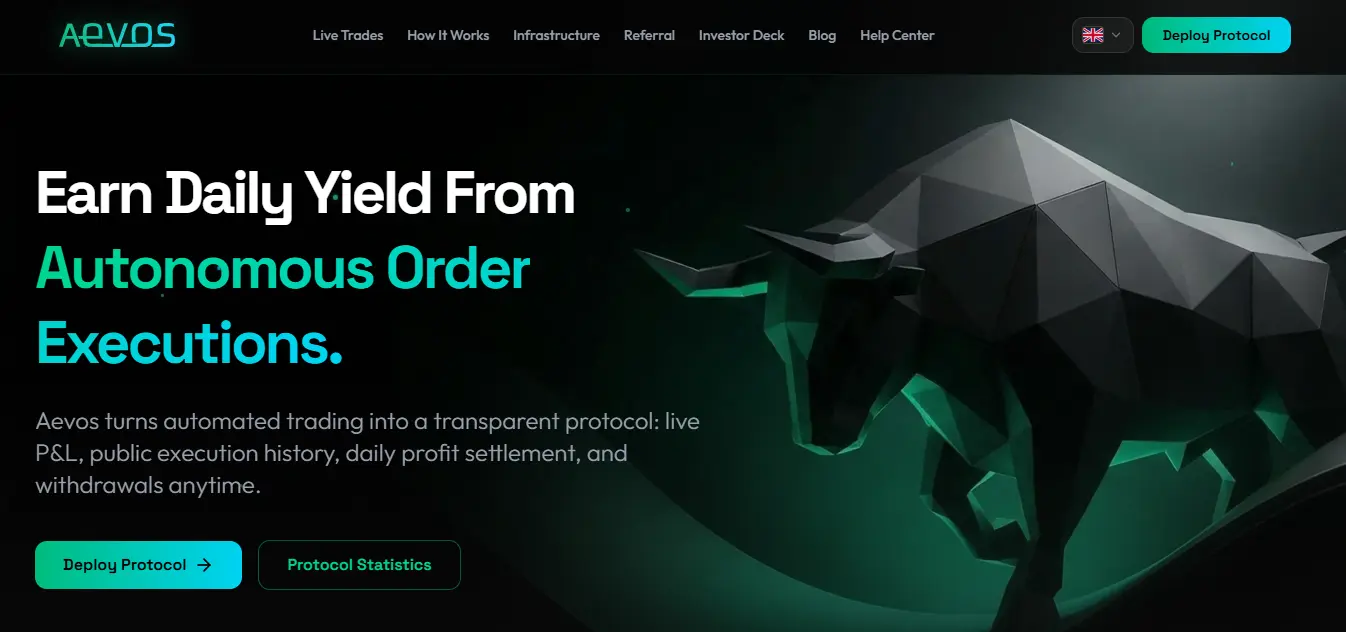
Aevos presents itself as an AI-powered crypto trading service called the Convergence Protocol. Four specialized agents handle market signals, risk, execution and sentiment. Trades occur only when the agents reach consensus. The site advertises daily settlement, withdrawals at any time with zero fees, a $10 minimum and estimated net daily returns between roughly 1.56 percent and 3.11 percent. Gross figures reach about 3.46 percent before the protocol fee. Deployment periods last 20 to 90 days. Crypto deposits convert to USDT. The related marketing site describes 24/7 automation and live profit-and-loss displays.
Independent checks show the domain registered on 28 December 2025. The company Aevos Limited appears in Hong Kong records under Business Registration Number 79477022, incorporated around 25 December 2025. These facts establish a very short operating history of about eight months as of late August 2026.
1.1 Ownership Profile and Background
Public records identify Aevos Limited as the legal entity. The privacy policy matches this name. No conventional corporate profile lists founders, ultimate shareholders, directors beyond the CEO title, trading-team members or beneficial owners. Ownership details remain obscured through privacy services on the domain registration.
Promotional materials name Li Jian as CEO. Communities mention Zoom sessions with this individual. Li Jian is a common Chinese name. No reliable public evidence links the Aevos CEO to any specific historical regulatory cases involving people with the same name. The distinction matters: a named CEO does not equal proven ownership or a verified professional track record. Ultimate control of the Hong Kong company stays unclear from available sources.
Traffic ranks remain low. Security tools note valid basic SSL but no independent audits of custody or trading systems. Payment methods stay crypto-focused. Support channels list an email and limited hours, yet independent verification of response quality is absent.
1.2 Full Compensation Plan Explained
The platform offers two main earning paths: protocol deployment returns and a five-level referral system.
1.3 Deployment returns
Capital placed into the protocol generates the advertised daily yield for the chosen term. An example calculator for $1,000 over 20 days at about 1.71 percent net shows investor profit near $342 after a roughly 50.5 percent protocol fee on the gross trading result. The underlying operation must therefore produce the higher gross rate (near 3.46 percent daily in that illustration) before fees.
Part: 2 Referral structure (unilevel-style)
Level | Instant Bonus on Deployment | Daily Profit Share |
L1 | 7% | 4% |
L2 | 3% | 0.8% |
L3 | 2% | 0.4% |
L4 | 1% | 0.2% |
L5 | 0.5% | 0.1% |
Instant bonuses total 13.5 percent across all five levels when capital deploys. Recurring shares total 5.5 percent of positive protocol profit. No evidence supports binary legs or a forced matrix. The plan links rewards directly to new capital entry and ongoing profits of referred users.
A simple $10,000 L1 deployment triggers a $700 instant bonus. If that capital produces $200 daily profit, the L1 referrer receives an additional $8 that day. Larger networks multiply these figures, creating strong recruitment incentives.
2.1 Why the Return Math Raises Concerns
Sustained multi-percent daily returns create extreme annualized figures. At 3 percent daily compounded, capital multiplies roughly 48,000 times in one year. Even the lower 1.56 percent daily rate produces hundreds of percent simple annualized. Real-world benchmarks differ sharply:
- Bank savings or short-term Treasuries: low single-digit percent per year.
- Typical real-estate total returns: mid-to-high single digits to low teens annually.
- Established crypto staking or lending: commonly low-to-mid teens at best, with principal risk.
- Professional trading firms: edges measured in basis points or low single-digit annual percentages after costs.
A $1 million deployment at 3.46 percent gross would require about $34,600 daily trading profit before fees, referrals and expenses. Scaling to $100 million multiplies the daily requirement into millions. Public protocol statistics pages have displayed zero trades, zero AUM and zero P&L on multiple checks, conflicting with promotional claims of thousands of trades and six-figure profits in short periods. No independently audited exchange ledgers or proof-of-reserves close the gap.
2.2 Red Flags and Reputation Signals
Key risk indicators include the young domain and company, hidden beneficial ownership, crypto-only irreversible deposits, multi-level investment-linked commissions, and absence of verified regulatory authorization for the investment product. Hong Kong company registration confirms legal existence but does not equal investment-manager licensing or investor protections.
Third-party scanners report low trust scores: ScamAdviser near 0 (“Very Likely Unsafe”), Gridinsoft 17/100 (Suspicious), ScamDoc around 44 percent. Similar-name domains have drawn comparable flags. Promoter channels often appear in high-yield investment communities that have previously listed programs later marked non-paying. Early withdrawal screenshots exist in monitoring sites, yet early payouts alone do not prove long-term sustainability.
2.3 Comparison Snapshot
Feature | Aevos Claimed | Typical Bank / REIT / Licensed Crypto Yield |
Daily / Annual ROI | 1.56–3.11% daily | <0.05% daily / 4–15% annual |
Regulation | None established | Heavy or partial |
Ownership clarity | Limited | High |
Referral dependence | Core | Rare or optional |
Capital lock | 20–90 days | Variable, often higher liquidity |
Practical Takeaways for Readers
Anyone considering the platform should treat the advertised yields as extraordinary claims requiring extraordinary independent proof. Demand readable exchange trade histories, wallet flow audits, full director and beneficial-owner disclosure, and clear regulatory authorization numbers before sending any funds. Compare the numbers against regulated alternatives that publish realistic annual returns and audited records.
The combination of short history, opaque ownership, aggressive daily targets and recruitment-heavy rewards places the opportunity in the high-risk category. Early participants may receive payouts funded by later deposits; later participants face elevated loss probability if inflows slow. Paper-trade or test only amounts you can afford to lose completely, and prefer platforms with multi-year verifiable track records and proper licenses.
This aevosReview summarizes the publicly available ownership facts, the exact five-level compensation table and the mathematical scale of the return claims so readers can decide for themselves. Always verify current dashboard statistics, company records and regulatory status independently before acting.
Aevos Review
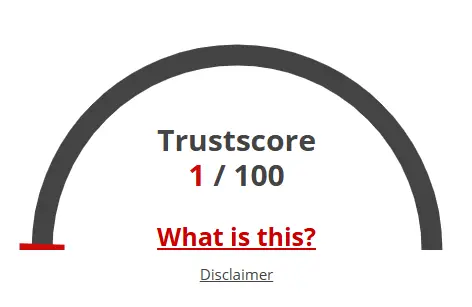
A website’s trust score is an important indicator of its aevos includes low web traffic, negative user feedback, potential phishing risks, undisclosed ownership, unclear hosting details, and weak SSL encryption.
With such a poor trust score, the likelihood of fraud, data breaches, or other security issues is much higher. It is crucial to carefully assess these warning signs before engaging with a aevos Similar platform.
Positive Highlights
- We found a valid SSL certificate
- DNSFilter labels this site as safe
Negative Highlights
- The Tranco rank (how much traffic) is rather low.
- The age of this site is (very) young.
Frequently Asked Questions About Aevos
This section answers key questions about aevos concerns, and highlights issues related to the platform’s legitimacy.
Aevos is an online investment platform that claims to offer users earning opportunities.
Its legitimacy should be verified through ownership, regulation, business model, and user reviews.
Risks may include unrealistic returns, withdrawal issues, and potential loss of funds.
Everstead Review should be compared with independent and verifiable information.
Research carefully and verify all claims before investing.
Other Infromation:
WHOIS data : Hidden
Owner : REDACTED FOR PRIVACY
Country: US
WHOIS Registration Date :2025-12-28
WHOIS Last Update:2026-08-12
WHOIS Renew Date: 2027-12-28
Website: aevos
Title :aevos
Reviews:
There are no reviews yet. Be the first one to write one.