ZignalsReview: A Clear Look at the Crypto Trading Platform Claims
This ZignalsReview examines the platform promoting AI crypto signals, managed trading, and copy trading with daily profit targets. Readers seeking facts on ownership, the compensation structure, and risks will find a straightforward summary based on public investigations and available data. The goal is to help ordinary people understand the full picture without jargon. Scams radar
Part : 1Ownership and Background Profiles
Table of Contents
Public materials link the operation mainly to Zaid Adrian Diaz Artiaga, often called Adrian Artiaga. He appears as COO, Head of Marketing, co-founder, and trading operations lead across livestreams, Facebook groups, Discord, and promotional events. His cited background centers on client growth, outsourcing, and business development. Independent reviews note limited evidence of a long track record in institutional crypto fund management.
Paul Dominic Aquino is frequently presented as CEO. Community organizers in the Philippines, especially around Davao and Quezon City, support branch openings and recruitment drives. Philippine business registrations (SEC, DTI, barangay clearance, mayor’s permit, BIR) are promoted. These confirm a local entity exists. They do not equal a license to solicit public investment funds, operate as a VASP, or manage client assets under regulated standards. One note indicated a VASP license was still pending. Photos of Artiaga in Philippine National Police CIDG offices have circulated. Investigations found no official endorsement.
The platform is distinct from the older legitimate Irish charting site (zignals.com, founded around 2007–2008) and the Spanish social-trading service Zignaly. Domain history includes earlier names such as zignals.org, zignals.net, and myzignals.org. At least one prior domain triggered a browser phishing warning. The current site uses HTTPS and presents a modern interface, yet ownership details remain privacy-protected and corporate structure opaque.
1.1 Compensation Plan and Affiliate Structure
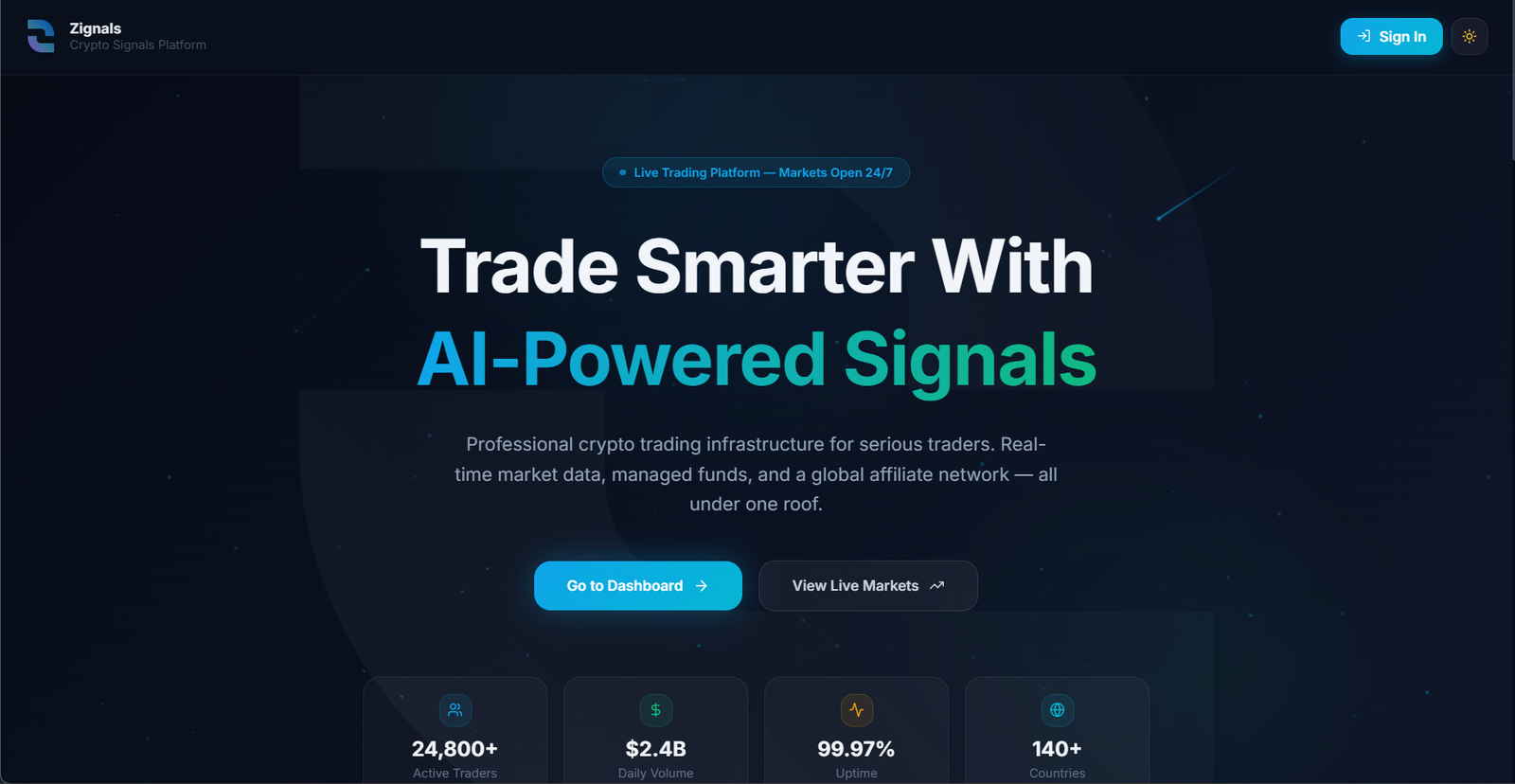
The plan combines managed or copy trading claims with a strong multi-tier affiliate network. Promotional materials and community messaging highlight a 1% daily target gain. Income charts project results from small deposits ranging from $20 to $1,000. Affiliates earn multi-level commissions, bonus points, and gadget incentives. Recruitment, branch openings, and recognition programs receive heavy emphasis alongside trading claims.
Commissions appear tied closely to new deposits and network growth rather than independently verified trading profits. This structure resembles classic multi-level marketing patterns. Manual withdrawal approvals inside Discord and member questions about balances, exchange rates, and processing delays have been documented.
1.2 Why the Daily Return Claims Are Unsustainable
A consistent 1% daily return compounds dramatically. On a $1,000 deposit:
- Continuous compounding over 365 days: roughly $37,783 (about 3,678% annualized).
- On about 250 trading days: still over 1,100% annualized.
Even simple non-compounded figures remain extreme (hundreds of percent per year). Real professional hedge funds and top quant desks rarely sustain multi-year returns above 20–30% after fees, and those come with drawdowns. Crypto markets routinely experience 50–80% declines. Fixed daily targets with no meaningful losing periods match historical high-yield investment program projections that rely on continuous new capital inflows.
1.3 Comparison of realistic annual returns (approximate, illustrative):
Investment type | Typical annual range | Notes |
Bank savings / deposits | Low single digits | Often lower after inflation |
Real-estate equity (developed markets) | Mid-single digits to low teens | Liquidity and maintenance risks |
Legitimate crypto staking / lending on major platforms | Low to mid single digits for major assets | Counterparty and smart-contract risks |
Top professional trading funds | Rarely sustained above 20–30% | Most underperform simple benchmarks long-term |
Claimed 1% daily target | Thousands of percent | Mathematically extreme and unsustainable at scale |
These gaps form a classic red-flag pattern.
Part : 2 Security, Traffic, Perception, and Technical Notes
Related domains showed modest trust scores (Gridinsoft listed one earlier domain at 40/100 Caution, citing newness and limited independent data). Positive signals were mainly the SSL certificate. No strong public evidence of independent smart-contract audits, proof-of-reserves, or regulated custody appears in available reports. Traffic data is sparse; activity is largely community- and affiliate-driven via Philippine Facebook groups, Discord, and livestreams rather than high organic web traffic.
Content authenticity of trading results is hard to verify independently. Screenshots and selected examples circulate, but audited track records are absent. Payment methods are crypto-centric. Support is reported as Discord-heavy with manual processes. No robust regulated support infrastructure or clear legal recourse for foreign investors is evident.
2.1 Key Red Flags Summary
- Unsustainable fixed or target daily returns marketed aggressively.
- Heavy multi-level affiliate and recruitment focus.
- Multiple domain changes and at least one prior phishing warning report.
- Business registrations presented as legitimacy without clear investment or VASP licensing.
- Limited independently verifiable trading performance or audited financials.
- Manual withdrawal processes and member questions about processing.
- New or recent domains with privacy protection and modest independent trust scores.
- Marketing that can create an impression of official legitimacy without corresponding regulatory approvals for fund management.
These patterns align with historical HYIP and recruitment-driven schemes that expand via community networks until inflows slow.
2.2 Social Media and Promotion
Promotion concentrates in Philippine Facebook communities (including “Zignals Official Community” and regional hubs such as South Davao), Discord, Facebook Lives, and individual accounts. Adrian Artiaga appears frequently in livestreams, Zoom calls, and branch events. Community organizers post income claims and recruitment calls. Independent monitoring accounts and OSINT reviews (notably dehek.com investigations) highlight the recruitment emphasis and unanswered questions around transparency.
Recommendations and Future Outlook
Treat the platform as high-risk. Do not deposit funds. If already involved, document everything, attempt orderly withdrawal of any accessible balances, and avoid recruiting others. Prefer regulated exchanges, audited funds, or transparent self-custody strategies with realistic risk-adjusted expectations. Verify any claimed licenses directly with the relevant regulator (for example, Philippine SEC or BSP).
Schemes built on high fixed daily targets and continuous recruitment typically face pressure as the base of new depositors grows slower than payout obligations. Common trajectories include delayed or restricted withdrawals, changing terms, domain migrations, or eventual difficulties once inflows slow. Regulatory scrutiny could increase given the investment-solicitation character.
Zignalsl Review
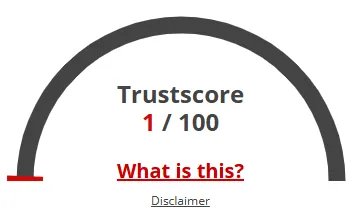
A website’s trust score is an important indicator of its Zignals includes low web traffic, negative user feedback, potential phishing risks, undisclosed ownership, unclear hosting details, and weak SSL encryption.
With such a poor trust score, the likelihood of fraud, data breaches, or other security issues is much higher. It is crucial to carefully assess these warning signs before engaging with a ZignalsSimilar platform.
Positive Highlights
- We found a valid SSL certificate
- DNSFilter labels this site as safe
Negative Highlights
- The Tranco rank (how much traffic) is rather low.
- The age of this site is (very) young.
Frequently Asked Questions About Zignals
This section answers key questions about Zignalsconcerns, and highlights issues related to the platform’s legitimacy.
Zignals is an online investment platform that requires careful due diligence.
Potential red flags make it important to verify Zignals before investing.
Zignals promotes returns that should be compared with realistic market rates.
Check its registration and regulatory status before depositing funds.
No clear connection is established without reliable evidence.
Other Infromation:
WHOIS data : Hidden
Owner : REDACTED FOR PRIVACY
Country: US
WHOIS Registration Date :2026-06-15
WHOIS Last Update:2026-06-20
WHOIS Renew Date:2027-06-15
Website:Zignals
Title :Zignals
Reviews:
There are no reviews yet. Be the first one to write one.