
EdgeX Token Review: A Balanced Look at Features, Risks, and What Investors Should Know
In this EdgeX Token review, we explore the key aspects of the project, including its tokenomics, staking options, compensation structures in related promotions, and important background details. With cryptocurrency investments carrying notable volatility, understanding both opportunities and potential concerns helps everyday readers make informed choices. Scams Radar

Table of Contents
Part: 1 Understanding EdgeX and the EDGE Token
EdgeX operates as a decentralized perpetual exchange focused on high-speed trading for crypto, stocks, and other assets. The native EDGE token serves governance, incentives, and ecosystem participation roles. Launched around March 2026, it features a total supply of 1 billion tokens.
Common questions arise about distinctions between official platforms and similar-sounding sites. The primary project maintains strong ties to established backers like Amber Group and uses infrastructure designed for performance, such as low-latency order matching.
1.1: Owners' Profiles and Backgrounds
Transparency varies across crypto projects. For the main EdgeX initiative, connections exist to experienced teams with backgrounds in traditional finance and crypto trading firms. Amber Group, a known player in digital assets, provides incubation support, bringing institutional expertise in liquidity and operations.
However, some promotional sites and copycat domains registered recently show limited or hidden ownership details. Privacy-protected WHOIS records and lack of clear company filings raise standard caution flags for potential investors. Legitimate efforts typically share verifiable team info, audits, and legal structures. Always cross-check official channels like the main exchange site for confirmed details.
No single verified criminal history ties directly to named executives in public records for the core project, but anonymous or mismatched entities in affiliate promotions warrant extra scrutiny. Professional backgrounds in finance can support operations, yet investors benefit from checking regulatory licenses and independent audits themselves.
1.2 : Comprehensive Compensation Plan Breakdown
Promotions around EdgeX-style platforms often highlight staking rewards alongside referral elements. The official token supports staking for potential yields and governance, though actual rates fluctuate with market conditions and protocol activity. Claims of fixed high APYs, such as 18%, appear in some unrelated or third-party marketing and deserve careful math review.
1.3 : Core Components Often Discussed:
- Staking and Passive Rewards: Participants may earn through network participation. Sustainable yields in established DeFi typically range lower, backed by real fees rather than new inflows.
- Referral and Team Structures: Some affiliate models blend binary (left/right leg balancing), unilevel (direct recruits), and matrix-style spillover. These reward recruitment and volume but rely heavily on network growth.
- Matching and Leadership Bonuses: Downline performance can generate extra income, with ranks unlocking higher tiers.
- ROI Claims: High fixed returns sound appealing but require scrutiny. For example, consistent double-digit APYs demand exceptional trading profits or liquidity provision that few platforms sustain long-term without dilution.
A simple table for clarity:
Aspect | Typical Claim | Real-World Comparison | Key Consideration |
Staking APY | Up to 18% | 3-10% in major protocols | Depends on emissions and revenue |
Referral Bonus | 10% direct | Varies by volume | Network growth dependent |
Binary Matching | Pair-based payouts | Common in hybrids | Balancing required |
Overall Sustainability | Passive income focus | Fee capture from trading | Needs verifiable revenue |
Part 2 : Mathematical Perspective on Returns (Simplified for Clarity):
Suppose a platform promises 18% annual yield on staked tokens. For $100 invested, that suggests about $18 in rewards yearly before any fees. If half the supply stakes, large payouts require either strong protocol revenue or new token emissions, which can pressure price. Real benchmarks include bank deposits (around 3-8% in many regions), real estate yields (5-12%), or established crypto staking (often 3-5%). High claims need matching real activity to avoid dilution.
Hybrid models combining trading ROI with MLM-like elements can work when product usage drives value. Yet heavy recruitment focus risks unsustainability if new deposits slow, as payouts then strain reserves. Exponential growth examples illustrate limits: recruiting two people per level quickly scales beyond practical user bases.
2.1 : Tokenomics and Utility Details
EDGE tokenomics allocate across categories like early users (including airdrop/genesis distribution), liquidity, ecosystem, foundation, reserves, and contributors. Vesting schedules help align incentives over time. Utility centers on governance voting, staking incentives, and potential fee-sharing mechanisms.
Price history shows volatility, including sharp moves in 2026, prompting community discussions and compensation efforts from the main team for affected users. Such responses demonstrate accountability in active projects.
2.2 : Traffic, Perception, and Security Notes
Established platforms build organic interest through usage and listings. New or promotional domains often show low independent traffic and rely on social channels. Security basics like SSL appear standard, but deeper audits (e.g., by firms like CertiK or PeckShield) and on-chain transparency provide stronger confidence.
Fake testimonials and generic content appear in some copycat promotions. Official docs and community channels offer better verification.
Part 3 : Comparison Charts for Better Understanding
Annual Return Benchmarks (Approximate Averages):
- High-Risk Crypto Promotions: Claimed 18%+ staking
- Established Crypto Staking: 3-8%
- Stock Market Historical: ~7-10%
- Real Estate Yields: 5-12%
- Savings Accounts: 3-8%
These highlight why promises far above norms prompt questions about backing.
In graph terms, sustainable growth curves upward gradually with usage, while recruitment-heavy models spike then plateau or decline when inflows slow.
3.1 : Red Flags and Best Practices
Common watchpoints include very new domains, hidden ownership, unrealistic guarantees, and pressure on referrals over product. Distinguish official EdgeX resources from similar names. Tools like ScamAdviser, WHOIS lookups, Etherscan, and official audits aid due diligence.
Test small, read independent analyses, and avoid investing more than you can afford to lose. Regulatory warnings on high-yield schemes underscore caution.
3.2 : Future Outlook and Recommendations
The broader EdgeX ecosystem shows innovation in perpetual trading with orderbook models for speed and liquidity. Success depends on execution, user adoption, and transparent governance. Price predictions remain speculative amid market conditions.
For those exploring: Prioritize verified channels, understand token utility, and monitor developments like listings and protocol upgrades. Airdrop or genesis details evolve, so check announcements directly.
Conclusion
This EdgeX Token review covers essential elements from tokenomics and staking to compensation nuances and background considerations. While the space offers potential for decentralized trading innovation, risks remain high due to volatility, varying transparency, and sustainability questions in some promotions. Approach with research, focus on official platforms, and treat all investments thoughtfully. Staying informed maximizes chances in this dynamic field. Always perform your own verification—DYOR remains key for crypto decisions. (Word count: ~1050)
EdgeX Token Review Score
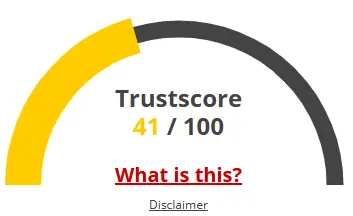
A website’s trust score is an important indicator of its reliability. EdgeX Token includes low web traffic, negative user feedback, potential phishing risks, undisclosed ownership, unclear hosting details, and weak SSL encryption.
With such a poor trust score, the likelihood of fraud, data breaches, or other security issues is much higher. It is crucial to carefully assess these warning signs before engaging with a EdgeX Token Similar platform.
Positive Highlights
- We found a valid SSL certificate
- DNSFilter labels this site as safe
Negative Highlights
- The Tranco rank (how much traffic) is rather low.
- The age of this site is (very) young.
Frequently Asked Questions About EdgeX Token Review
This section answers key questions about EdgeX Token clarifies points, addresses concerns, and highlights issues related to the platform’s legitimacy.
EdgeX Token is a digital asset designed for use within the EdgeX ecosystem, offering platform utility and reward features.
It depends on the project's transparency, security, and market performance. Always do your own research before investing.
Key risks include price volatility, limited transparency, and uncertainty about long-term sustainability.
Both reviews assess transparency, business models, and potential risks to help investors make informed decisions.
Review the team, tokenomics, security audits, liquidity, and official documentation before investing.
Other Infromation:
WHOIS Registration Date: 2026-05-18
WHOIS Last Update: 2026-06-02
WHOIS Renew Date: 2027-05-18
Website: EdgeX Token
Reviews:
There are no reviews yet. Be the first one to write one.