
DeNet Review: Exploring Decentralized Storage and Passive Income Opportunities in the DeNet Ecosystem
DeNet offers a decentralized storage solution that lets everyday people and businesses share unused device space for secure data storage while earning rewards. This DePIN project combines blockchain technology with practical storage needs, making it accessible for those interested in Web3 storage options.
In this detailed review, we cover the owners’ backgrounds, the full compensation plan, key features, and real-world considerations. We use simple language, bullet points, and tables to explain everything clearly.Scams Radar

Table of Contents
Part : 1 Who Is Behind DeNet? Owners and Team Backgrounds
DeNet started around 2016-2017 with roots in Russia and later connections to Hong Kong and Dubai. The project operates through Defender Software FZ-LLC, an active entity in the EMEA/GCC region.
Key Founders and Leadership:
- Rafik Singatullin (CEO): Brings business leadership and has helped build the team over many years. He focuses on strategy and growth.
- Denis Shelestov (CTO): Technical expert and serial inventor with deep knowledge of data storage protocols. He leads development of the core technology.
- Other Team Members: Include Pavel Litviakov (CBDO), Olga Belonozhko (COO), and Maria Titova (CFO). The team has experience across Russia, Singapore, and other locations.
The advisory board features professionals from the USA, South Korea, Switzerland, Ireland, and Canada. Investors include firms like Comma3 Ventures, Global Blockchain Innovative Capital, and Nalu Capital. The project has raised funding and shows a structured corporate setup, though details on exact funding amounts remain limited in public records.
This international team draws on years of blockchain and storage expertise. For a layman, think of them as engineers and business people working to create a more private alternative to services like Google Drive or AWS.
1.1 Understanding the DeNet Compensation Plan and Earning Potential
DeNet lets users participate through Datakeeper Nodes and Watcher Nodes. The focus is on providing storage capacity and earning from real usage plus token incentives.
Datakeeper Nodes (Main Investment Option):
- Cost: Around $580 per license/position.
- Provides allocated storage capacity (e.g., starting at 10 TB).
- Earnings come from two sources:
- Payments from users and businesses storing data on your contributed space.
- Token rewards (15% of token supply allocated to node operators).
ROI Examples from Project Materials:
- 10 TB allocation: Approximately $4 per day.
- 100 TB allocation: Up to $41 per day.
- Annual estimate per license: Around $1,500, depending on network usage.
Watcher Nodes (Lighter Participation):
- Use the free mobile app to run a node on your phone.
- Earn WN tokens by contributing to network security and data availability.
- Lower barrier — no large upfront cost, but earnings depend on uptime and device contribution.
MLM/Referral Element:
- Unilevel commissions on node sales: 20% on level 1, 5% on level 2, and 1% on level 3.
- Paid in internal WN tokens.
- This adds a community-building aspect for those who refer others.
Simple Comparison Table for Earnings Context
Option | Upfront Cost | Daily Potential (Example) | Main Revenue Sources | Risk Level |
Datakeeper Node | ~$580 | $4–$41 | Storage fees + tokens | Medium-High |
Watcher Node (App) | Free | Variable (tokens) | Network contribution | Lower |
Traditional Savings | Varies | Low (bank rates) | Interest | Low |
Real Estate Rental | High | 5-10% annual | Rent payments | Medium |
Note: Actual earnings depend on network demand, utilization, and token value. High claims require real user adoption.
1.2 Key Features of DeNet Decentralized Storage
DeNet uses sharding, encryption, and auto-replication to break files into secure pieces stored across many devices. No single company holds your data.
Main Benefits for Individuals and Enterprises:
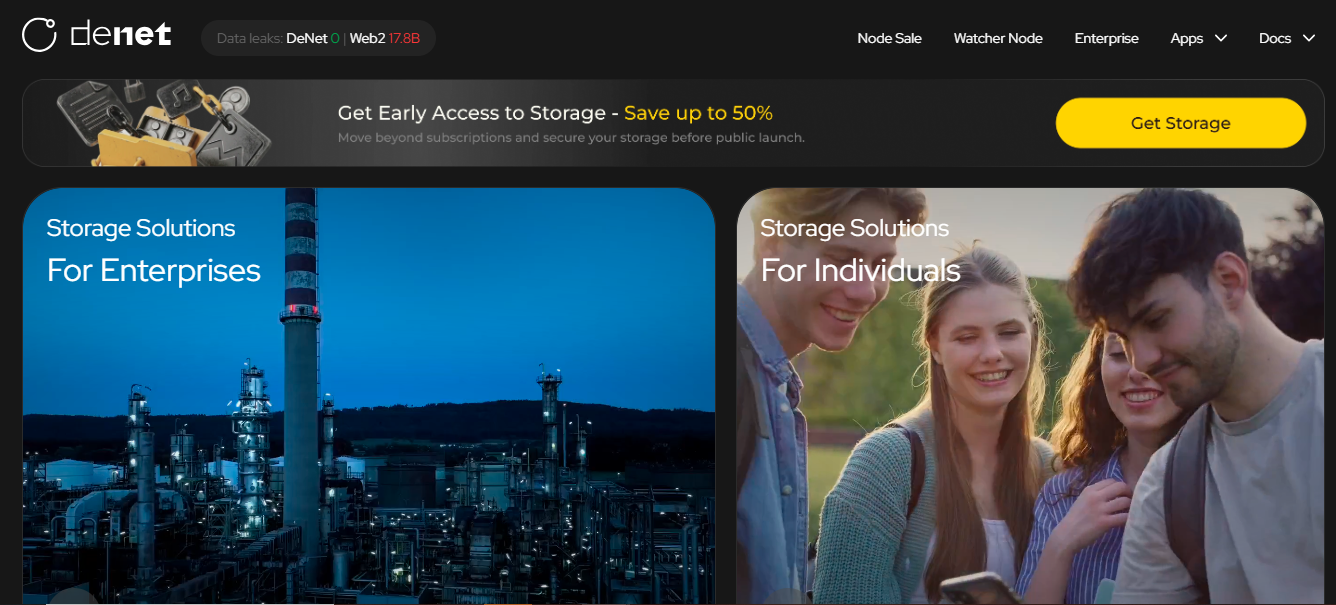
- Privacy-Focused: Zero reported data leaks compared to large Web2 incidents. Non-custodial you control keys.
- Tokenized Capacity: TBY tokens for storage (RWA — real-world asset approach).
- Accessibility: Watcher Node app for mobile users; Datakeeper for dedicated hardware.
- Use Cases: AI data, healthcare records, IoT, personal files, and enterprise needs.
- Stats: Over 7.3M storage users/Watcher Nodes, 2000+ Datakeepers, files protected across 194 countries.
How It Works (Simple Steps):
- Install the app or set up a node.
- Contribute storage or run Watcher mode.
- Data gets encrypted and distributed.
- Earn as the network uses your space.
Part : 2 DeNet vs Other Decentralized Storage Options
DeNet positions itself as blockchain-agnostic and focused on privacy. Compared to Filecoin or Arweave, it emphasizes easy mobile entry via Watcher Nodes and tokenized RWA capacity.
Pros:
- Low entry for Watcher Nodes.
- Long history since 2017.
- Active app with positive ratings (around 4.6-4.8 stars).
Considerations:
- Earnings rely on actual storage demand.
- Crypto projects involve volatility.
- Token liquidity and long-term value need monitoring.
2.1 Markdown Chart Representation of Growth Potential
Imagine a bar chart here:
- Watcher Nodes: High adoption (7M+ users)
- Datakeeper Nodes: Growing (2,000+)
- Protected Files: 15M–20M+
- Countries: 194
This shows broad distribution, which strengthens security through decentralization.
2.2 Traffic, Community, and Real-World Performance
The project has an active presence with social channels, GitHub for node setup, and a functional website. App downloads exceed 1M, with users praising ease of use for passive participation.
Community feedback mixes excitement about the concept with questions about payout consistency. Always test small and track results.
2.3 Security and Technical Aspects
DeNet claims strong encryption, proof-of-storage, and bug bounty programs. SSL is standard, and the network runs in beta with plans for full launch. Risks common to DePIN projects include hardware costs (electricity, bandwidth) and token price changes.
Final Thoughts on DeNet Review
DeNet brings an interesting mix of decentralized storage, DePIN innovation, and earning opportunities through Datakeeper Nodes and Watcher Nodes. The experienced team and focus on privacy make it worth exploring for those curious about Web3 storage solutions.
The compensation plan offers clear paths for passive income, but success depends on network growth and real usage. Compare it to traditional options like bank savings or real estate, and start small.
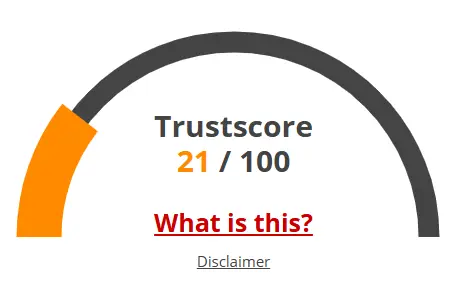
DeNet Review Score
A website’s trust score is an important indicator of its reliability DeNet includes low web traffic, negative user feedback, potential phishing risks, undisclosed ownership, unclear hosting details, and weak SSL encryption.
With such a poor trust score, the likelihood of fraud, data breaches, or other security issues is much higher. It is crucial to carefully assess these warning signs before engaging with a DeNet Similar platform.
Positive Highlights
- We found a valid SSL certificate
- DNSFilter labels this site as safe
Negative Highlights
- The Tranco rank (how much traffic) is rather low.
- The age of this site is (very) young.
Frequently Asked Questions About The DeNet Review
This section answers key questions about DeNet clarifies points, addresses concerns, and highlights issues related to the platform’s legitimacy.
DeNet is a decentralized cloud storage platform that rewards users for sharing storage resources.
DeNet is a real blockchain project, but users should research its risks and transparency before investing.
Earnings are possible, but results depend on network activity, demand, and token value.
Risks include market volatility, regulatory changes, and uncertain long-term sustainability.
An Everstead Review focuses on a different business model, while DeNet centers on decentralized cloud storage.
Other Infromation:
WHOIS Registration Date:N/L
WHOIS Last Update : N/L
WHOIS Renew Date: N/L
Website: DeNet
Reviews:
There are no reviews yet. Be the first one to write one.