
Polynetica Review 2026: Honest Insights into the Polygon DeFi Project and POLLY Token
In this Polynetica review, we examine the platform that aims to blend DeFi tools with business partnerships on the Polygon blockchain. The project features the POLLY token and promises passive income through staking, NFTs, and marketing programs. Many people search for clear details on how it works, especially the compensation plan and who runs it. This guide breaks everything down in simple terms so anyone can understand the facts, risks, and key features. For more crypto safety insights and scam-related platform checks, you can also explore our Scams Radar section

Table of Contents
Part : 1 What Is Polynetica and How Does It Work?
Polynetica presents itself as a smart contract platform on the Polygon network. It calls itself a DeFi solution for online business growth. Users buy the POLLY token, stake it, and join programs that offer rewards. The official website highlights features like partner links, level activations, and weekly payouts.
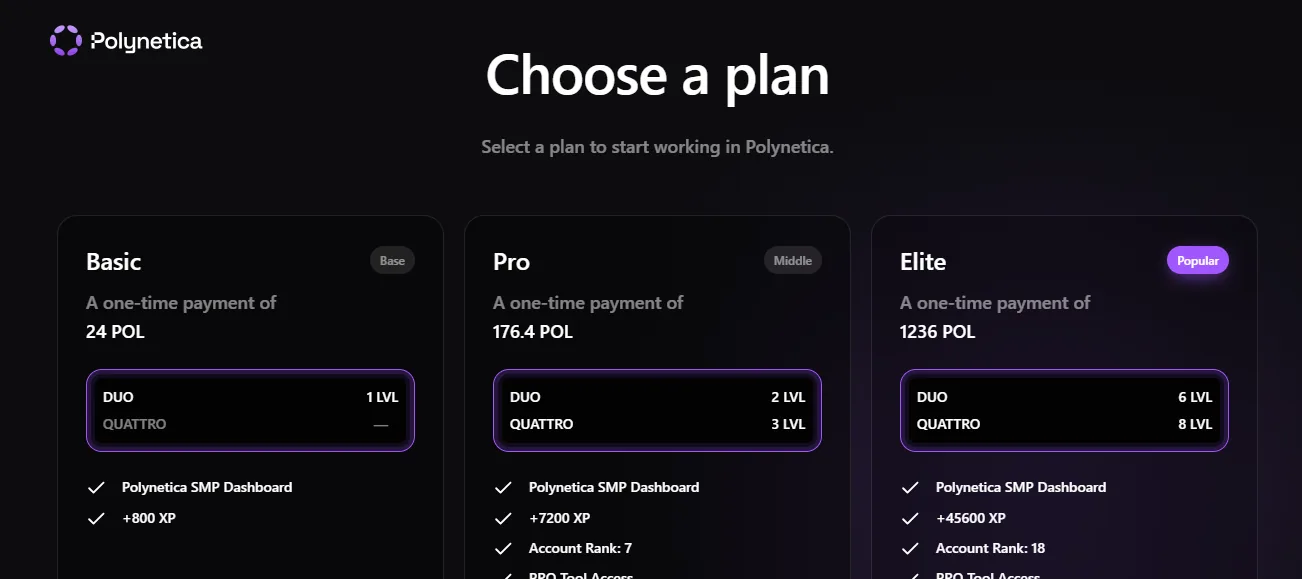
At its core, the system mixes token sales with a referral setup. People register, purchase packages using POL coins, and activate levels in two main programs called DUO and QUATTRO. These programs use matrix-style mechanics with spillovers. Some rewards come from platform fees, while others depend on new participants joining. Staking POLLY boosts your position, and special Energy NFTs can pay dividends for seven days.
The project also mentions a litepaper that explains token sales in tiers and a public phase. Early buyers get tokens at set prices, and later listings on DEX or CEX are planned. However, real-world trading shows the POLLY coin price stays very low with thin liquidity.
1.1 Owners’ Profiles and Backgrounds: What We Know
Transparency matters in any investment, especially with crypto. Polynetica review sources show no public list of founders, CEO, or developers on the site. No LinkedIn profiles, bios, or company filings appear. This stands out as a key point for investors.
Domain records list a registration around September 2024. Privacy protection hides the owner details through a service linked to the Bahamas. One contact email points to Thailand, but no corporate registration or verifiable business address ties back to named individuals. The litepaper simply uses a generic owner@polynetica.com address.
No independent audit covers the full team or operations. The smart contract on Polygon exists and shows as verified, yet no major firm like CertiK has published a full report. This anonymity raises questions for anyone considering the Polynetica partner program or token purchase. Legitimate projects usually share clear leadership to build trust.
1.2 Polynetica Tokenomics and Litepaper Breakdown
The Polynetica litepaper outlines a total supply of 100 billion POLLY tokens. Here is a simple table showing the main allocations:
Allocation | Percentage | Tokens (approx.) | Purpose |
Team & Marketing Pool | 20% | 20 billion | Promotions and operations |
Dev Pool | 25% | 25 billion | Development and maintenance |
Presale / Tier Sale | 12% | 12 billion | Early buyer access |
Public Sale | 10% | 10 billion | Wider distribution |
DEX & CEX Listing | 15% | 15 billion | Exchange liquidity |
Growth & Partner Pool | 18% | 18 billion | Rewards and bonuses |
Fees collected on the platform split in various ways. About 15 percent goes toward token dividends for holders who lock at least 0.001 percent of supply for seven days. Another portion supports buybacks. Current market data shows the POLLY token on Polygon with low daily volume and a market cap that remains modest. The presale tiers started at fixed POL costs and distributed large batches of tokens. Public sale prices ranged higher, aiming for DEX listing growth
Part : 2 The Complete Compensation Plan Explained in Simple Terms
The compensation plan forms the heart of the project. It combines single-level referrals with two matrix-style programs. New users buy packages and activate levels. Each activation sends rewards to upline partners. Spillovers let earnings flow even without direct recruits in some cases.
2.1 Main Programs: DUO and QUATTRO
- DUO Program: Features 2 mining slots per level across up to 15 levels. Each cycle promises 200 percent ROI on the level cost. Promoters claim this can equal around 6,000 percent monthly if cycles complete quickly. It uses sequential activation, freezing, and personal referral spillovers.
- QUATTRO Program: Offers 6 slots in a 2-line setup per level. Cycle ROI hits 300 percent. Expected monthly returns reach about 9,000 percent under full activity. It includes system-wide spillovers, bonuses, and overtaking mechanics.
Packages unlock different starting levels:
- Basic: Around 20 POL – targets entry users.
- Pro: Around 147 POL – adds more levels and potential.
- Elite: Around 1,030 POL – highest access with premium support claims.
A 10 percent referral bonus applies on invited partner purchases, paid in POLLY. Staking increases level speed, and Energy NFTs deliver 15 percent of certain fees as passive dividends for seven days.
2.2 Why the Math Matters: A Simple Example
Let’s look at a basic $100 investment equivalent in POL terms. If it earns the claimed 6,000 percent monthly:
- Month 1: Grows to roughly $6,100.
- Month 2: Reaches about $372,100.
- Month 3: Hits over $22 million.
This growth requires constant new participants to fund payouts. In any matrix with 12 or more levels, filling positions demands exponential recruitment. For instance, a 2-wide structure needs thousands of people under one participant by deeper levels. Global population limits make this unsustainable long-term without fresh capital.
Here is a clear benchmark table comparing typical returns:
Investment Type | Typical Annual Return | Risk Level | Source of Funds |
Bank savings (Pakistan) | 7–10% | Very low | Interest from lending |
Real estate | 8–12% | Medium | Rent and property value |
Legitimate crypto staking | 5–20% | High | Blockchain fees |
Stock market index | 7–10% | Medium | Company profits |
Polynetica claimed returns | 6,000–9,000% monthly | Extremely high | New participant activations |
These figures show why many view the claims as aggressive. Real yields come from actual business activity, not endless recruitment.
Part : 3 Traffic, Security, and Public View
Visitor numbers stay low. The platform shows a user counter around 12,000 toward a larger goal, but independent checks find minimal organic interest. The POLLY token trades with low liquidity on Uniswap, creating slippage risk.
Security includes a valid SSL certificate. The smart contract handles transactions, yet no full independent audit appears on major scanners. Support runs mainly through Telegram. Payments stay crypto-only via wallet connect.
Public perception mixes. Some tools rate it average for technical factors but flag the hidden owner and low traffic. Others label it higher risk. Promotion appears strongest in regional communities focused on earn-from-home opportunities, with ties noted to similar past projects.
3.1 Polynetica Scam Check: Key Considerations
A Polynetica scam check highlights both sides. Positive points include a verified contract and working smart contract platform. Concerns center on anonymity, MLM-style reliance on referrals, and the high ROI projections that need constant growth.
No major exploit reports exist yet. Still, low volume means exiting large positions could prove difficult. The Polynetica referral system works well for early participants but faces saturation limits later.
Final Thoughts and Recommendations
This Polynetica review shows a project built on Polygon with interesting DeFi ideas like staking and NFTs. The compensation plan offers multiple earning streams through DUO, QUATTRO, referrals, and dividends. However, the anonymous background and reliance on recruitment deserve careful thought.
Anyone exploring the Polynetica token sale, presale tiers, or partner program should start small. Use the litepaper and official docs for your own checks. Monitor on-chain activity via PolygonScan. Compare with safer options that show clear teams and steady, realistic yields.
Remember, crypto involves risk. Treat any high-return promise with caution. Conduct your own research, review the Polynetica investor review from multiple angles, and only use funds you can afford to lose. The platform may evolve, so stay updated through trusted sources.
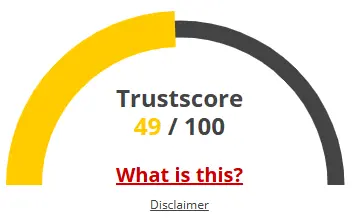
Polynetica Review Score
A website’s trust score is an important indicator of its reliability Polynetica includes low web traffic, negative user feedback, potential phishing risks, undisclosed ownership, unclear hosting details, and weak SSL encryption.
With such a poor trust score, the likelihood of fraud, data breaches, or other security issues is much higher. It is crucial to carefully assess these warning signs before engaging with a Polynetica similar platform.
Positive Highlights
- We found a valid SSL certificate
- DNSFilter labels this site as safe
Negative Highlights
- The Tranco rank (how much traffic) is rather low.
- The age of this site is (very) young.
Frequently Asked Questions
This section answers key questions about Polynetica clarifies points, addresses concerns, and highlights issues related to the platform’s legitimacy.
Polynetica claims to be a DeFi project, but its anonymous team and high-return promises make it risky.
It uses crypto packages, referrals, DUO/QUATTRO programs, spillovers, and POLLY token rewards.
No regulator has officially labeled it that, but its referral and matrix-style model raises serious red flags.
Hidden ownership, unrealistic returns, weak token liquidity, and passive-income claims are major concerns.
Everstead Review and Polynetica Review both help users check if online earning platforms are risky or legit
Other Infromation:
WHOIS Last Update Date: 2026-01-07
WHOIS Renew Date: 2026-09-21

Reviews:
There are no reviews yet. Be the first one to write one.