Mineroom Review: A Clear Look at the New Crypto Mining Simulator Game
In this Mineroom review, we break down the free-to-play crypto mining game available at app.mineroom.net. Many people search for a simple way to earn while playing. This review from Scams Radar explains everything in plain words so anyone can understand. We focus on the owners, the full compensation plan, and real risks. All details come from public records as of March 2026.

Table of Contents
Part 1: Who Owns Mineroom and What Is Their Background?
The owners stay hidden. Public records show the domain was registered on January 13, 2026. It expires one year later. The registrar is Hostinger, based in Lithuania. Full privacy protection hides every name, address, and email. No company details appear on the site. There is no team page, no LinkedIn profiles, and no registered business entity.
This setup is standard for very new projects. Yet it leaves users with no way to check who runs things. No audits or legal papers exist publicly. Support is only a generic email at support@mineroom.com. Without clear faces or history, accountability stays low. New players often feel uneasy when money or rewards enter the picture.
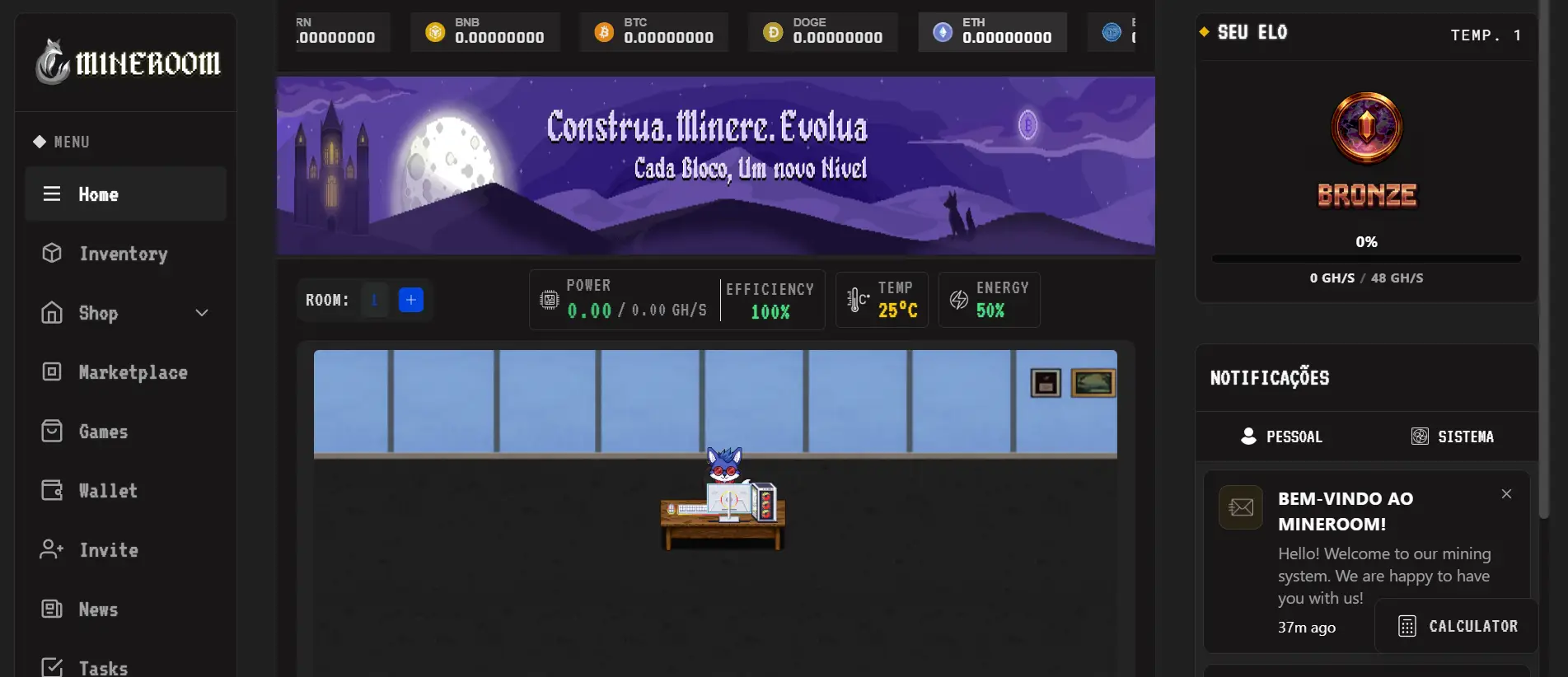
1.1 The Full Compensation Plan in Mineroom
Mineroom works as a play-to-earn style simulator. You start free. Unlock rooms. Finish missions. Stack virtual miners to grow your power. Some high-performance miners cost real money, though the site calls the base game free.
The compensation plan mixes three parts. First, in-game earnings come from your total mining power. Second, a referral program gives boosts to both the referrer and the new player. Third, promoters talk about daily rewards up to 5 percent on any spent amounts. No official document lists exact levels or percentages. The site never shows a clear payout table.
Promoters also mention deposits through USDT or PIX for faster buys. Withdrawals, if they happen, tie to your balance after missions. Real crypto earnings stay unproven. Similar games pay tiny amounts for free play. Paid miners might raise output, but no verified numbers exist.
Here is the simple math behind the 5 percent daily claim many see:
Pn=P0×(1.05)n P_n = P_0 \times (1.05)^n Pn=P0×(1.05)n
Start with $1,000. After 30 days, it grows to over $4,300. After one year, the number reaches billions. No real business can pay that forever. Real mining hardware gives 5 to 20 percent per year at best. The chart above shows the difference. The red line explodes while the blue and green lines grow slowly and steadily.
1.2 How the Mineroom Crypto Mining Game Works
Players log in and build a virtual mining farm. You open new rooms step by step. Each mission raises your power level. Stack miners to increase daily output. Referral links add extra boosts for both sides.
The game feels like a simulator. Think of it as managing a farm where miners dig crypto instead of crops. You can buy upgrades for faster growth. Missions give small rewards. Everything happens inside the browser. No heavy download needed. The site loads fast on Vercel hosting.
Part 2: Security, Trust Scores, and Technical Details
The platform uses basic HTTPS with a valid certificate. Login options include Google and Discord. Yet many tools flag low safety.
Look at the trust chart above. Independent scanners give very low marks. Scamadviser shows 0 out of 100. Gridinsoft sits at 12. Scamdoc reaches only 25. Average scores stay under 25 percent. Reasons include the young domain, hidden owner, and crypto focus.
The site shares its server space with other risky addresses. No 2FA option appears. No security audit badges exist. These points add up to extra caution.
2.1 Payment Methods, Deposits, and Payouts
Users can deposit via USDT or local PIX transfers. The game markets itself as free, yet buying miners often requires real funds. Withdrawal limits and times never appear publicly. Promoters share proof images, but no large verified payouts show up on independent sites.
2.2 Mineroom Red Flags and Warnings
Several clear issues stand out:
- The domain is only two months old
- Owner identity stays fully private
- Trust scores range from 0 to 25 percent
- Promotion relies almost only on referral links
- No company registration or support team listed
- Claims of high daily returns fail basic math tests
- No proof of real mining hardware or revenue
- Site sometimes shows login walls that hide full rules
Here is a quick comparison table:
Type of Investment | Typical Yearly Return | Risk Level |
Bank savings | 1–5% | Very low |
Real estate | 5–10% | Low |
Crypto staking | 5–20% | Medium |
Mineroom promoted claims | Over 1,800% | Extremely high |
The numbers simply do not match real-world results.
Part 3: Mineroom User Reviews and Public View
Most talk comes from YouTube shorts and social posts with referral codes. A few call the game “fun and legit.” Others stay quiet. No Trustpilot or major forum threads exist yet. Independent reviews remain scarce. Traffic data shows low organic visits. Growth ties mostly to airdrop hunters.
3.1 Mineroom vs Other Crypto Mining Apps
Compared to Rollercoin, Mineroom copies some ideas but lacks years of payout history. Established games prove small but steady earnings. New clones often fade fast when rewards drop. Mineroom still needs time to show if it can last.
Final Thoughts on Mineroom
This Mineroom review shows a fresh game with interesting gameplay. The free start lets anyone try rooms and missions without risk. Yet the hidden owners, missing compensation details, and extreme return claims create real concerns. Play for fun if you like simulators. Never treat it as a serious income source or deposit more than you can lose.
Stick to proven platforms for actual crypto earnings. Always check domain age and trust scores first. Do your own research before spending. The math and facts speak clearly here.
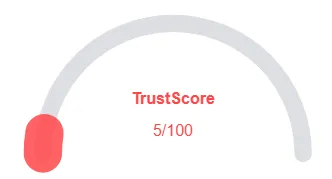
Mineroom Review Score
A website’s trust score is an important indicator of its reliability. Mineroom includes low web traffic, negative user feedback, potential phishing risks, undisclosed ownership, unclear hosting details, and weak SSL encryption.
With such a poor trust score, the likelihood of fraud, data breaches, or other security issues is much higher. It is crucial to carefully assess these warning signs before engaging with a Mineroom or similar platform.
Positive Highlights
- We found a valid SSL certificate
- DNSFilter labels this site as safe
Negative Highlights
- The Tranco rank (how much traffic) is rather low.
- The age of this site is (very) young.
Frequently Asked Questions Mineroom Review
This section answers key questions about Mineroom, clarifies points, addresses concerns, and highlights issues related to the platform’s legitimacy.
Public tools give low trust scores. The young domain and private owners raise questions. Test free, but stay careful with money.
You unlock rooms, complete missions, and build miner power. Referrals add boosts. Rewards are tied to your total setup.
USDT and PIX appear in promotions. Withdrawals stay unverified.
Yes. Both sides get power boosts when new players join through your link.
Free play is low risk. Any real deposits need extra checks because of limited transparency.
Other Infromation:
WHOIS Last Update Date: 2026-01-13
Reviews:
There are no reviews yet. Be the first one to write one.