
Solaris DEX Review 2026: Detailed Analysis of Risks and Claims
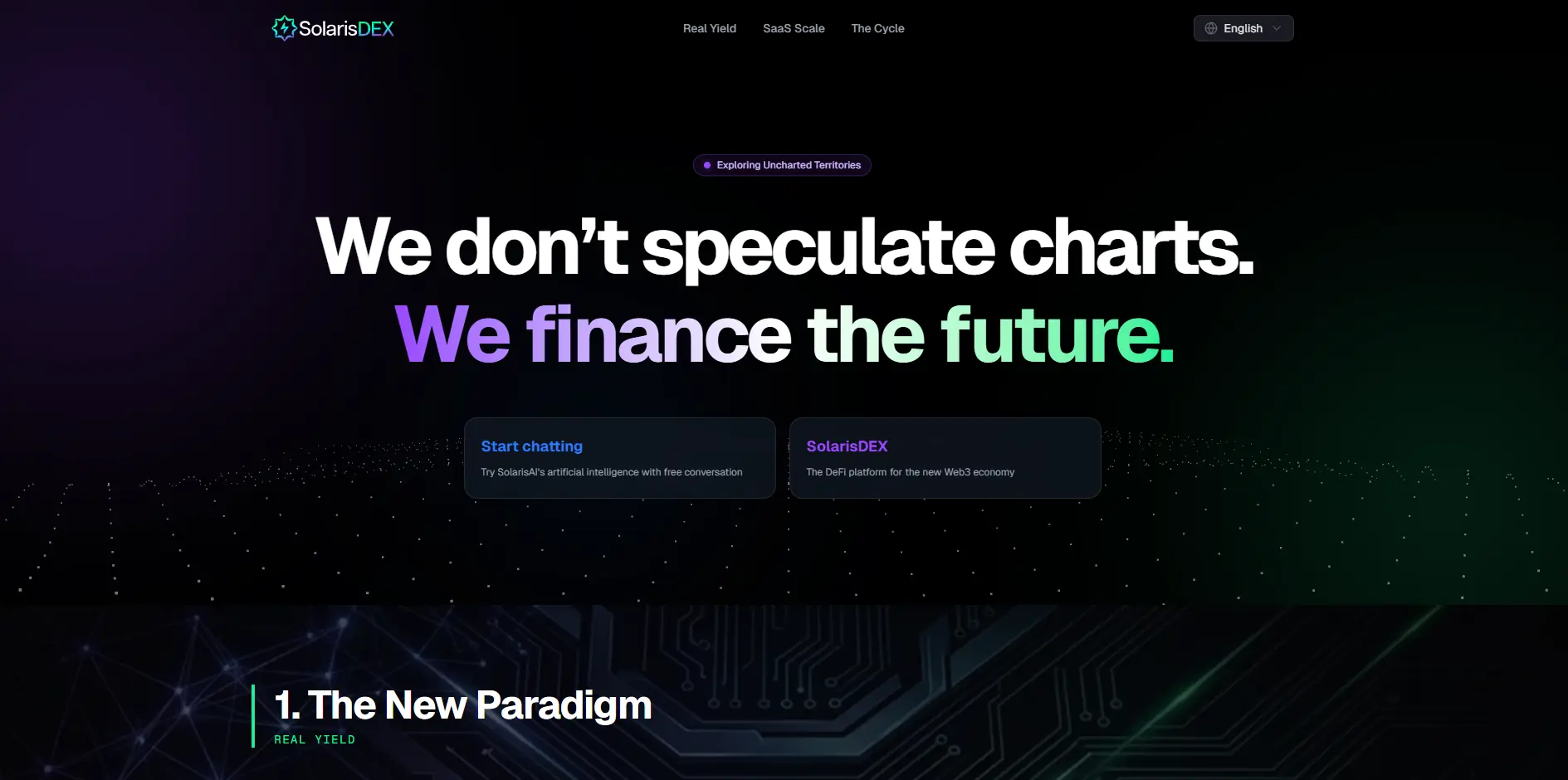
Many people search for a Solaris DEX review to understand this DeFi project. SolarisDEX presents itself as a Web3 platform linking artificial intelligence with decentralized finance. It claims to fund AI development through investor capital and share revenues from subscriptions. This 2026 review examines public data, site content, and community feedback. It focuses on ownership, structure, and sustainability.
For readers who want to compare trust signals and transparency checks across similar projects, you can also review independent analyses on Scams Radar.
Investments in crypto and DeFi carry high risks. You could lose everything. This is not financial advice. Always research on your own and talk to experts.
Table of Contents
Part 1: Ownership and Team Background
SolarisDEX lacks transparency about its operators. No founders appear on the site or in searches. There are no names, bios, or LinkedIn profiles.
The domain was registered in late 2025. Ownership details stay hidden through privacy services. No company registration or legal jurisdiction shows up.
Established platforms usually share team info for trust. Here, full anonymity raises serious concerns. It makes accountability hard if issues arise.
Aspect | Details | Common in Legit Projects? |
Team Names/Bios | None provided | Yes, usually detailed |
Company Registration | Not disclosed | Yes, public records |
Domain Age | About 3 months (as of Feb 2026) | Older domains preferred |
Ownership WHOIS | Hidden | Often public or partial |
1.1 Business Model and Platform Overview
SolarisDEX positions itself as a decentralized fund. Investors provide capital to grow SolarisAI, a subscription-based AI tool. Revenues supposedly flow back as daily yields via smart contracts.
The site stresses real-world income from AI users, not just crypto trading. It aims for one million subscribers and $20 million monthly revenue.
No specific blockchain details appear, though Web3 gets mentioned. The platform offers an AI chat demo, but no proof of advanced tech or customers exists.
External promotions sometimes add details like fixed daily rates or referrals, not found directly on the site.
Part 2: Compensation Plan and Referral Structure
The official site avoids direct mention of referrals. However, community discussions and promoters describe a multi-level setup.
Common elements include:
- Direct referral bonuses (up to 21% in some claims)
- Binary structure – rewards for balancing two teams
- Unilevel commissions – earnings down multiple levels
- Matrix plans – fixed slots for retention
This design pushes recruitment. Income ties more to bringing in new people than AI performance.
Heavy referral focus often signals reliance on fresh deposits, not product revenue.
Plan Type | How It Works | Risk Note |
Binary | Balance two legs for pairing bonuses | Encourages fast growth |
Unilevel | Earn from deep downline levels | Rewards top recruiters |
Matrix | Fixed width/depth slots | Creates urgency to fill spots |
2.1 Yield Claims and Mathematical Reality
Promotions outside the site often cite 1.12% daily returns. Some mention up to 200% total in 90 days.
Simple calculation for 1.12% daily (compounded):
- After 90 days: Roughly 172% profit
- After one year: Over 5,000% growth
To sustain this, the AI business needs explosive revenue. Starting from zero proven users makes it tough.
Real benchmarks:
Investment Type | Typical Annual Return | Sustainability Note |
Bank Savings | 4-5.5% | Low risk, insured |
Established Staking | 5-20% | Audited, market-dependent |
Stock Market Average | ~10% | Long-term, diversified |
Claimed SolarisDEX | 4,000%+ (implied) | Requires endless new funds |
Legitimate businesses rarely deliver consistent high double-digit monthly gains. Promises this large usually need constant inflows.
2.3 Security and Trust Scores
No evidence of smart contract audits from firms like Certik or PeckShield appears.
Scam check tools rate it low:
- GridinSoft: Very low trust
- Scamdoc/others: 13-25/100 range
- Community videos flag high risks
Traffic remains minimal. Reliance on social promotions is common in short-lived projects.
Red flags include:
- Young domain with hidden owners
- No audits or transparency
- Aggressive yield hype in promotions
- Recruitment-driven earnings
- Lack of risk warnings
Community Feedback and Promoters
Social media shows mixed views. Some accounts push it as a strong 2026 opportunity. Others warn of Ponzi traits.
Promoters often use similar messages across groups. Independent reviews lean cautious due to anonymity and math.
Final Assessment
SolarisDEX offers an ambitious AI-DeFi mix but falls short on basics. Anonymous operations, no audits, and a recruitment focus point to serious risks.
Sustainable yields come from proven revenue, not hype. Stick to established, transparent options.
Research multiple sources. Never invest more than you can lose. Report suspicious promotions if encountered.
Solaris DEX Review Score
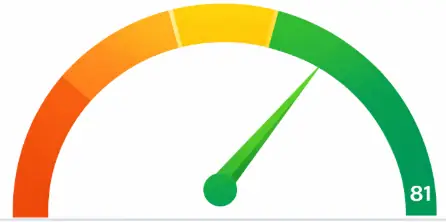
A website’s trust score is an important indicator of its reliability. Solaris DEX currently reflects a worryingly low rating, raising serious concerns about its legitimacy. Users are strongly urged to exercise caution.
Key red flags include low web traffic, negative user feedback, potential phishing risks, undisclosed ownership, unclear hosting details, and weak SSL encryption.
With such a poor trust score, the likelihood of fraud, data breaches, or other security issues is much higher. It is crucial to carefully assess these warning signs before engaging with the Solaris DEX or similar platforms.
Positive Highlights
- We found a valid SSL certificate
- DNSFilter labels this site as safe
Negative Highlights
- The Tranco rank (how much traffic) is rather low.
- The age of this site is (very) young.
Frequently Asked Questions Solaris DEX Review
This section answers key questions about Solaris DEX, providing clarity, addressing concerns, and highlighting issues related to the platform’s legitimacy.
A DeFi platform claiming to fund AI projects and share subscription revenue with investors.
Transparency is limited, so it carries high investment risk like most DeFi projects.
The platform says rewards come from AI service subscription income.
It focuses on AI investment pools instead of simple crypto trading.
Both analyze credibility and risks, but their business models differ.
Other Infromation:
Reviews:
There are no reviews yet. Be the first one to write one.