
E-Estate Review 2026: A Close Look at This Tokenized Real Estate Platform
E-Estate.co entered the scene in late 2024. It offers fractional shares in apartments, houses, villas, and more. This E-Estate review examines the facts as of early 2026. We cover ownership, the compensation plan, returns, and key risks, using public data and risk indicators tracked by Scams Radar.
Many investors search for “E-Estate review” or “E-Estate scam or legit.” As highlighted by Scams Radar, the details raise serious concerns. Anonymous operators, high promised yields, and a strong recruitment focus stand out as common warning signs.

Table of Contents
Part 1: Ownership and Team Profiles
Trust begins with knowing who runs the show. Legitimate platforms share clear team details.
E-Estate falls short here. The domain registered in September 2024 uses hidden WHOIS data through NameCheap. No real company address or registration appears.
The site lists leaders like Brandon Stephenson (CEO and co-founder) and Mike Hamilton (co-founder linked to Eli Property Company). Other names include Karoll Peterson and partners.
Independent checks paint a different picture. Researchers found inconsistencies in videos, such as changing voices and no joint appearances. Profiles lack a verifiable history. Some link to fabricated organizations created around launch time.

Part 2: The Compensation Plan Explained
E-Estate combines investment tiers with recruitment rewards. Users buy into property types using crypto.
Here is the structure from available details:
Property Type | Minimum Investment | Daily Return Range | Notes |
Apartments | $117 | 0.41% – 0.61% | Entry level |
Houses | $480 | 0.46% – 0.66% | Mid-range |
Villas | $3,120 | 0.51% – 0.71% | Higher yield |
Tourism | $6,740 | 0.56% – 0.76% | Focus on rental potential |
Commercial | $10,270 | 0.61% – 0.81% | Top tier |
Plans run 18 months with high daily rates. After that, a lower 10% annual payout is promised.
The agent side adds commissions on recruits, often across multiple levels with rank bonuses.
2.1 Understanding the Promised Returns
Daily percentages add up quickly. Look at the top rate of 0.81%:
Real estate rarely delivers such steady high yields. Typical rental income plus appreciation falls in the 7-13% annual range.
Investment Type | Average Annual Return | Backed By |
Bank Savings/CDs | 4-5.5% | Insured deposits |
Stock Market (long-term) | 10-12% | Company growth |
Traditional Real Estate | 7-13% | Rentals and value increase |
Legitimate Tokenized | 8-15% | Actual properties |
E-Estate Claims | 150-300%+ | New investor funds? |
2.2 Other Concerns and Red Flags
- No major audits or blockchain verification for tokens.
- Low trust scores from review sites.
- Promotion relies on agents with past similar programs.
- Limited independent user feedback.
Part 3: Better Alternatives for Real Estate Exposure
Consider established options:
- Regulated REITs through brokers.
- Platforms with verified properties and audits.
- Direct ownership or crowdfunding with clear legal ties.
These provide realistic returns with more transparency.
Final Thoughts on E-Estate
E-Estate presents an appealing idea in tokenized real estate. Fractional ownership and passive income attract many. However, the lack of clear ownership, questionable team details, unsustainable return math, and recruitment emphasis create major risks.
For anyone researching E-Estate investment or EST token, proceed with extreme caution. Stick to platforms with proven track records, real regulation, and verifiable assets.
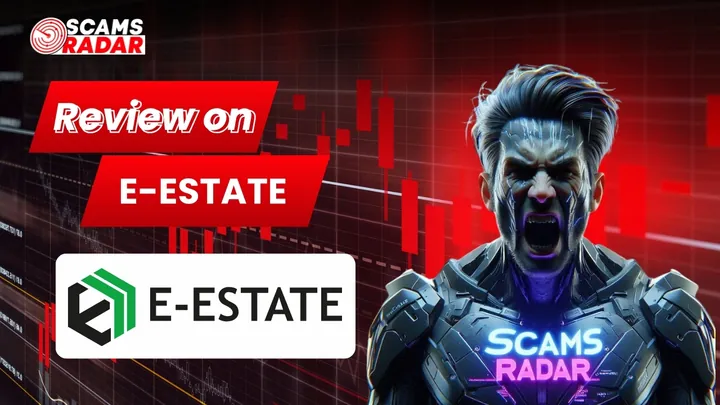
E-Estate Review Score
A website’s trust score is an important indicator of its reliability. E-Estate currently reflects a worryingly low rating, raising serious concerns about its legitimacy. Users are strongly urged to exercise caution.
Key red flags include low web traffic, negative user feedback, potential phishing risks, undisclosed ownership, unclear hosting details, and weak SSL encryption.
With such a poor trust score, the likelihood of fraud, data breaches, or other security issues is much higher. It is crucial to carefully assess these warning signs before engaging with the E-Estate or similar platforms.
Positive Highlights
- We found a valid SSL certificate
- DNSFilter labels this site as safe
Negative Highlights
- The Tranco rank (how much traffic) is rather low.
- The age of this site is (very) young.
Frequently Asked Questions E-Estate Review
This section answers key questions about E-Estate, providing clarity, addressing concerns, and highlighting issues related to the platform’s legitimacy.
The E-Estate review raises concerns due to anonymous ownership, high promised returns, and limited transparency, which can increase investor risk.
E-Estate claims returns come from tokenized real estate investments, but it offers little verifiable evidence of real property income.
This E-Estate review shows that the platform does not publicly disclose its founders or management team.
Major risks include unclear revenue sources, unrealistic yield promises, reliance on recruitment, and lack of regulation.
Compared to platforms covered in an Everstead Review, E-Estate provides fewer verified details about assets, operations, and compliance.
Other Infromation:
Reviews:
There are no reviews yet. Be the first one to write one.