Polar Tensor Review 2026: A Detailed Look at the AI Crypto Trading Platform
In this Polar Tensor review, we explore a platform that promises advanced AI-driven crypto asset management. Launched in 2025, Polar Tensor positions itself as a bridge between cutting-edge AI research and practical wealth building in cryptocurrency. The official site appears professional and measured. Yet promotional channels reveal bolder claims about returns, referrals, and team growth. This analysis covers ownership details, the marketed compensation structure, performance implications, and key risks as of early 2026.
This review is part of ongoing investigations by Scams Radar, where emerging crypto platforms, AI trading systems, and high-risk investment models are analysed to help users make informed decisions.

Table of Contents
Part 1: Who Is Behind Polar Tensor? Ownership and Leadership Profiles
Transparency about leadership builds trust in any investment platform. Polar Tensor provides some public information here.
- Felix Bick serves as the presenting founder and CEO. Promotional videos and social media describe his background in private banking at M.M. Warburg & CO and supply chain roles at Li & Fung. He appears in YouTube presentations discussing trading proofs and platform growth.
- Veronica Camano (sometimes listed as Veronica Camaño) appears as a related person or director in official filings.
- A U.S. SEC Form D filing exists for Polar Tensor Corp., registered in Panama City, Panama (CIK: 0002085242). Felix Bick signed this notice of exempt securities offering in 2025.
Note that a Form D is simply a notification filing. It does not mean SEC approval or oversight. The main website mentions no team bios, licenses, or full company details. This partial transparency leaves questions about full accountability.
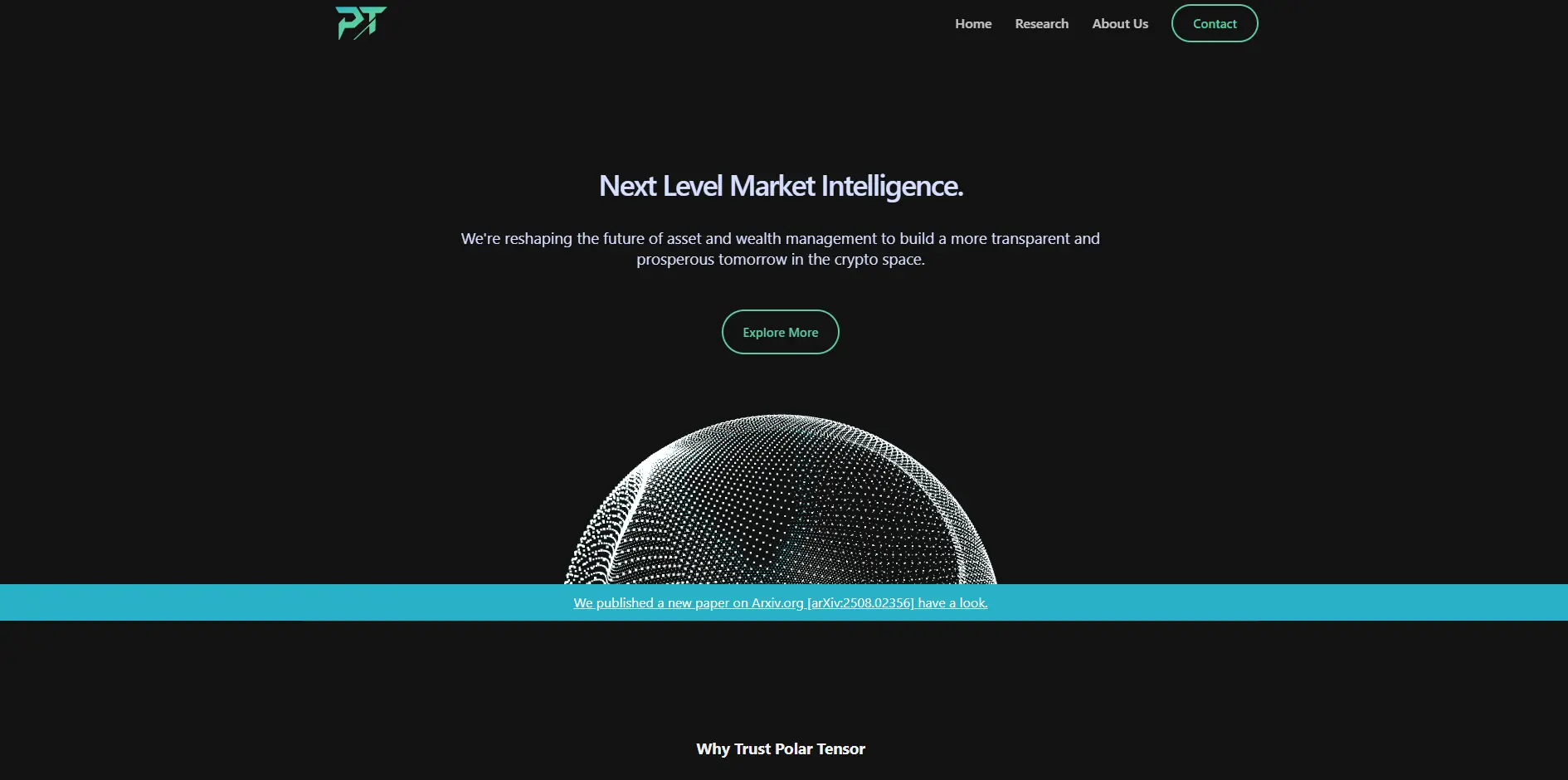
1.1 Platform Claims: AI Trading and Polar One AI Features
The core offering centers on Polar One AI, described as an intelligent investment engine.
Key features highlighted include:
- Proprietary models using on-chain data, sentiment analysis via large language models, pattern recognition, and statistical trading.
- Focus on risk management, capital preservation, dynamic scaling, and backtested strategies.
- Sub-second execution and adaptation to market conditions.
- An upcoming mobile app for tracking balances, profits, and community growth.
The site avoids direct profit guarantees. It emphasises reliability and a “risk-first” approach. However, promotional videos and posts suggest weekly profit distributions, non-leverage spot trading, and institutional-grade tools for retail users.
Part 2: The Marketed Compensation Plan: Referrals and Multi-Level Structure
While the official site stays quiet on referrals, social media and YouTube promotions paint a different picture. They describe a clear affiliate-style system designed to reward recruitment.
2.1 Referral Commission Levels
Promoters advertise deep payout structures:
Commission Type | Depth | Notes |
Direct Commissions | Up to 15 levels | Instant payouts on team deposits |
Residual Commissions | Up to 10 levels | Ongoing from network activity |
Rank Bonuses | Varies | From $500 up to $500,000 based on team size |
Additional elements include:
- One-time 10% license fee on deposits.
- Performance fees on profits.
- Withdrawal penalties (e.g., 10% early fee, reducing over time).
- Claims of “principal insured” protection (no verifiable insurer details provided).
This unilevel-style plan relies heavily on new user inflows. It combines passive AI trading income with active team-building rewards.
2.2 Performance Claims and Realistic Math Check
Promotions often cite an “average 22% over the last 18 months.” This figure remains ambiguous: total return or monthly?
To illustrate potential outcomes:
Assumption | Implied Annual Return (Compounded) | Required Growth for Sustainability |
22% total over 18 months | ~14-16% annualized | Modest, but strained by deep commissions |
22% monthly (extreme case) | ~987% annualized | Mathematically impossible long-term without constant new capital |
Legitimate benchmarks for comparison:
Asset Type | Typical Annual Return Range |
High-yield savings | 4-5.5% |
Stablecoin lending (DeFi) | 4-10% |
Broad stock market (historical) | ~10% |
Professional crypto funds | 5-20% (with high variability) |
Even modest high returns become challenging when layered with multi-level commissions and fees. Sustainable models rarely support such deep payout depths without eventual strain.
Part 3: User Feedback and Public Signals
Early indicators show mixed results:
- Trustpilot displays around 11 reviews averaging 4-4.4 stars, mostly positive but from a small sample.
- Independent trust scanners vary widely; some flag low scores due to young age and limited traffic.
- Social channels (YouTube, Facebook, Telegram) drive most visibility through promoter content.
- Traffic remains low for a platform claiming advanced AI capabilities.
Many users encounter Polar Tensor first through referral links rather than organic searches.
Security, Withdrawals, and Regulation Status
The site claims strong measures:
- Multi-layered cybersecurity.
- Cold storage.
- AI-driven risk monitoring.
Payments appear crypto-only. Withdrawals are marketed as flexible but include fee schedules. No clear regulatory licenses appear beyond the Panama entity and Form D notice. True investor protections remain unverified.
Final Thoughts: Is Polar Tensor Legit or Risky in 2026?
Polar Tensor offers an intriguing mix of serious AI research claims (backed by an arXiv paper) and aggressive affiliate marketing. The professional website contrasts with promotional hype around insured principal, deep referral commissions, and high implied returns.
Leadership names like Felix Bick provide some traceability through filings. Yet the overall structure, combining unverified performance, multi-level rewards, and limited regulation, carries substantial risk.
For anyone exploring Polar Tensor crypto trading or the Polar One AI bot, start small when testing. Demand independent audits, verifiable custody proofs, and clear insurance details first. Safer options exist on established platforms offering transparent spot trading without recruitment incentives.
Polar Tensor Review Score
A website’s trust score is an important indicator of its reliability. Polar Tensor currently reflects a worryingly low rating, raising serious concerns about its legitimacy. Users are strongly urged to exercise caution.
Key red flags include low web traffic, negative user feedback, potential phishing risks, undisclosed ownership, unclear hosting details, and weak SSL encryption.
With such a poor trust score, the likelihood of fraud, data breaches, or other security issues is much higher. It is crucial to carefully assess these warning signs before engaging with the Polar Tensor or similar platforms.

Positive Highlights
- We found a valid SSL certificate
- DNSFilter labels this site as safe
Negative Highlights
- The Tranco rank (how much traffic) is rather low.
- The age of this site is (very) young.
Frequently Asked Questions Polar Tensor Review
This section answers key questions about Polar Tensor, providing clarity, addressing concerns, and highlighting issues related to the platform’s legitimacy.
Polar Tensor claims to offer automated trading tools using advanced algorithms to assist crypto investors.
Polar Tensor shows mixed signals, and users should research risks before investing.
The platform provides limited public information about its founders or management team.
Risks include lack of transparency, unclear performance data, and possible regulatory gaps.
Like platforms discussed in an Everstead Review, Polar Tensor shares similarities in transparency and risk concerns.
Other Infromation:

Reviews:
There are no reviews yet. Be the first one to write one.